Saudi Military Faces Ongoing Attacks from Houthi Militia in Yemen
A missile strike on Riyadh's international airport resulted in 13 deaths and over 300 injuries, while another attack claimed one civilian life and left 11 wounded.
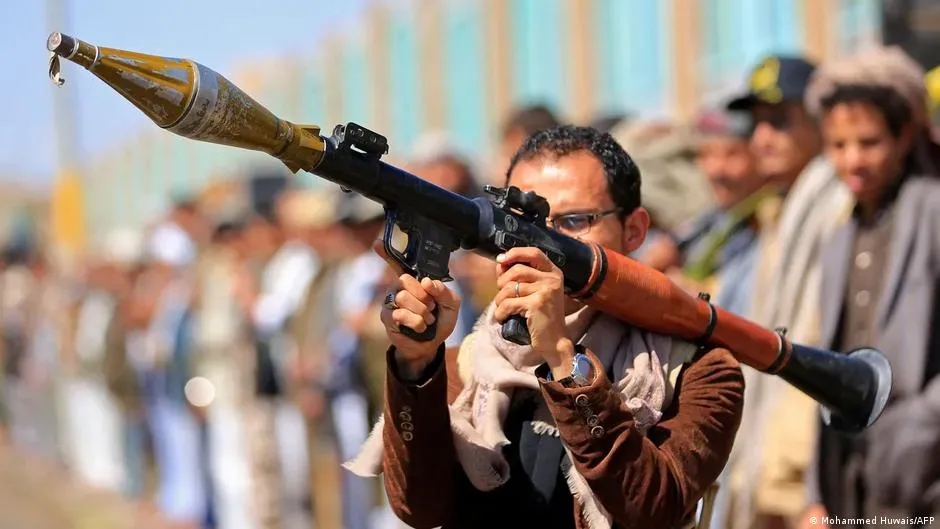
Saudi Arabia's military is facing a relentless onslaught of attacks from Yemen's Houthi militia, which has been targeting key infrastructure including airports and energy facilities in recent days.
On Saturday, a missile strike on Riyadh's international airport resulted in the loss of 13 lives and over 300 injuries, while another attack on Sunday claimed the life of one civilian and left 11 others wounded. The Houthis have also reportedly launched attacks on Saudi Arabia's Dammam airport and two oil facilities within the past 24 hours.
Saudi Energy Minister Prince Abdulaziz bin Salman Al Saud has issued a stark warning about the consequences for global energy security, announcing a robust response to the escalating violence. This comes as part of ongoing efforts by Riyadh to protect its vital infrastructure from Houthi aggression.
According to data compiled by the American Enterprise Institute, Saudi Arabia's military campaign against the Houthis has already resulted in the destruction of 136 military targets across Yemen, including missile launch pads and storage facilities. The Saudi military spokesman, Turki al-Maliki, was quoted as saying that these operations would continue until the militia is brought to heel.
Despite years of military intervention in Yemen between 2015 and 2022, led by a coalition of Arab states including Saudi Arabia, the Houthi militia remains a formidable force. The group has not only consolidated its control over large swaths of northern Yemen but also expanded its influence along the western coastline, where it poses a significant threat to international shipping through the Red Sea and Bab el-Mandeb Strait.
The Saudi government's efforts to defeat the Houthi militia have been met with limited success, prompting a search for allies in the fight against the rebels.
In recent weeks, the UK and France have pledged military support to defend key Saudi infrastructure, including aerial refueling for Saudi fighter jets and troops, radar systems, and air defense technology to protect the Yanbu oil terminal.
The US has so far refused to join forces with Saudi Arabia against the Houthis, but there is now speculation that Washington may reconsider its stance. Political analyst Osamah Al-Rawhani suggests this could be a turning point in the conflict.
Al-Rawhani notes that while military support from Western allies may provide a temporary boost, it remains uncertain whether such aid would translate into a decisive victory for Saudi Arabia against the Houthis.
The complexities of the conflict between Saudi Arabia and the Houthis have led experts to question the effectiveness of military intervention. Project manager Marcus Schneider at the Friedrich Ebert Foundation's Center of Expertise on Peace and Security in the Middle East and North Africa believes that ground troops would be necessary to eliminate the Houthis, but notes a significant hurdle for Saudi Arabia - its lack of experience with this type of warfare.
Saudi Arabia's reliance on military might is further complicated by the fact that it has no experience fighting in a foreign country. Schneider suggests that the Saudi leadership may be more focused on reducing its vulnerability and securing international support rather than achieving a decisive military victory. This approach would allow Riyadh to gain political maneuvering room and advance its Vision 2030 reform agenda.
The Houthis, entrenched in Yemen, are capable of withstanding significant attacks due to their familiarity with the terrain and their guerrilla warfare tactics. Saudi Arabia's efforts to defeat them will be hindered by the fact that they do not need to win a conventional war. Instead, they can employ missiles and drones to disrupt shipping traffic and threaten infrastructure.
The military asymmetry between Saudi Arabia and the Houthis is another significant factor in this conflict. While Riyadh possesses modern weapons and invests heavily in its armed forces, the Houthis can achieve their objectives through asymmetric means, targeting key vulnerabilities without engaging in a conventional battle.
In an effort to counter Houthi threats, Saudi Arabia may look to strengthen ties with other regional partners, including the United Arab Emirates (UAE). Recent reports suggest that Anwar Gargash, a senior diplomatic advisor to the UAE president, has called for increased security cooperation among Gulf states.
The escalating conflict in Yemen has led to a significant increase in Houthi attacks on neighboring countries, particularly Saudi Arabia. This has raised concerns about regional security and prompted calls for increased cooperation among Gulf states.
Saudi Arabia's military struggle against the Houthi rebels is further complicated by the involvement of other regional players. Pakistan, which signed the Mecca Joint Defense Agreement with Saudi Arabia and Turkey in early August, initially ruled out military intervention but may now be carrying out airstrikes on Houthi targets.
The Soufan Center, a US-based think tank, has analyzed the situation and concluded that additional military support from countries like Pakistan and Turkey could bolster Saudi Arabia's efforts. However, it remains to be seen whether this will translate into an effective strategy against the Houthis.
Iran, which has been accused of supporting the Houthi rebels, has offered to act as a mediator between Saudi Arabia and the Houthis. While this offer may seem like a gesture of goodwill, it is unclear whether Saudi Arabia will accept it given Iran's past actions in support of the Houthi cause.
The success of any military strategy against the Houthis also depends on the ability of Yemeni government forces to coordinate their operations effectively. With multiple factions vying for control, it remains to be seen whether they can put aside their differences and present a united front against the common enemy.
The complex dynamics at play in the conflict between Saudi Arabia and the Houthi rebels are further complicated by the fact that the US is an ally of Saudi Arabia, while Iran is a key player in supporting the Houthis.
The strained relationship between the US and Iran may also impact Tehran's ability to exert influence over the Yemeni militia, leaving it unclear whether Iran can persuade the Houthis to cease their attacks on Saudi targets.
Facts based on reporting originally published by DW English.
You may republish this story, in full or in part, if you credit News Central Site and link to it (licence CC BY 4.0). Photos are not included.