Kabila Forms New Political-Movement Amid Ongoing Congo Conflict
Joseph Kabila has announced a new political-military movement, the Front for the Refoundation of the Nation (FRN), which aims to unite opposition forces in the Democratic Republic of Congo.
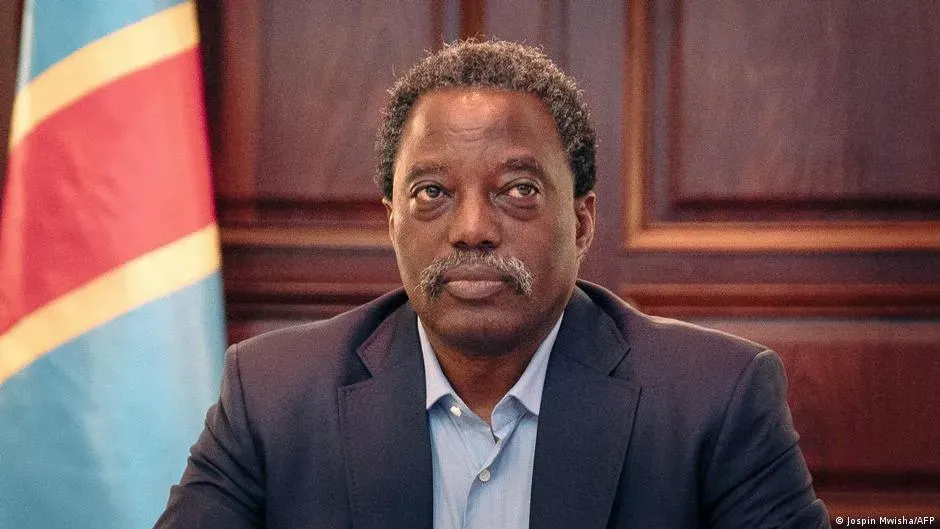
The decision by Joseph Kabila, former president of the Democratic Republic of Congo (DRC), to lead a new political-military movement, the Front for the Refoundation of the Nation (FRN), has put him at odds with President Felix Tshisekedi's government in a more direct way than before.
Kabila announced the FRN on October 12 in Goma, eastern DRC, from his residence, where leaders of the AFC/M23 rebel movements joined him. The FRN coalition is advised by Claude Ibalanky, who said that the group aims to unite opposition forces, including those associated with the AFC/M23 movement.
The new structure succeeds the Congo River Alliance (AFC), which had been allied with the M23 rebellion and now includes former AFC leader Corneille Nangaa and M23 political leader Bertrand Bisimwa among its leadership. Sultani Makenga, a senior M23 military commander, has also been assigned a significant role in the FRN.
Kabila's move comes as diplomatic efforts seek to put an end to the ongoing fighting between Congolese government forces and the rebellion. Kabila himself is currently facing serious charges from the Congolese authorities, who have accused him of supporting the insurgency, a claim he has vehemently denied.
The former president's decision to take a more public role in supporting M23 has been met with criticism from within his own party. Adolph Amisi Makutano, a senior official of the Union for Democracy and Social Progress (UDPS), accused Kabila of lacking courage in his actions.
Makutano's comments suggest that some members of the UDPS are unhappy with Kabila's move, which they see as a sign of weakness rather than strength. This criticism is significant, given the former president's prominent position within the party and the government.
The eastern region of the Democratic Republic of Congo has been plagued by conflict for decades, driven by factors such as competition over territory and mineral resources, as well as tensions with neighboring countries. The aftermath of Rwanda's 1994 genocide against the Tutsi played a significant role in shaping the current conflicts in the region.
The complex web of regional politics and historical events that have contributed to the ongoing conflict is deeply entrenched. M23, a rebel group that emerged from a failed peace agreement in 2009, has been accused by Kinshasa, the United Nations, and Western governments of receiving support from Rwanda.
Kabila's leadership of the new front has sparked concerns about his intentions. Is he seeking to consolidate opposition against President Tshisekedi or strengthen the rebellion's political leadership? The move has left many questioning Kabila's true motives.
Analysts suggest that Kabila's decision is driven by his own political ambitions. Alex Vines, director of the European Council on Foreign Relations' Africa program, believes that Kabila remains a force to be reckoned with in Congolese politics. He sees this development as evidence of Kabila's continued desire for power.
Experts caution against making assumptions about Kabila's intentions based solely on ethnic ties. Timo Roujean, head of the Konrad Adenauer Foundation's office in Kinshasa, emphasizes that economic factors and regional dynamics also play a significant role in shaping Kabila's actions. Specifically, he points to the performance of his home region of Katanga as a crucial consideration.
The reorganization of M23 with Kabila at its helm could potentially give the movement more defined political leadership. However, it is unclear whether this shift will broaden the group's support base or alter its negotiating position in peace talks. Conflict analysts are divided on the implications of this development.
Cliffton Chifuwe, a conflict analyst, notes that the alliance between Kabila and M23 does not necessarily preclude a negotiated settlement. However, he believes it may make achieving a durable agreement more challenging. According to Chifuwe, the alliance raises the threshold for securing peace in the region.
The formation of the FRN coalition has significant implications for the fragile peace process in eastern Congo. Beyond a simple cessation of hostilities, lasting peace requires credible security arrangements, restoration of state authority, humanitarian access, and conditions that allow displaced people to return safely.
This new development raises questions about whether existing peace frameworks can accommodate the shifting political landscape and whether the parties involved can ensure compliance with any agreement. For civilians in eastern Congo, the central issue remains whether this leadership change will open a path to settlement or make an already complex conflict even harder to resolve.
Facts based on reporting originally published by DW English.
You may republish this story, in full or in part, if you credit News Central Site and link to it (licence CC BY 4.0). Photos are not included.