Rising Sea Levels Cause Widespread Flooding Around World
The record-breaking El Niño event is causing widespread flooding in coastal areas around the world due to rising sea levels.
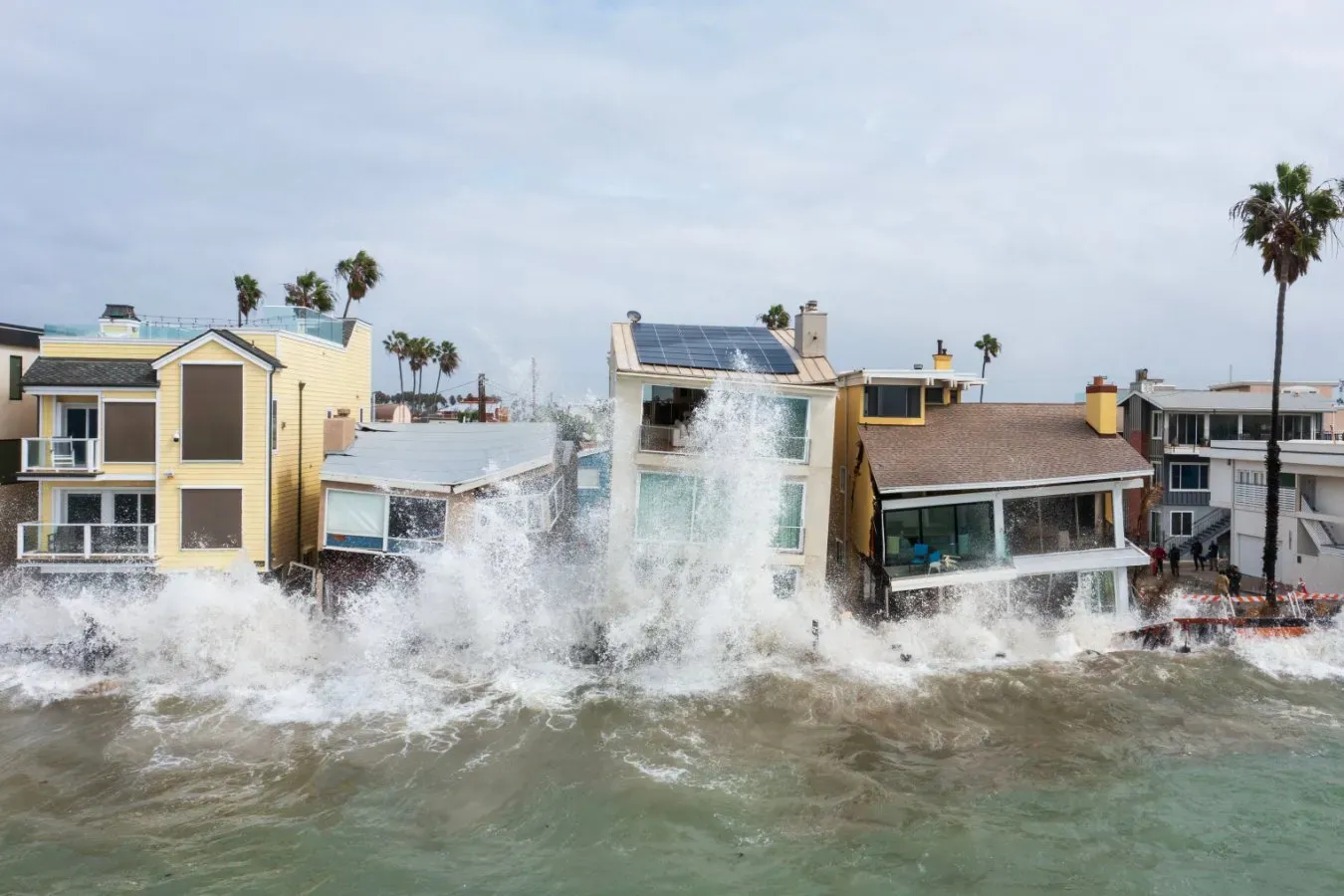
Rising sea levels are causing widespread flooding in coastal areas around the world, including California, as a result of the record-breaking El Niño event. The strong warming of ocean temperatures is having far-reaching impacts on regional weather patterns and ecosystems.
The eastern Pacific has seen dramatic sea-level rises, with levels currently 40 centimeters above normal. This phenomenon is expected to worsen in the coming weeks due to a strong westerly wind event that will drive sea levels even higher. As a result, coastal areas from Alaska to Chile are bracing for flooding and erosion.
Experts warn of frequent and possibly severe coastal inundation in many regions, with significant disruption and damage likely to occur. The extreme tides exacerbated by El Niño's effects on the equatorial Pacific are creating ideal conditions for record-breaking sea levels. This unprecedented rise in ocean levels is already having a devastating impact on communities worldwide.
The combination of factors contributing to this crisis includes the seesaw-like shift in sea levels caused by El Niño, with falling levels in the west and rising levels in the east.
The movement of warm water across the Pacific Ocean is being driven by unusual bursts of wind that blow in the opposite direction to the usual trade winds. This phenomenon triggers Kelvin waves, which are distinct from normal ocean waves and play a key role in shaping sea levels during El Niño events.
Kelvin waves take approximately 60 days to travel across the Pacific and then continue along coastlines, resulting in sustained rises in sea level that can persist for months. These changes will peak with the highest sea surface temperatures, which are currently projected to occur around late November or December.
The exceptional nature of this El Niño event means that its impact on sea levels will also be unusually pronounced. Research by Thomas Monahan and his colleagues has found that strong El Niño events amplify changes in sea level, rather than following a linear pattern.
This amplification effect can lead to significant variations in sea level rise, particularly near the equator. Based on analysis of past events, Monahan's team estimates that sea levels could increase by between 24 and 40 centimeters in the Galapagos islands, depending on the strength of this El Niño event.
The changes in sea level will be most pronounced nearest the equator, where the effects of Kelvin waves are most pronounced. This has significant implications for coastal communities and ecosystems, which may experience unprecedented flooding and disruption as a result of these extreme sea level rises.
As the effects of El Niño spread across the globe, coastal communities in Peru and Ecuador are bracing themselves for significant sea level rises. According to estimates, these regions can expect increases of between 19 and 33 centimeters.
This increase is not just a result of El Niño's impact, but also the cumulative effect of global warming over the past century. Since 1900, the global mean sea level has risen by 20 centimeters due to climate change.
Even if this El Niño event doesn't reach the same intensity as the one in 1877-78, the resulting sea-level rises will still surpass those experienced during that time. The situation is further complicated by the fact that these increases are already taking place on top of existing sea level rise.
The impact of El Niño's effects are not limited to South America, however. Along the west coast of North America, several factors come into play, including extra high tides caused by long-term lunar cycles.
The combination of extra high tides and massive waves whipped up by storms during El Niño events poses a significant threat to coastal areas on the west coast of North America.
When storm surges coincide with these extreme weather conditions, the risk of coastal flooding and erosion increases dramatically, leading to potentially catastrophic consequences. In fact, the 2015/16 El Niño event saw waves as high as 15 meters hit Oregon, a record that still stands today for the US coastline.
The confluence of these factors is especially concerning in California, where extreme rainfall is also expected due to El Niño. According to experts, this could lead to flooding on a scale not seen before, potentially rivaling or even exceeding historical records by a significant margin.
Facts based on reporting originally published by New Scientist.
You may republish this story, in full or in part, if you credit News Central Site and link to it (licence CC BY 4.0). Photos are not included.