Republicans' Election Strategy Faces Challenges Amid Trump's Unpopularity
The Republican Party's midterm campaign is facing difficulties due to President Donald Trump's unpopularity and rising healthcare costs.
As the midterm campaign enters its final month, Republicans are growing increasingly anxious about their chances of success. With a massive $1 billion at their disposal, they had hoped to use this war chest to secure victories and maintain control of Congress.
However, President Donald Trump's unpopularity is proving to be a major liability for Republican candidates. The persistent cost concerns, fueled by rising healthcare costs and stagnant wages, are also taking a toll on voters' perceptions of the party. Meanwhile, the fallout from the war in Iran has further complicated the electoral landscape.
The cash advantage that Republicans thought would give them an edge is being spread across several groups, with MAGA Inc., the Trump-aligned organization, playing a significant role. With nearly $416 million in cash reserves at the end of August, MAGA Inc. began stepping up its spending on critical races in September.
But despite this increased spending, some Republican Senate campaign officials are sounding alarm bells about the effectiveness of the strategy. They point out that groups which reserved advertising time last spring secured much lower rates than those who waited until September, forcing Trump-connected organizations to pay significantly more for airtime.
The Republican Party is facing a daunting challenge in Texas, where President Trump will visit for the second time this week to support Senate candidate Ken Paxton. Despite the state's long history of electing Republicans to the Senate, MAGA Inc. has spent over $22 million on advertising in the past month alone.
This significant investment in airtime is being matched by other groups, with Texas PAC, aligned with Senate Majority Leader John Thune, spending an astonishing $83 million on ads in the same period. The sheer scale of these expenditures raises questions about their effectiveness and value to the candidates they support.
One advertisement that has been airing nationwide features Paxton's estranged wife expressing her support for the full Republican ticket. This high-profile ad was broadcast during a popular football game between the Dallas Cowboys and the Houston Texans, reaching a large audience across the United States.
The cost of advertising is also a concern, with outside groups like MAGA Inc. being charged significantly more than candidates themselves. According to tracking firm AdImpact, MAGA Inc. has been paying roughly $894 per airing on streaming services, while Texas PAC has been charged around $809 for a mix of broadcast and streaming ads.
The disparity in advertising costs is becoming increasingly apparent as the 2026 campaign heats up. For instance, during a recent football game, Texas PAC was charged $450,000 for a single spot in the Austin market, while a rival campaign paid just $50,000 for a similar ad.
This discrepancy highlights the significant challenge faced by some Republican campaigns to effectively utilize their resources and stay competitive. Democrats have acknowledged their disadvantage and are instead relying on anti-Trump sentiment and targeted messaging on issues like corruption to connect with voters.
A seasoned Republican pollster, Neil Newhouse, has echoed concerns about the party's advertising strategy, suggesting that spending too much money at this late stage may not yield significant returns. He noted that effective advertising typically takes place well before Labor Day, making it difficult for campaigns to make a meaningful impact in October.
The party's struggles are evident in key battleground states, with Thune's group beginning to pull back in North Carolina last week. This move reflects the challenges faced by Republicans in the state, where their cash advantage is being offset by the increasing effectiveness of their opponents' messaging and ground game.
The influx of funds from the Supreme Court's decision to lift campaign finance limits has brought unprecedented amounts of money into the 2024 midterm elections. However, this massive financial advantage may not guarantee victory for Republicans.
A look at past elections suggests that a significant amount of money alone does not translate into success. For instance, in the 2024 presidential election, Democrat Kamala Harris had more funds than her opponent but ultimately lost all critical swing states and the White House.
Similarly, billionaire Elon Musk's $25 million investment did not secure a Wisconsin Supreme Court seat for his preferred candidate last year. Furthermore, Tom Steyer's massive $216 million personal contribution to his California governor's campaign failed to propel him into the general election.
Senate Democratic leader Chuck Schumer acknowledges that his party faces an enormous spending disadvantage in the midterms, describing it as "obscene.
Democrats are expanding their reach in traditionally Republican districts in Arkansas and Tennessee as they grow increasingly confident of retaking control of the House majority. This newfound optimism is evident in the party's decision to target areas that were previously considered off-limits.
In these regions, Democratic candidates are working tirelessly to get their message out to voters. Rep. Suzan DelBene, chair of the Democratic Congressional Campaign Committee, emphasizes the importance of adequate funding to support this effort. And district by district, we are" investing in campaigns to maximize the party's chances of success.
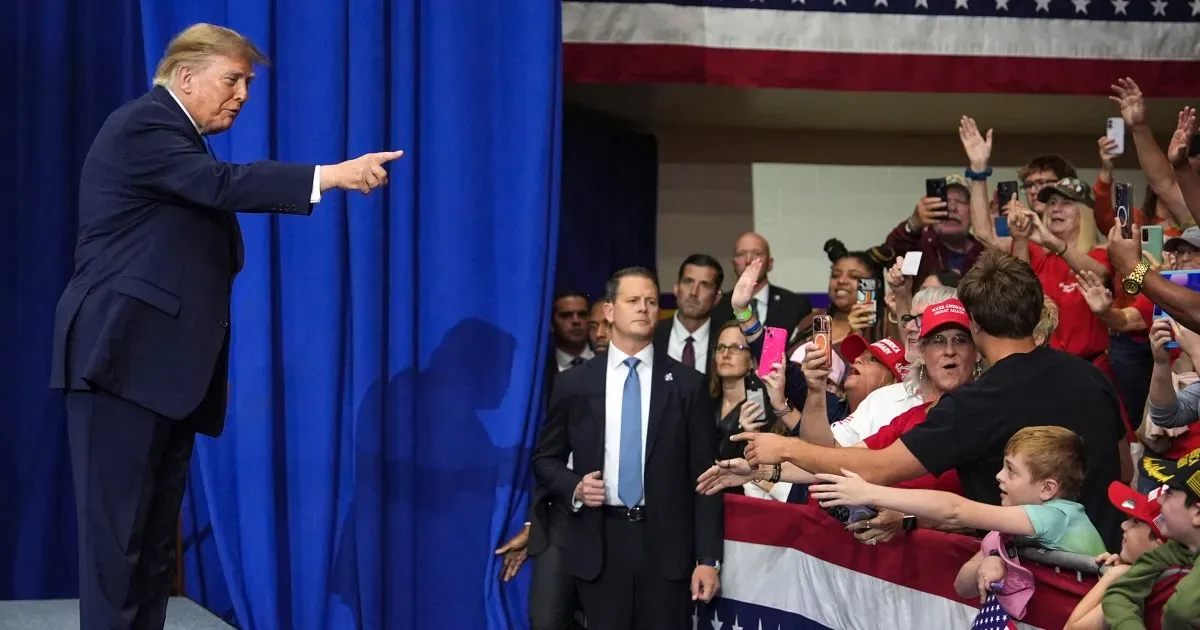
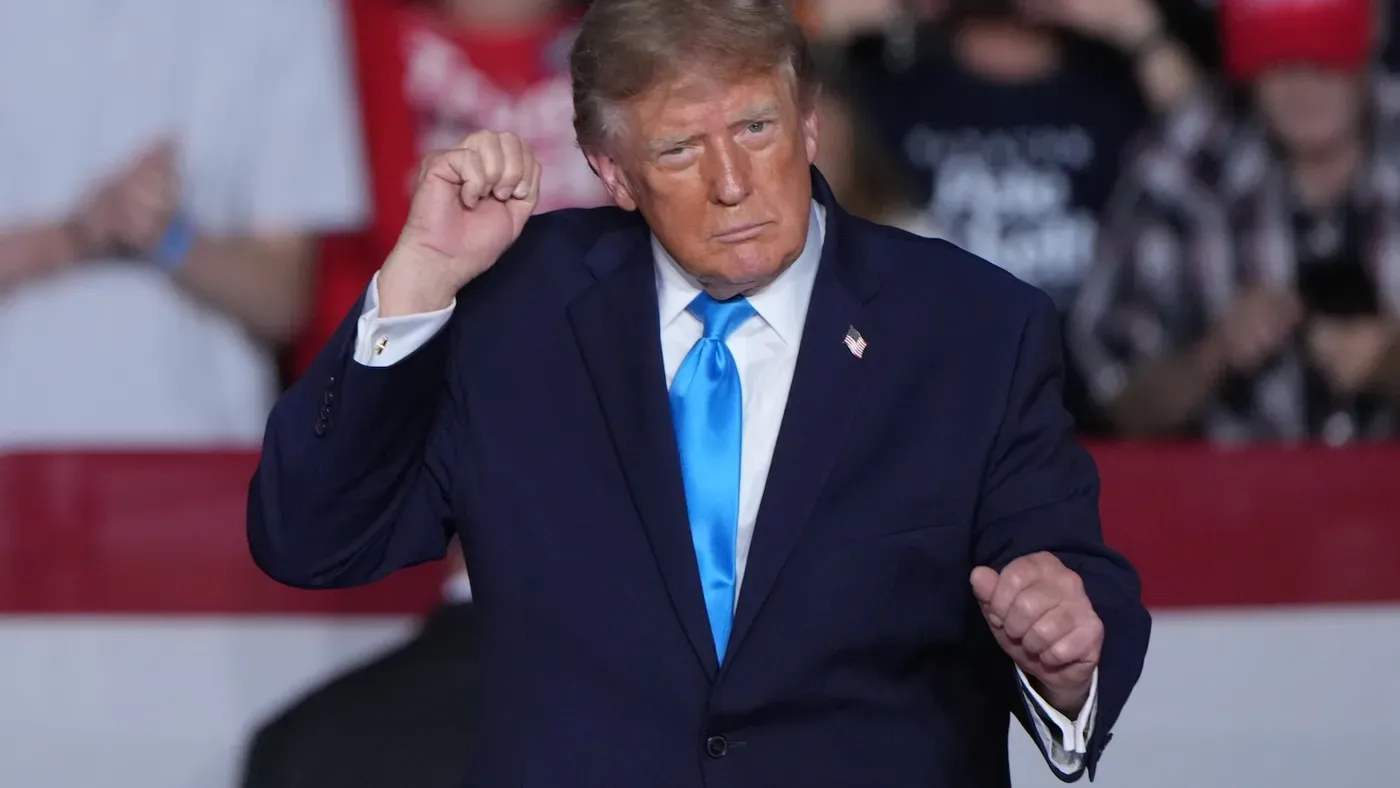
Meanwhile, President Trump is relying on his deep bond with supporters to propel him through the final weeks of the midterm campaign. He has stepped up his schedule of rallies in recent weeks, traveling to areas that were once considered solidly Republican. The events have been well-attended, with crowds packing venues like the high school gymnasium in Vandalia, Ohio.
At these rallies, Trump's signature style has drawn enthusiastic responses from the audience. His use of profanity and familiar catchphrases continues to energize his base. Despite some early departures as the events wore on, the overall atmosphere remains charged with emotion.
As President Trump's speech came to a close on Monday in Grand Island, Nebraska, he made a final appeal to his supporters, asking them to rally behind him as if he were still on the ballot.
The president emphasized that despite not being directly involved in the midterm elections, his presence and influence remain crucial. In a nod to his devoted base, Trump urged them to continue supporting his agenda.
A sense of determination and resolve has taken hold among Republican voters, with many viewing the midterms as an opportunity to propel their party forward. With the stakes high and emotions running deep, it remains to be seen whether this renewed energy will translate into electoral success for the GOP.
Facts based on reporting originally published by ABC News Politics.
You may republish this story, in full or in part, if you credit News Central Site and link to it (licence CC BY 4.0). Photos are not included.