Crime dominates Republican messaging ahead of US midterm elections
Republican candidates are shifting their focus to crime and public disorder in key battleground states as they seek to appeal to voters frustrated with rising living expenses and foreign policy decisions.
Washington has become a battleground for Republican candidates who are shifting their focus to crime and public disorder ahead of the midterm elections.
Political advertising is now warning voters about Democratic plots to defund the police, while campaign events feature law enforcement unions and tough talk on law and order issues. This change in strategy reflects growing frustration among voters with their party's handling of everyday costs and foreign policy decisions.
Crime rates have been trending downward since the 1990s, but Republicans are seizing on this issue as a rare opportunity to go on the offensive in an otherwise challenging year. They believe that lawlessness is safer ground for them than other issues like rising living expenses or the ongoing conflict with Iran.
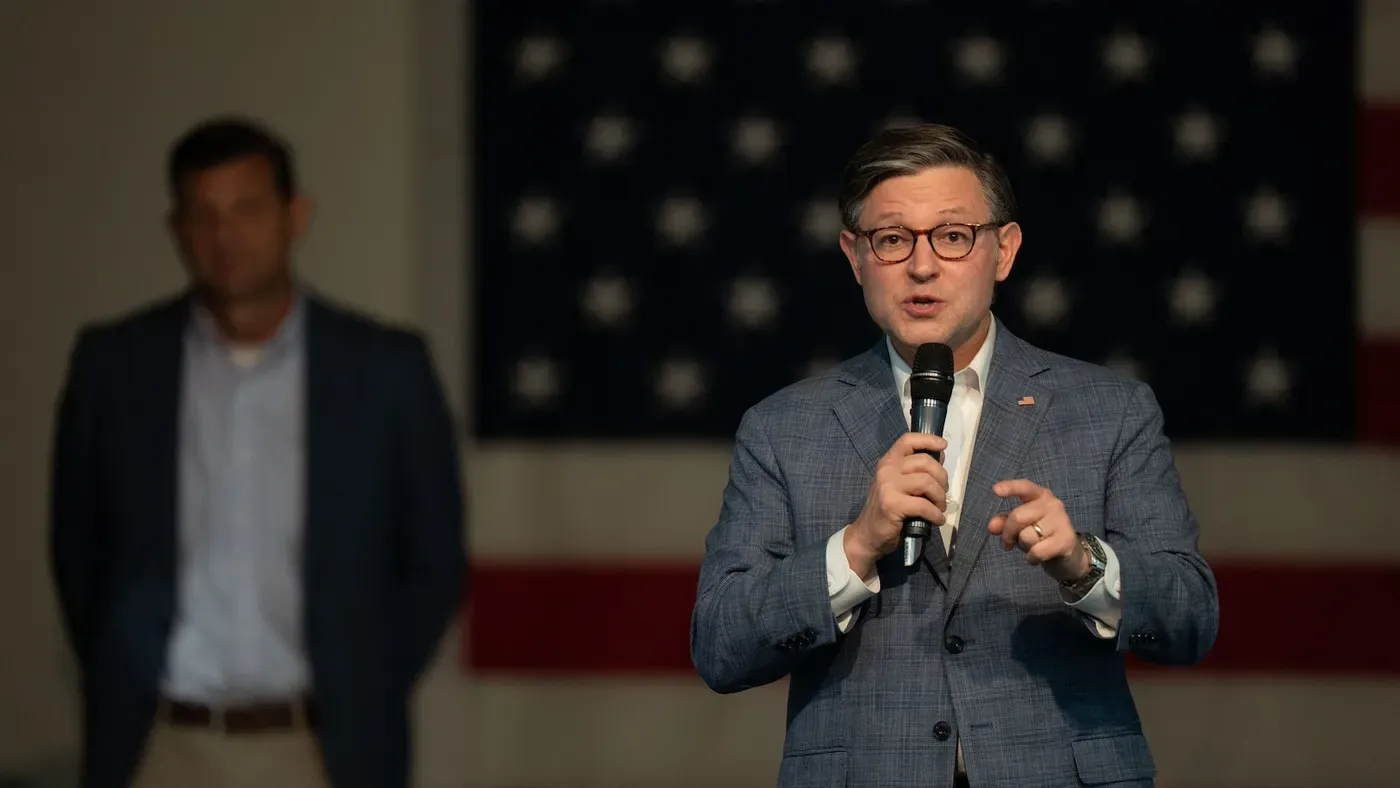
House Speaker Mike Johnson recently highlighted this trend, pointing out that America has seen its lowest violent crime rate in 126 years. He credited a focus on upholding the rule of law for this achievement and boasted about having the most secure border in over half a century.
The shift in Republican messaging comes despite concerns within their own party about the implications of Donald Trump's record, which includes being convicted as a felon for paying hush money to a former adult film star.
Republican candidates in key battleground states are shifting their messaging ahead of the midterm elections, embracing a tough-on-crime approach that has become a staple of the party's platform.
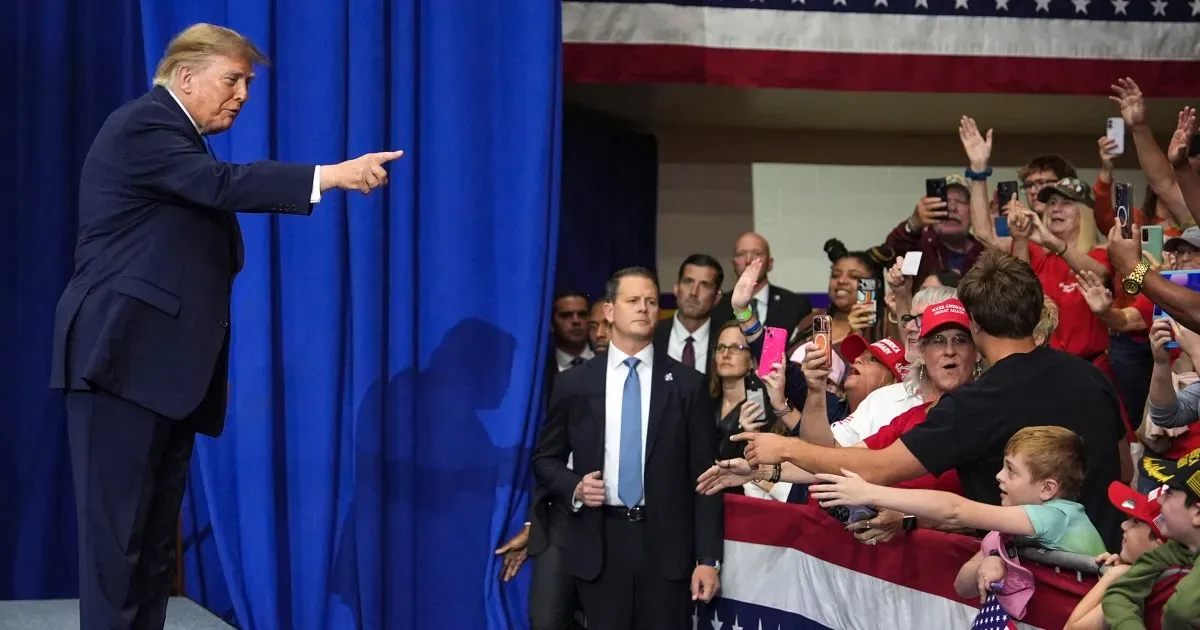
In Nebraska, former President Donald Trump revived his signature issue on Monday night, painting a dire picture of the country under its current leadership. He claimed that the US had previously been plagued by unprecedented levels of crime and unchecked immigration at its borders.
This rhetoric is being echoed across the country, with Republican gubernatorial candidates in several states launching attacks against their Democratic opponents over law enforcement funding and public safety. In Texas, Governor Greg Abbott has criticized his opponent's stance on bail reform for undocumented immigrants charged with violent crimes.
In response, Democratic nominee Gina Hinojosa has highlighted her background as a civil rights lawyer and accused Abbott of promoting policies that undermine civil liberties. Her campaign has focused on issues such as police funding and public safety, rather than immigration or crime.
Meanwhile, in Georgia, billionaire healthcare executive Rick Jackson has repeatedly criticized his opponent's tenure as mayor of Atlanta, claiming she abandoned neighborhoods and failed to adequately fund law enforcement.
In key U.S. House races, Republicans are revisiting a familiar theme: crime and disorder. In Virginia's first congressional district, Rep. Rob Wittman is criticizing his Democratic opponent Shannon Taylor for her record as a former county prosecutor.
Taylor's alleged "soft on crime stance has been a focal point in the campaign, with Wittman using it to paint her as a threat to public safety. This strategy mirrors one employed by other Republican candidates nationwide. In Michigan's 10th district, Michael Bouchard is running on his military service and law enforcement background.
Bouchard claims that his Democratic opponent Christina Hines supports woke, soft on crime, socialist policies. He's using this language to appeal to voters who are concerned about public safety and the perceived rise in crime. Similar tactics are being used by Rep. Gabe Evans in Colorado's eighth district against Manny Rutinel.
Evans is touting his experience as a police officer to contrast with Rutinel's background as a former prosecutor. In Wisconsin's third district, Rep. Derrick Van Orden is painting Democratic nominee Rebecca Cooke as a communist who wants to defund the police.
Democratic rivals have responded by highlighting their own commitment to public safety and law enforcement. Taylor has aired an ad featuring 13 local sheriffs endorsing her campaign, while Rutinel has rolled out a safety plan that includes increased funding for police departments and drug prevention programs.
The Republican Party's emphasis on border security and law enforcement is gaining momentum ahead of the midterm elections, a strategy that may be seen as a return to their tough-on-crime message.
Several lawmakers, including Senator Eric Schmitt, are arguing that the party needs to remind voters about its accomplishments in this area. According to Schmitt, the fact that border security has become less prominent in headlines is actually a sign of progress, rather than a cause for concern. Having secured the border, he believes the party should be proud of its achievement.
A recent poll conducted by AP-NORC found that while 48% of U.S. adults still approve of President Trump's performance on border security, this number has declined from 55% just a year ago. This shift in public opinion may suggest that the issue is becoming less relevant to voters, but Republicans are pushing forward with their strategy.
Not all party members share this enthusiasm for rehashing the crime message. Senator Thom Tillis, who chose not to seek reelection this year, expressed doubts about its effectiveness as a campaign issue. He believes it will not resonate with voters and may even backfire.
In North Carolina, Republicans are testing the waters by running ads claiming that Democratic nominee Roy Cooper was too lenient on convicts during his time in office. This move is part of their broader effort to make the upcoming election a referendum on crime.
Critics have accused Republicans of resorting to racist tactics in their campaign ads, drawing parallels with past efforts to appeal to suburban white voters.
The ads display mugshots of men of color, evoking memories of infamous campaigns like the 1988 Willie Horton ad. This move has sparked outrage among Black leaders who view it as a deliberate attempt to whip up fear and division.
In contrast, Senator Thom Tillis highlighted North Carolina's relatively low crime rate in recent years. He shared his own personal experience of feeling safe in Charlotte, where he lives just 25 minutes from downtown.
National Democrats have seized on the disconnect between Republicans' tough-on-crime rhetoric and the Trump administration's immigration policies. They point to the tragic deaths of American protesters and undocumented individuals as evidence that the president's actions are more likely to fuel violence than prevent it.
Senator Ruben Gallego, an Arizona Democrat, has gone further, describing the White House as a criminal organization due to its alleged corruption and self-dealing.
The White House has pushed back against criticism from some lawmakers, accusing them of attempting to shift attention away from what it calls a radical soft on crime agenda". According to a White House spokeswoman, extreme Democrats are trying to deflect from their own policies.
This counter-attack comes as Republicans have sought to regain traction with voters by emphasizing tough-on-crime stances ahead of the midterm elections. The strategy aims to tap into public concerns about safety and law enforcement.
Facts based on reporting originally published by ABC News Politics.
You may republish this story, in full or in part, if you credit News Central Site and link to it (licence CC BY 4.0). Photos are not included.