Republican Losses in Traditionally Red States Raise Concerns Ahead of 2028 Election
The Republican Party's losses in several key states have significant implications for their prospects in future elections, particularly the 2028 presidential election.

A stunning wave of Republican losses in traditionally red states has sent shockwaves through the party ahead of the 2028 presidential election, as strategists on both sides reassess the electoral landscape.
The scale of these losses is particularly alarming for Republicans, who are now grappling with the possibility that a significant chunk of their once-reliable Electoral College votes could be at risk. This development has sparked intense debate among party strategists about how to respond and whether it's time to fundamentally shift their approach.
According to former Trump campaign manager Bill Stepien, the Democrats' midterm success has made it significantly harder for Republicans to win in 2028. Stepien pointed out that several key states have flipped from red to blue, including Ohio, which was a crucial swing state under Trump's leadership.
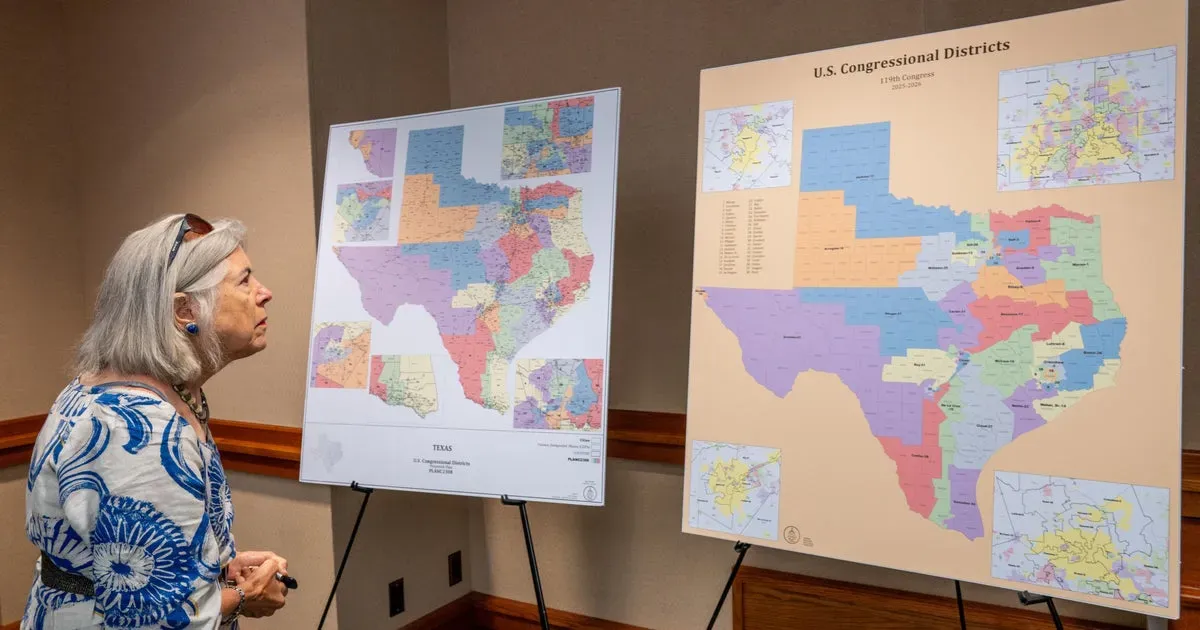
The loss of these states has significant implications for Republican presidential hopefuls, particularly when it comes to waging campaigns in traditionally Republican strongholds like Texas.
The Republican Party's midterms losses have raised concerns about their prospects in future elections. The party's electoral map is now looking increasingly daunting, particularly if current trends continue.
GOP strategists are drawing parallels between this year's results and the party's performance in 2006, when Democrats made significant gains in Congress. A similar pattern emerged in 2012, when Barack Obama won a second term as president with a narrow majority of electoral votes.
In both cases, Republicans struggled to regain momentum after their losses. The party's woes are compounded by the fact that they have lost key states in this year's midterms.
Some Democrats, however, caution against assuming that voters who switched sides will remain loyal to their new party allegiance.
The electoral landscape has undergone significant changes since the midterms, sending shockwaves through Republican ranks.
Strategists are now viewing every state as a potential swing state in the 2028 elections, according to Antjuan Seawright, a Democratic strategist from South Carolina who advised Hakeem Jeffries this cycle. This shift is largely due to the increasing importance of demographic changes and suburban voter realignment. With a growing Hispanic population, Texas has emerged as a key battleground.
The state's rapid growth in Hispanic numbers has contributed significantly to its swing towards Democrats. According to Melissa Morales, executive director of SOMOS PAC, a Latino voter engagement group, this demographic shift is now being factored into election strategies for 2028.
Texas' Republican machine had long kept the state out of reach for Democrats, but this cycle's results have shown that with effective organization and mobilization of Black and Latino voters, Democrats can compete in Texas.
The midterms have brought significant changes in the Midwest, where Republicans are now facing uncertainty in states they once dominated. Ohio and Iowa, two key swing states that had shifted hard right under Trump's leadership, saw Democrats emerge victorious in Senate and governor's races.
In these states, Democrats also flipped a dozen House seats, further solidifying their grip on the region. Republican strategists in both Ohio and Iowa are warning that their party's dominance might be tied to Trump's unique appeal, which has taken a hit since his return to the White House.
Bob Vander Plaats, an influential evangelical leader in Iowa, noted that Republicans had benefited from Trump's brand but also acknowledged its potential drawbacks. "You lived off Trump's brand, and Trump's brand did a lot of good for the state of Iowa," he said. However, he added, "you can also die by the brand as well."
In Ohio, ancestrally Democratic blue-collar areas made a significant comeback to the left, with some Republican strategists now considering the state a battleground. As Curt Steiner, an Ohio GOP strategist, pointed out, this shift in Ohio's voting patterns is a warning sign for Republicans who had taken their dominance for granted.
The midterms have exposed a significant vulnerability for Republicans in key swing states, where they suffered major losses in elections that will shape the 2028 presidential map.
Democrats now hold governor's seats in all 10 states considered crucial battlegrounds for future presidential contests, leaving Republican strategists scrambling to reassess their organizational priorities.
Facts based on reporting originally published by Politico.
You may republish this story, in full or in part, if you credit News Central Site and link to it (licence CC BY 4.0). Photos are not included.