Rediscovery of Extinct Species Raises Questions About Conservation Efforts
Aelys Humphreys argues that every time an extinct species is found again, it represents a failure on our part to protect or conserve that species in the first place.
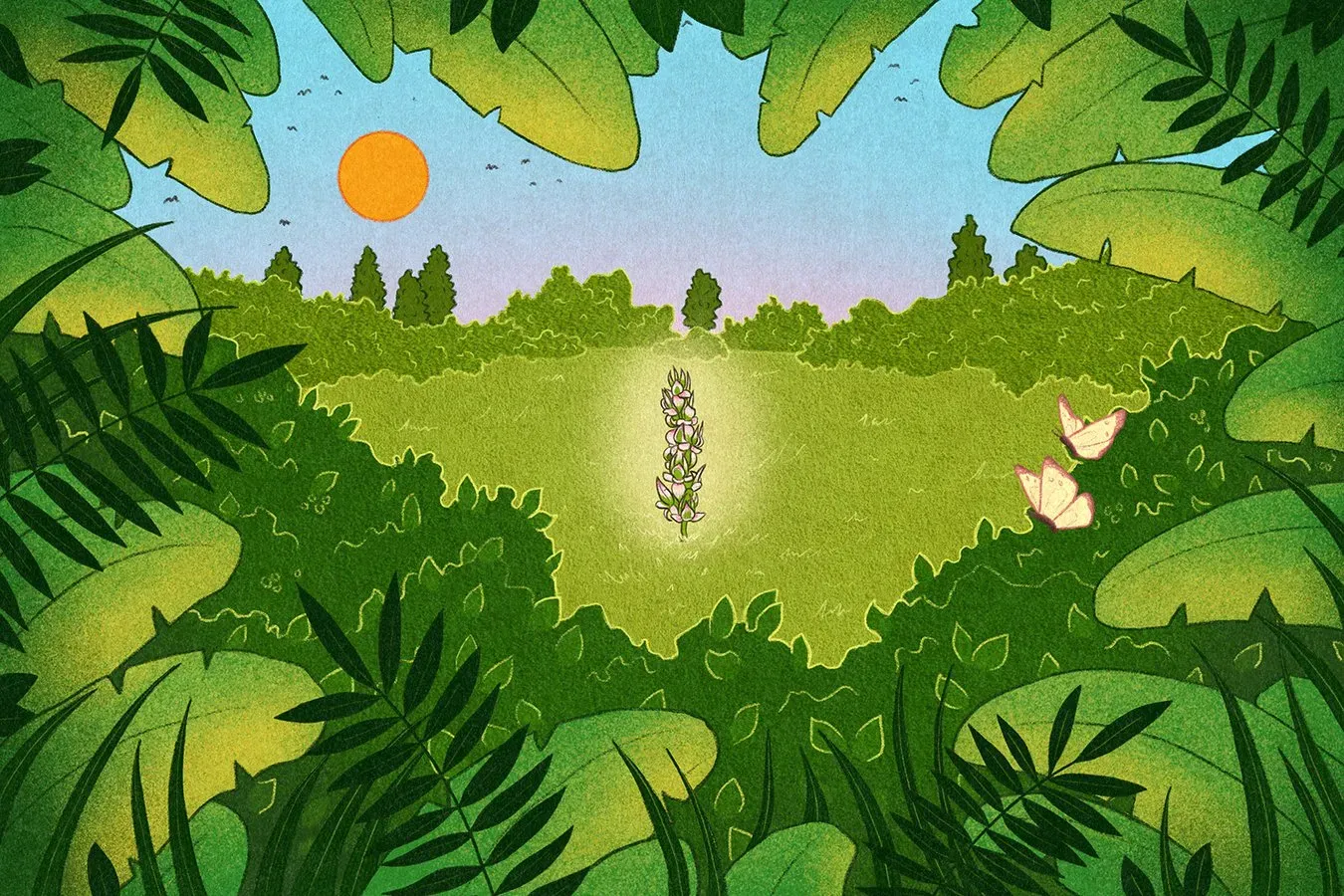
Tens of thousands of orchid species have been found on Earth, making this plant family the second most diverse in the world. Their remarkable diversity is largely due to their close relationships with pollinating insects and fungi that help boost their roots.
Each type of orchid has its own preferred partners for these relationships, which has contributed to their success but also makes them highly vulnerable to extinction if these partnerships are disrupted. This delicate balance is crucial for the survival of many orchid species.
The rediscovery of a lemon-scented mignonette leek orchid in 2020 was seen as a cause for celebration after it had not been spotted since the 1930s. However, this incident is part of a larger trend of seemingly rare moments of joy amid the rapid loss of many plants and animals worldwide.
In recent years, species like the ring-tailed glider and the Santa Marta sabrewing hummingbird have also been rediscovered after long periods of being thought extinct. These finds are often met with excitement, but evolutionary biologist Aelys Humphreys from Stockholm University takes a more nuanced view.
According to Humphreys, every time an extinct species is found again, it represents a failure on our part to protect or conserve that species in the first place. This perspective highlights the complexities of declaring a species extinct in the first place.
The scale of extinction worldwide may be underestimated due to problems with how and why we declare species extinct. Humphreys suggests that we need to adopt a more nuanced approach to this issue, one that acknowledges the difficulties of proving an absence or determining whether a species is truly extinct.
Humphreys's views on rediscovery as failure have been met with strong reactions from some in the scientific community. She believes that by re-examining our assumptions about extinction, we can gain a better understanding of the scale of this problem and work towards more effective conservation efforts.
The discovery of a species thought to be extinct can have unintended consequences for conservation efforts. While it may seem counterintuitive, rediscovering a species that was previously considered extinct can actually lead to the withdrawal of resources from conservation programs.
This phenomenon is often referred to as the Romeo error, named after Shakespeare's tragic hero who mistakenly believed Juliet was dead and took his own life. In this context, the Romeo error occurs when an expert declares a species extinct, only to later discover that it still exists.
The implications of rediscovery can be significant, particularly in terms of resource allocation. When a species is declared extinct, conservation efforts are often scaled back or redirected to other causes. However, if it's later discovered that the species was never truly extinct, those resources may no longer be available for its protection.
According to research, approximately 35% of plant species and 36% of mammal species previously considered extinct have been rediscovered. This suggests that the phenomenon is not uncommon and can have far-reaching consequences for conservation efforts.
One notable example of a rediscovered species is Psoralea cataracta, a South African plant in the pea family. Despite being declared extinct in 2008, it was later found by a junior botanist in 2020. This discovery highlights the challenges of accurately determining extinction and the importance of ongoing monitoring and research.
The difficulty in proving absence is a philosophical conundrum that has puzzled experts across various fields for centuries. In medicine, for instance, the lack of recorded side effects does not necessarily mean that none exist. Similarly, in law, the absence of evidence does not necessarily prove innocence.
In the context of species conservation, this concept is particularly relevant. Just because a species has not been seen or recorded in recent years does not necessarily mean it's extinct. The phrase "absence of evidence is not evidence of absence" underscores the complexity and nuance involved in making such determinations.
Conservation efforts often rely on repeated surveys in areas where a species is known to have existed, ideally in similar habitats it may have migrated to.
These surveys must be conducted by experts who know what they're looking for over an extended period of time to minimize the chance of missing the species due to bad luck.
The rarity and remote location of many species make them difficult to track, adding complexity to the process of declaring a species extinct.
Experts often feel hesitant to declare extinction out of fear of being wrong, which could lead to resources being diverted away from the area and efforts to continue searching for the species.
This reluctance results in an underestimation of extinction rates, as many species that are thought to be extinct may still exist but have not been officially declared so due to a lack of conclusive evidence.
A significant portion of plant species remain undescribed by science, with estimates suggesting that 75% of those awaiting description are already threatened with extinction.
The constant discovery of new plant species - around 2,000 are described scientifically every year - highlights the dynamic nature of biodiversity and underscores the challenges of tracking extinction rates.
The time lag between discovering new plant species and formally describing them can be significant, with some specimens lying undisturbed in herbaria for decades before being studied and documented.
Research has shown that this waiting period can be as long as 24 years on average, a timeframe that raises questions about the fate of newly discovered species during this interval.
For instance, Lysimachia iniki, a critically endangered plant found only on the Hawaiian island of Kauaʻi, highlights the risks associated with delayed description and potential extinction.
By the time a new species is formally described, it may already be extinct due to various factors such as habitat loss or degradation.
A more nuanced approach to declaring extinction is being proposed by some experts, one that involves assigning probabilities rather than absolute categories of "extinct" or "not extinct.
This probabilistic framework would allow for a range of likelihoods between 0 and 1, enabling scientists to convey the degree of confidence in a species' extinction status.
For example, if a species has a probability of 0.9 that it is extinct, there can be significant certainty about its fate, whereas a lower probability of 0.6 might indicate more uncertainty or ambiguity.
When new evidence emerges about an extinct species, existing probabilistic extinction models can be updated to reflect this information.
By running the model again with the new data, researchers can reassess the probability of a species' extinction status and gain a clearer picture of its fate.
For instance, if another sighting of a species is discovered five years after it was initially thought extinct, the model will take this into account when recalculating the probability of its survival.
This process allows for a more nuanced understanding of extinction probabilities, rather than relying on individual experts' opinions or manual assessments.
Some probabilistic models also consider factors such as unsuccessful searches and the extent to which potential habitats have been explored.
Detectability is another crucial factor, referring to how easily a species can be found and identified in its native habitat.
The presence of similar-looking organisms or environmental conditions that make detection difficult are all taken into account by these models.
The identification process is further refined by flagging species that haven't been recently searched for, allowing them to be added to a priority list and increasing the chances of successful rediscovery.
A more accurate estimate of extinction numbers is the ultimate goal, taking into account both species already extinct and those currently becoming extinct.
Hawaii's reputation as the plant extinction capital of the world" stems from its unique status as home to numerous endemic species found nowhere else on Earth.
The island's geography contributes to this high rate of plant extinctions, with steep cliffs and isolated habitats making it easy for species to become lost forever after a landslide or other disaster.
Invasive species and human activity also pose significant threats to Hawaii's native flora, exacerbating the problem of extinction in the region.
Facts based on reporting originally published by New Scientist.
You may republish this story, in full or in part, if you credit News Central Site and link to it (licence CC BY 4.0). Photos are not included.