Prehistoric Gold Cape Unearthed in Wales
A 3,900-year-old gold cape discovered in Wales has been hailed as one of the finest examples of prehistoric goldwork ever found. The artifact was unearthed in 1833 by stone quarry workers...
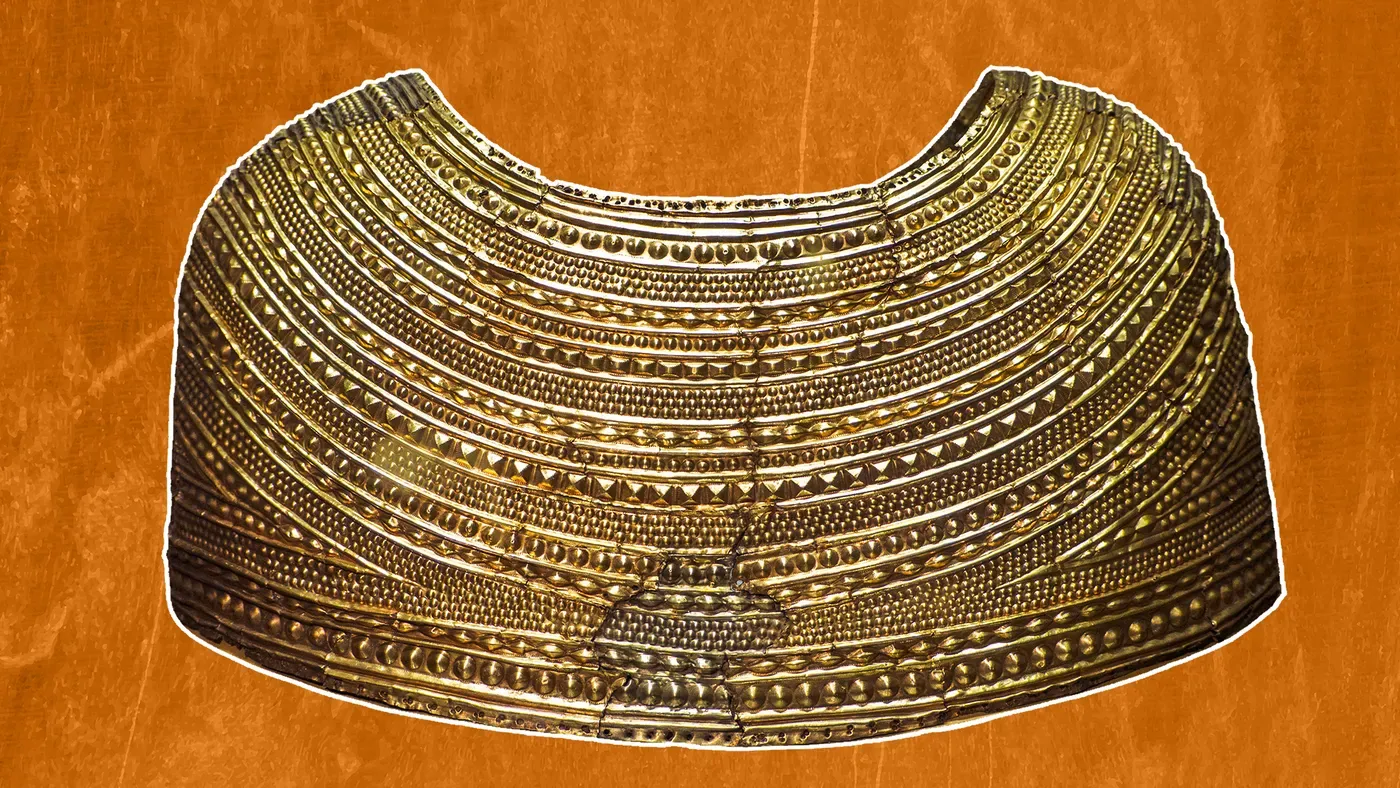
A 3,900-year-old gold cape discovered in Wales has been hailed as one of the finest examples of prehistoric goldwork ever found. The artifact was unearthed in 1833 by stone quarry workers at Goblins' Hill near the town of Mold in north-eastern Wales.
The discovery was made at a burial mound that contained a fragmented skeleton and the crushed remains of the gold cape, which had been buried for centuries. Experts believe that the gold cape dates back to Britain's Early Bronze Age, a period spanning from 2500 to 1200 B.C., during which there was a significant shift in metalworking techniques.
Artisans began crafting jewelry and weapons using gold, copper, and bronze instead of flint tools, marking a major innovation in prehistoric technology. The gold cape itself is remarkable for its unique shape and style, with experts still trying to determine the circumstances of its original use.
Theories abound about who wore the gold cape originally, with some speculating that it belonged to an ancient warrior or leader due to its impressive design. However, after reassembling the broken pieces, some experts suggested that the garment may have been worn by a woman or child due to its relatively small size.
The Mold gold cape stands at approximately 9.3 inches tall and 18.3 inches wide, weighing around 1.2 pounds. This remarkable piece of prehistoric jewelry was likely crafted from a single large gold ingot, comparable in size to a ping-pong ball.
According to the British Museum, the process of creating this cape involved beating an incredibly thin sheet of gold into shape and then adorning it with decorative elements that mimicked beads or necklaces. Adding to its gilded appearance were hundreds of amber beads discovered on the cape in the grave where it was found. These beads may have been used to enhance the visual impact of the accessory.
Perforations around the neck opening suggest that the cape once had a lining made of leather or another perishable material, which unfortunately did not survive the passage of time. This subtle detail hints at a more complex construction process than initially meets the eye.
Experts speculate that when worn, the gold cape would have severely restricted upper arm movement, suggesting it may have been reserved for ceremonial occasions and held significant religious authority. However, the reason behind its burial in a grave remains unclear.
The cape's uniqueness is underscored by Roberts' assertion to the BBC: "There is really nothing to compare it to in the whole of Europe." This lack of comparable examples makes understanding its significance and purpose all the more challenging.
The gold cape's exceptional craftsmanship has sparked intense interest among archaeologists, who are still trying to unravel its significance and purpose. Its intricate design features a series of interconnected circles and lines that appear to be a mix of symbolic and decorative elements. By examining the cape's construction, researchers hope to gain insights into the cultural and artistic practices of the people who created it.
The gold cape's unique characteristics make it a standout example of prehistoric goldwork, with its precision-cut pieces and expertly soldered joints demonstrating a high level of technical skill. The fact that this artifact is so well-preserved after 3,900 years has allowed researchers to study it in remarkable detail, providing valuable information about the materials and techniques used by ancient craftsmen.
The cape's uniqueness is underscored by its lack of comparable examples in European archaeology, making it a truly exceptional find. Its significance extends beyond its artistic value, offering a glimpse into the lives and traditions of the people who created it. This extraordinary artifact will undoubtedly continue to fascinate researchers and the public alike for years to come.
Facts based on reporting originally published by Live Science.
You may republish this story, in full or in part, if you credit News Central Site and link to it (licence CC BY 4.0). Photos are not included.