PM2.5 Particles Pose Serious Health Risk in Delhi Metropolitan Region
A short motorbike ride through India's capital city reveals the dire reality of living under some of the world's most polluted skies.
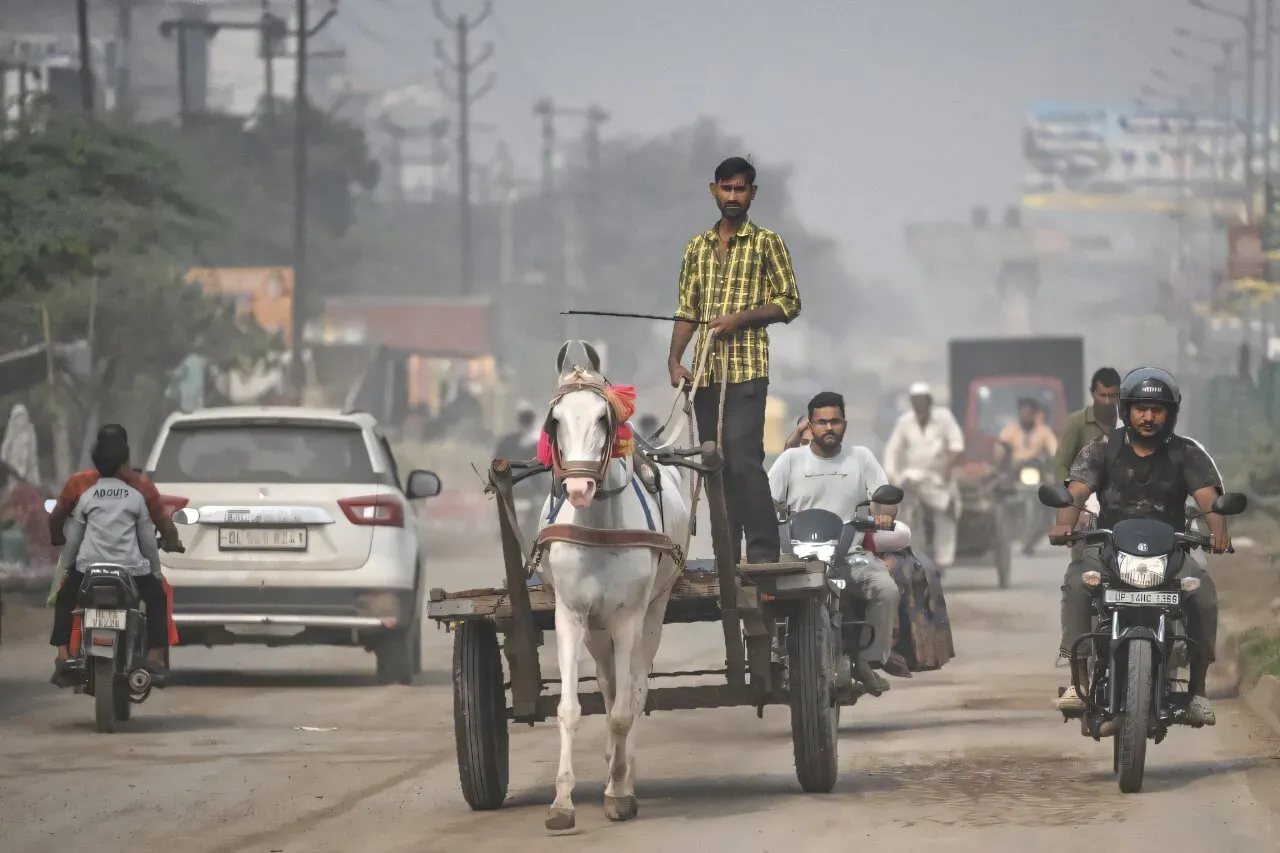
In a shocking revelation about air quality, a small motorbike ride through India's capital city reveals the dire reality of living under some of the world's most polluted skies.
Salesman Kanwar Singh, 55, is covered in toxic dust after taking a short bike ride through the urban area where he lives. He attributes his condition to the fine particles that penetrate deep into his lungs when he inhales.
According to Singh, drinking hot water and gargling helps him breathe more easily in the evening, but even this temporary relief cannot mask the long-term risks associated with living under such conditions.
Research has shown that exposure to PM2.5 particles can increase the risk of lung cancer and heart disease, making it a serious health concern for residents like Singh.
The area where Singh lives, Loni, is one of five locations in the Delhi metropolitan region that made it into an annual ranking of the world's 20 most polluted areas by Swiss monitoring firm IQAir.
The winter months bring an especially harsh reality to residents of Loni, where pollution levels reach alarming heights due to a combination of factors.
Festivals like Diwali, which celebrate with fireworks, further exacerbate the problem, pushing toxic air readings to unprecedented levels in some areas - a staggering 58 times above what the World Health Organization recommends as safe for daily exposure.
Many residents, such as those in Loni, lack access to basic protective gear like masks, and instead rely on makeshift solutions like scarves or handkerchiefs to shield themselves from the choking dust.
The economic realities of living in a densely populated industrial hub like Loni mean that few residents can afford homes designed to withstand pollution or invest in expensive air purifiers.
According to recent census figures, over 700,000 people call Loni home, and it's no wonder they struggle with health issues given the constant barrage of pollutants - from factories burning wood and coal to poor road conditions and vehicle emissions.
The constant haze in Loni has taken a toll on Devi's mental health, particularly during mornings when pollution hangs heavy over the area before sunlight disperses some of the haze.
Devi's feelings of unease and lethargy are mirrored by many residents who struggle to cope with the air pollution. The World Health Organization lists air pollution as one of the greatest environmental risks to child health worldwide.
Air pollution is a major public health concern in Delhi, where it was linked to an estimated 17,188 deaths in 2023, accounting for nearly 15% of total fatalities. This makes air pollution the city's biggest individual risk factor according to a recent analysis by the Centre for Research on Energy and Clean Air.
Devi's grandchildren often fall ill when pollution levels surge, with doctors attributing their infections to airborne pollutants rather than actual illnesses. Authorities have attempted to mitigate road dust through water-sprinkler trucks, but these measures are insufficient in tackling finer PM2.5 pollution from traffic and industry emissions.
Residents of this city report that the brief respite from dust brought by water-sprinkler trucks is short-lived, as traffic and construction quickly churn up more particles.
Shopkeeper Inamul Khan, who has to constantly wash his belongings due to the dusty conditions, expressed frustration with the lack of effective measures to tackle PM2.5 pollution in the area. He observed a sprinkler truck spraying water on an adjacent road under construction, but questioned whether such efforts can make a significant difference.
For those like Singh, who suffers from respiratory problems and relies on face masks and medication just to survive, the dust-filled days are particularly challenging, often forcing them to stay indoors and miss out on earning opportunities.
Facts based on reporting originally published by Phys.org.
You may republish this story, in full or in part, if you credit News Central Site and link to it (licence CC BY 4.0). Photos are not included.