OpenAI Publishes National Community Compact Amid Data Center Opposition
The compact outlines OpenAI's commitment to paying for electricity and grid infrastructure at its data center campuses, including financial guarantees before major spending begins.
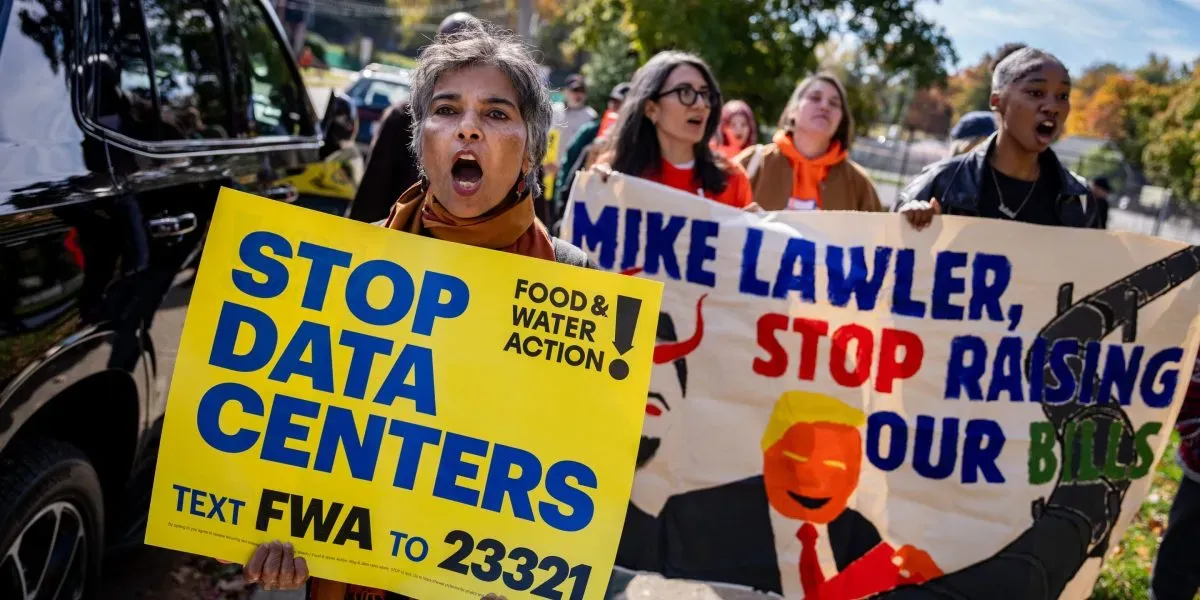
In a surprise move, OpenAI has published a National Community Compact, just two days after voters across various towns appeared to reject data centers in their communities. The compact outlines the company's commitment to paying for the electricity and grid infrastructure of its data center campuses.
This pledge is not new, according to OpenAI, which claims that it has been making similar commitments in its existing data center campuses for months. However, this is the first time the company has put these commitments in writing. The compact also includes a provision requiring OpenAI to post financial guarantees before major spending begins on any project.
The concept of what OpenAI is seeking is known as social license, a term used by mining and energy companies. It refers to a Community Partnership Agreement (CPA) that requires ongoing consent from the local community to operate. This type of agreement goes beyond zoning board approvals or tax abatements, instead focusing on earning the trust and confidence of nearby residents.
To earn this social license, companies must demonstrate that their projects benefit or at least do not harm the surrounding community. If they fail to meet these expectations, permits may be stalled, lawsuits can arise, and local officials may find reasons to reject the project altogether.
Voters in at least 25 localities across the country have passed measures aimed at limiting data center development, sending a clear message that while they may not want to completely halt the buildout of AI infrastructure, they do want stricter regulations.
These measures were put to a vote in roughly 40 localities nationwide, with about 28 passing by Wednesday morning. The majority of these successful measures came from Ohio, where voters in at least 18 municipalities have opposed data center development.
The scale of opposition is significant, particularly given the size of some of the proposed projects. In Sunbury, Ohio, for example, a ban on data centers over 25 megawatts was approved by an overwhelming majority, with 79% of voters supporting the measure. This came after Amazon announced plans to build a $2 billion campus in the area.
Similarly, in Trenton, Ohio, where Amazon Web Services is already building a large data center, voters passed a ban on facilities over 250 megawatts. In Hubbard, Ohio, a ban was approved with a slightly narrower margin, but the mayor has since indicated that a proposed 300-megawatt project is unlikely to move forward.
While some of these measures were framed as outright bans, others focused on setting limits or requiring certain safeguards. For instance, in Perry, Ohio, voters required hyperscale developers seeking tax breaks to post financial guarantees and meet noise limits, the same conditions that OpenAI recently agreed to abide by.
In addition to these specific requirements, some localities are taking a more general approach. In Grove City, Ohio, for example, voters passed a measure requiring public approval for any project over 50 acres, 20 megawatts, or 500,000 gallons of water per day, effectively giving residents a say in whether large-scale data centers can be built in their area.
As the midterm elections revealed, public opinion has shifted significantly against large-scale data centers, particularly those fueled by electricity. A significant majority of Americans polled oppose such projects when they are proposed for their neighborhoods, with rising power prices being a major concern.
The trend is not limited to one party or region. Politicians from both sides have taken notice of the growing discontent and are responding accordingly. For instance, some have called for a moratorium on new construction until legislative action can be taken to address the issue.
Tax breaks have long been a key incentive offered by corporations to persuade local governments to greenlight large-scale projects. However, these deals often prove costly for taxpayers in the long run. The examples of Amazon's failed HQ2 bid in Newark and New York City serve as cautionary tales about the limitations of tax incentives.
The AI buildout has followed a similar pattern, with data centers being lured by tax breaks and promises of economic growth. However, this strategy is no longer viable, as evidenced by Tuesday's election results. Instead, companies like OpenAI are now offering to pay for the costs associated with their projects.
Hyperscalers are rethinking their approach to community engagement in light of recent developments. Microsoft has introduced a new initiative, dubbed "Community-First AI Infrastructure," which promises to cover various costs associated with its operations.
Under this plan, Microsoft commits to paying for electricity, property taxes, and water usage without seeking tax breaks or exemptions. Additionally, the company pledges to provide free AI training in local schools and community colleges. This shift from previous practices is notable, as it represents a significant departure from companies expecting towns to absorb these costs.
The trend of repricing has become more pronounced, with multiple industry players adopting similar strategies. For instance, OpenAI announced that its Stargate campuses would also adopt community plans, mirroring Microsoft's initiative. Furthermore, several major tech firms have signed a non-binding White House pledge to ensure their facilities' power needs are met through in-house generation or purchase.
The relocation of computing projects from towns that rejected the industry is already underway. Applied Digital has begun constructing a data center near Harwood, which voted in favor of hosting the facility. Meanwhile, Sunbury and Hubbard will likely see alternative locations emerge as demand for computing power continues to shift.
The midterm elections may have sparked concerns about the rapid development of advanced artificial intelligence (AI), but it appears that this has not halted the momentum behind AI projects. Instead, voters seem to be reevaluating how the benefits of these developments are being distributed within their communities.
As a result, companies like OpenAI are already reassessing their strategies and making promises to invest in local communities and support infrastructure development. This shift reflects growing recognition that the costs and benefits of AI advancements must be more evenly balanced for them to be widely accepted. The future of AI development is likely to be shaped by this new focus on equitable distribution.
Facts based on reporting originally published by Fortune.
You may republish this story, in full or in part, if you credit News Central Site and link to it (licence CC BY 4.0). Photos are not included.