Amazon's stock price falls after disappointing earnings report
Amazon reported third-quarter revenue of $201.9 billion, slightly below expectations, with profit falling short at $20.7 billion.
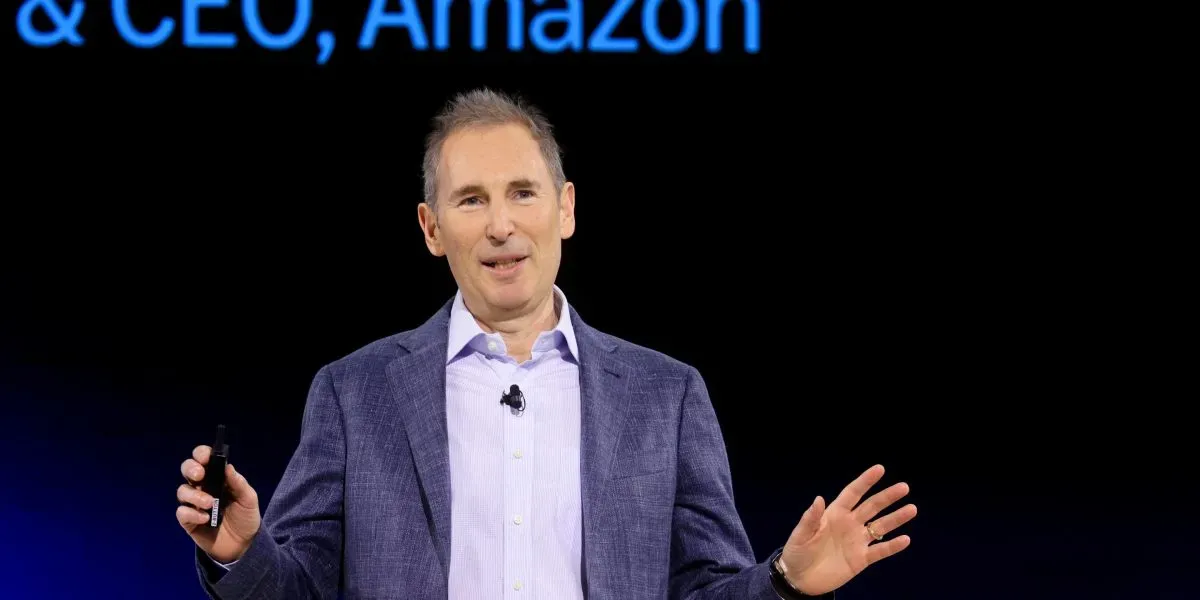
Amazon's stock price took a hit on Thursday as investors grew concerned about the e-commerce giant's massive spending on artificial intelligence (AI) data centers and weaker advertising performance.
The company reported third-quarter revenue of $201.9 billion, slightly below expectations, and its profit fell short at $20.7 billion. This decline was attributed to gains made a year ago from Amazon's investment in AI company Anthropic.
Despite this, Amazon Web Services (AWS), the cloud computing unit, continued to thrive, with sales rising 39.3% to $45.98 billion, exceeding Wall Street targets. The strong demand for AWS services, particularly those tied to AI, remains a key driver of growth.
However, Amazon's relentless spending on AI infrastructure is starting to raise eyebrows among investors. The company has reaffirmed its expectations that capital expenditures will reach about $220 billion in 2026, with the majority allocated towards AI data centers.
The performance of non-cloud businesses, including advertising and holiday-quarter operating profit, is also under scrutiny, having missed analyst expectations. Amazon's heavy spending on AI infrastructure has pushed its free cash flow into negative territory, a stark contrast to last year when it was $14.8 billion positive.
Shares of Amazon initially plummeted by 5% in after-hours trading following the release of its latest earnings report.
The tech giant's financials come on the heels of similar reports from Microsoft and Alphabet, the parent company of Google, which also showcased robust growth in their cloud units and substantial investments in AI infrastructure. This trend suggests that the demand for artificial intelligence compute remains extremely high, prompting companies to continue pouring significant amounts of money into this area.
As one of the largest spenders on data center construction, Amazon has been shifting its focus towards building out AI hubs. The company's capital expenditures are expected to contribute significantly to a projected $700 billion total spent by hyperscalers like Amazon, Microsoft, Alphabet, and Meta Platforms in 2026.
Amazon's latest financial projections indicate that it anticipates sales ranging from $240 billion to $247 billion for the current quarter, with operating income predicted to fall between $28.5 billion and $33.5 billion. This lower-than-expected operating income range has raised some eyebrows among analysts who had initially forecasted higher numbers.
The timing of Amazon's annual Prime Day event this year may also have had a bearing on its third-quarter results, as it was held in the second quarter instead of its usual slot in the third quarter.
Amazon's cloud computing unit is facing increased pressure to demonstrate strong growth rates as a result of the AI boom, which has put the spotlight on its ability to keep pace with its peers.
The company's reliance on Amazon Web Services (AWS) for AI compute is evident in the prospectus filed by Anthropic, a lab that plans to spend at least $110 billion on AWS services over the next decade. This commitment is part of Anthropic's broader plan to invest at least $389.9 billion in cloud computing with major players like Microsoft and Alphabet.
Amazon has invested heavily in AI research through its investments in companies like Anthropic, committing around $18 billion to date, with a potential for an additional $15 billion. However, the company's growth rates have slowed down due to its early mover advantage in cloud computing.
As Amazon enters its critical holiday quarter, which accounts for most of its yearly revenue, it is gearing up for e-commerce demand peaks by hiring 300,000 workers. The company has recently introduced a range of hardware products, including Alexa tablets and the Bee AI wearable, as part of its efforts to boost sales.
Despite this hiring spree, Amazon is also undertaking significant job cuts in other areas, with around 250 positions eliminated in its devices and services division this week, following earlier layoffs in retail. The company had previously shed about 30,000 workers between late 2025 and early this year.
Amazon has begun to shift its focus towards a more strategic approach to artificial intelligence (AI). This change in tack is evident in the company's decision to block Meta's AI assistant, Muse, from accessing its online store in September. By doing so, Amazon aims to protect its core business model, which relies heavily on human interaction and advertising revenue.
In a bid to foster a more outcome-driven culture within its software engineering team, Amazon has issued an internal memo emphasizing the importance of embracing AI while prioritizing tangible results. The company is urging its engineers to focus on developing solutions that benefit from current AI tooling rather than simply generating code or consuming tokens. This approach reflects a growing recognition within the industry that AI should be leveraged as a means to drive business outcomes, not merely as an end in itself.
By encouraging engineers to think critically about where AI can and cannot add value, Amazon is seeking to cultivate a more informed and adaptable workforce. This shift in mindset should ultimately help the company stay ahead of the curve in an increasingly competitive market, where innovation and strategic decision-making will be key drivers of success.
Facts based on reporting originally published by Fortune.
You may republish this story, in full or in part, if you credit News Central Site and link to it (licence CC BY 4.0). Photos are not included.