Nigeria's Northern Region Witnesses Protests Against President Tinubu
Protests against Nigerian President Bola Tinubu have led to an intense crackdown on dissent by authorities.
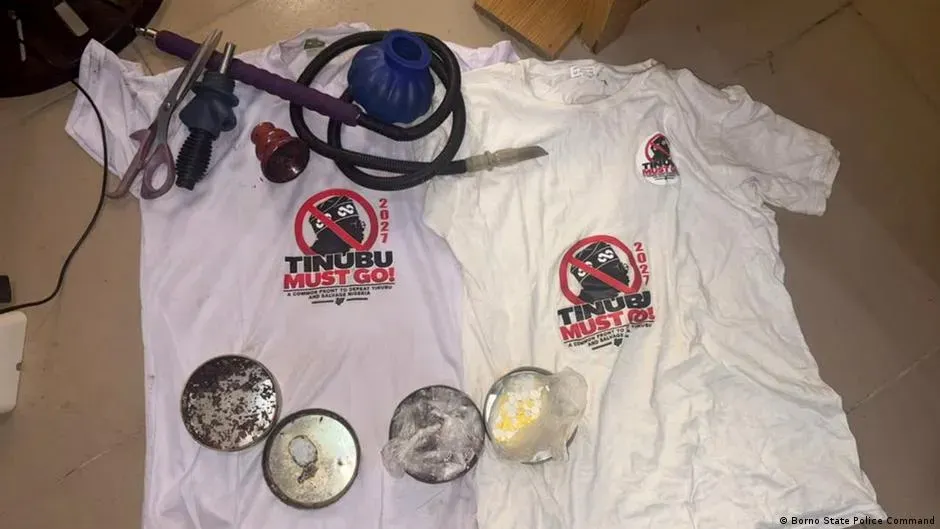
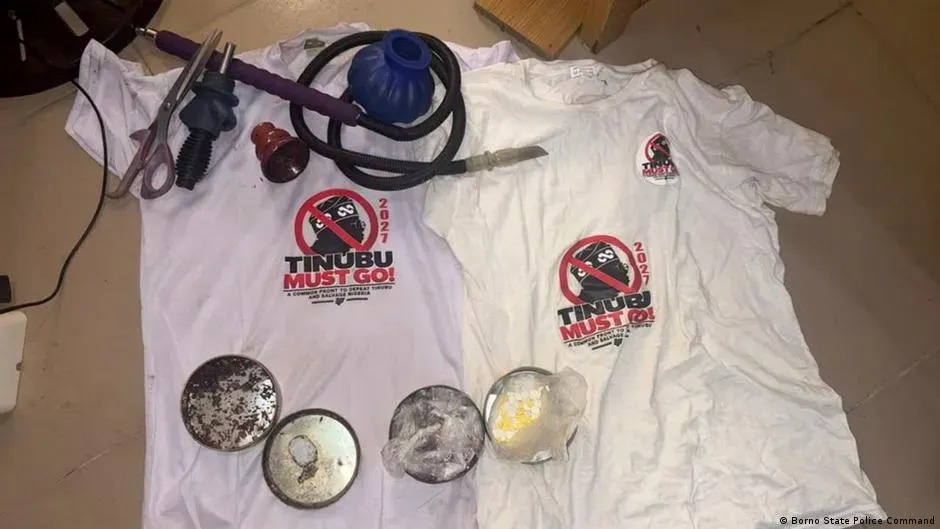
Nigeria's northern region has witnessed a surge in protests against President Bola Tinubu, with activists taking to the streets and wearing T-shirts emblazoned with the slogan "Tinubu Must Go! The move has sparked an intense crackdown on dissent by authorities.
In September, police in the northeastern state of Borno arrested five men aged 21-44 for allegedly producing and distributing these shirts. Authorities claimed that the group had conspired to disrupt public order, charging them with criminal conspiracy, inciting disturbance, and thuggery. The arrests drew criticism from human rights groups and activists.
The police later attempted to justify their actions by stating that the men were detained during a routine patrol and found with illicit substances and other items. However, this explanation has failed to quell concerns about the limits of free expression in Nigeria's democracy. Many are questioning whether citizens can challenge those in power without fear of persecution.
The arrest incident was followed by another concerning development in Kano state, where police blocked access to a meeting venue for members of the same movement. Authorities cited public safety concerns as the reason for this action, sparking further debate about the balance between security measures and political dissent.
The actions taken by authorities against citizens wearing Tinubu Must Go! T-shirts have sparked outrage and debate about the limits of political dissent in Nigeria.
According to Hassana Maina, a lawyer and activist, the police action was a clear attempt to suppress dissenting voices and silence critics of the government. Maina described the move as despicable and pointed out that it is not an effective solution to address security concerns, but rather creates a system that thrives on fascism.
The men arrested for wearing the T-shirts were reportedly supporters of the opposition African Democratic Congress (ADC), according to Amnesty International. This incident highlights a worrying trend in Nigeria where citizens are persecuted for expressing views critical of the government.
This is not an isolated case; similar incidents have occurred in the past, including the disappearance of prominent social media critic Abubakar Idris, known as Dadiyata, who was seized from his residence in August 2019.
Protesters across northern Nigeria have been using social media to mobilize against the current administration of President Tinubu.
Sharif Ahmed's arrest was a stark example of how dissent is being met in the region. She was detained after sharing footage that highlighted the struggles faced by displaced women and the impact of banditry on local communities.
The economic situation in Nigeria is deteriorating, with food prices at their highest level in over 20 years due to high inflation and rising transportation costs.
Amnesty International's executive director in Nigeria, Isa Sanusi, has expressed concern over the government's clampdown on people wearing Tinubu Must Go!" T-shirts.
Sanusi argues that just wearing a T-shirt expressing support or opposition to a political party or candidate is not a reason for arrest and detention. The actions of police, he claims, constitute an attack on democracy itself. This repression of freedom of association and expression is part of a disturbing pattern.
The clampdown has significant implications for the upcoming general election in Nigeria. Sanusi believes that elections are essential to democracy, but they are not the only measure of its health. The state of democracy should also be evaluated based on the protection and promotion of individual rights.
Sanusi's assessment of the current situation is dire, with people being attacked and detained solely for their political views or opinions. Opposition politicians are facing restrictions on holding gatherings, and hotels have been threatened not to allow opposition groups to use their facilities.
The management of Arewa House in Kaduna has withdrawn its approval for a book presentation deemed critical of the government, citing operational issues.
This move highlights the increasing restrictions on freedom of expression and dissenting voices in Nigeria, where opposition politicians are facing limitations on holding gatherings and hotels have been warned not to allow opposition groups to use their facilities.
Maina, a lawyer and activist, argues that democracy cannot thrive without strong opposition, emphasizing that standing up against policies deemed detrimental to national development is a key aspect of patriotism.
Facts based on reporting originally published by DW English.
You may republish this story, in full or in part, if you credit News Central Site and link to it (licence CC BY 4.0). Photos are not included.