Colombian court orders protection of removed historical artifacts
A Colombian court has intervened in a controversy over the removal of historical artifacts from Bogota's National Museum, ordering the government to protect more than 30 exhibits taken down last week.
A Colombian court has intervened in a controversy over the removal of historical artifacts from Bogota's National Museum, ordering the government to protect more than 30 exhibits taken down last week.
The move is part of an effort by Colombia's conservative administration to revise how the country's history is presented in museums and schools. Critics argue that this initiative targets leftist movements and sexual minorities. The removed artifacts include items related to social movements and guerrilla fighters, sparking concerns about censorship and historical erasure.
Bogota judge Cesar Enrique Osorio issued a ruling Monday requiring officials to safeguard the artifacts while determining whether they should be reinstated for public display. Among the exhibits is a copy of Colombia's first LGBTQ+ magazine and a poster featuring a former guerrilla leader who later ran for president.
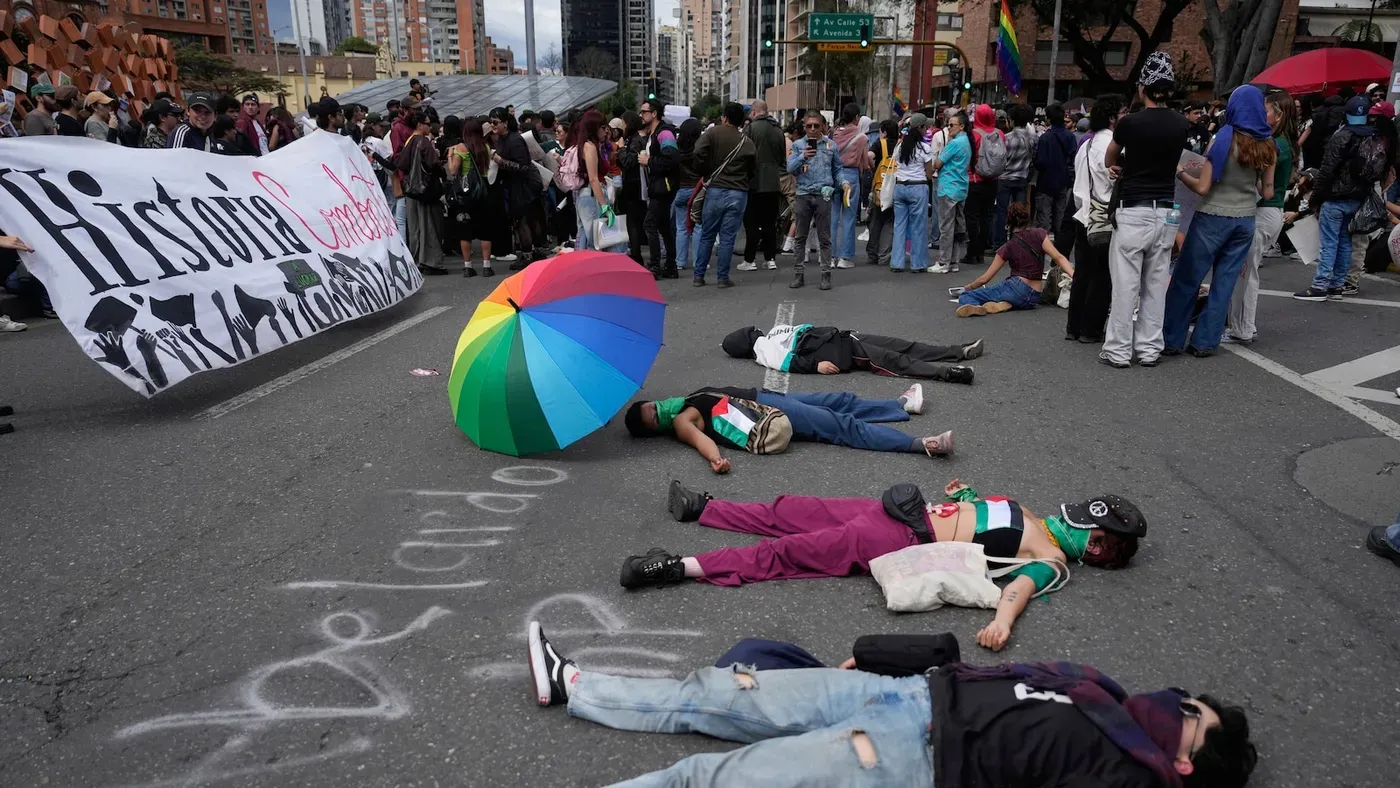
The judge also prohibited further removals from the museum, citing potential threats to Colombians' rights to free expression and historical memory. The decision comes as protests continue against the government's handling of cultural heritage and representation in public institutions.
The controversy surrounding the national museum's exhibit halls continues to escalate as the government faces mounting pressure from various groups.
Feminist organizations, left-wing activists, and members of Bogota's LGBTQ+ community have accused the government of attempting to erase their constituencies from Colombia's historical record.
In a speech delivered at the Ministry of Culture on Thursday, President Abelardo de la Espriella called for the protection of the nation's heritage. He described the current cultural landscape as being under threat from "wokeism" and "moral relativism.
According to the president, these ideologies have permeated all aspects of society, particularly in the cultural and academic spheres. He emphasized that it is the duty of the state to confront this perceived threat and uphold principles valued by Colombians.
The controversy has been fueled by the removal of several items from the museum's exhibit halls, including a pen used to sign the 2016 peace deal between Colombia's government and the FARC rebels.
The controversy surrounding the removal of historical artifacts from Colombia's museum exhibit halls has taken a new turn with the revelation that a campaign poster of Carlos Pizarro, a former leader of the M-19 guerrilla movement, was also removed.
Pizarro's daughter, María José Pizarro, has expressed her outrage over the sudden modification of the exhibits without any technical criteria. She believes that her father is a symbol of rebellion against tyranny and should be remembered as such. This sentiment reflects the ongoing debate in Colombia about how to balance the country's history with its current social and cultural values.
The judge's order for protection of historical artifacts has been seen as a response to the escalating controversy, which has also involved protests over censorship and persecution of sexual minorities. The removal of these items from public display has sparked heated discussions about what constitutes promoting terrorism" and how Colombia's cultural entities should approach its complex history.
Facts based on reporting originally published by ABC News International.
You may republish this story, in full or in part, if you credit News Central Site and link to it (licence CC BY 4.0). Photos are not included.