Apple stopped selling its miniature iPhone model in 2023
The smartphone market has shifted away from compact handsets as major players exit the small phone trend, leaving smaller companies to try and fill the void.
The smartphone market has undergone a significant shift in recent years, with many manufacturers abandoning the small phone trend that once dominated the industry. Gone are the days of compact handsets like the iPhone Mini and Sony's Xperia 5 series, which were popular just a few years ago but ultimately failed to gain traction due to poor sales.
In 2023, Apple stopped selling its miniature iPhone model, while Asus paused its mobile division to focus on more promising areas such as AI, robotics, and smart glasses. The departure of these major players from the small phone market has left a void that smaller companies are now trying to fill. Unihertz, for instance, has been producing keyboard-equipped tiny phones.
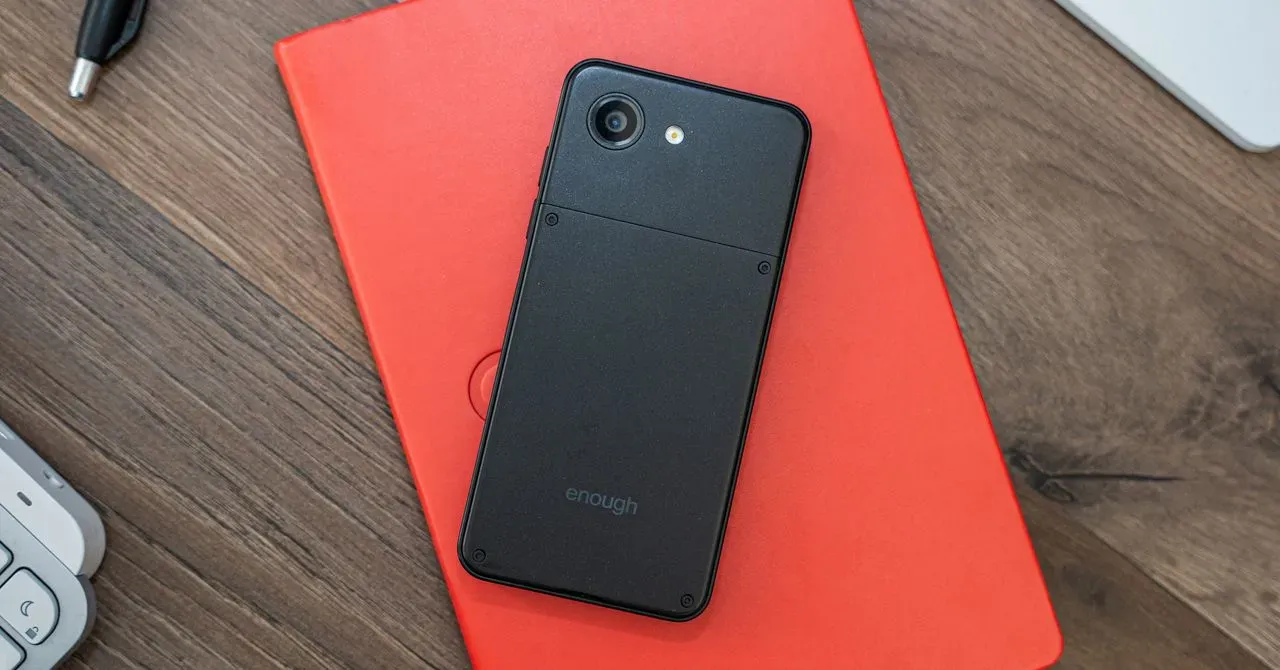
A new player is entering the scene with the launch of the Enough Phone on Kickstarter, which promises to bring back the small phone experience in a more unique way. When purchased, the device can run Android 17 and provide access to users' favorite apps on its compact screen. This approach sets it apart from other devices that focus on digital well-being and offer a more minimalist mobile experience.
The Enough Phone is not alone in its attempt to revive the small phone trend; other companies have also released similar devices, such as the Light Phone III, Minimal Phone, or Mudita Kompakt. These phones often resemble "dumb phones but still allow users to access some digital functions. The Communicator, a 4-inch Android phone with a keyboard from Clicks, is another example of this trend.
Enough Phone is not the only option for those seeking a simpler phone experience. Another alternative is the Sleke Android fork called OdysseyOS, which offers a software experience reminiscent of dumb phones.
This operating system allows users to access essential apps such as Uber and Google Authenticator, but restricts access to social media, games, browsers, and other distracting features. The handsets running this software are expected to ship in May 2027.
The trio behind Enough Phone is also involved with Sleke, a company founded in 2024 that refurbishes Google Pixel smartphones for sale on the market. These phones run OdysseyOS, a restricted operating system designed to minimize screen time.
Austin Boer and Brennan Jordan manage Sleke, while William Stults helps run Dumbwireless, an ecommerce platform that sells refurbished dumb phones alongside wireless plans from Gigs. This makes switching to a simpler phone experience as seamless as possible.
Stults has tried various dumb phones on the market and found Sleke's OdysseyOS to be the most user-friendly option, with minimal friction in accessing necessary apps such as Uber and Spotify.
The Enough Phone project is not a radical departure from the existing market, but rather an attempt to revive a product that has largely fallen by the wayside in recent years. The team behind it acknowledges that they don't have any direct experience in the smartphone or feature phone industry.
Despite this lack of expertise, the Enough Phone's design and features suggest a thoughtful approach to creating a device that meets modern needs while avoiding unnecessary complexity. For instance, the 3-inch Android handset is built with a polycarbonate material that can be easily disassembled, allowing users to replace the battery in compliance with upcoming European Union regulations.
The phone itself has a chunky battery that provides all-day" battery life, thanks to its thickness of just over 12 millimeters. This is made possible by a midrange MediaTek Dimensity 7500 processor, which is paired with 8 GB of RAM and 128 GB of internal storage. The hybrid SIM slot allows users to expand storage via microSD, while eSIM support and 5G connectivity are also on offer.
Internal space was limited, according to the team, so they made a deliberate decision not to include a headphone jack in order to keep the price under $600.
The phone boasts an impressive array of features despite its compact size, including a fingerprint sensor embedded in the side-mounted power button and support for contactless payments via NFC.
Sleek is also working to get its device certified on AT&T, in addition to T-Mobile, which means users will have access to a wider range of networks.
One of the key selling points of this phone is its small size, making it an attractive option for those who want a midrange Android device without the bulk that often comes with it.
However, there are still some unknowns surrounding the phone's capabilities, including camera quality and battery life, which will be essential to its overall performance.
Enough Phone's Sleke device is designed to cater to those seeking more compact phones, which are currently scarce in the market.
The company has incorporated several features into the Sleke, including a Perplexity-powered search bar for text-based answers and the ability to scan QR codes.
This indicates that the phone will be capable of handling everyday tasks efficiently.
Despite the major smartphone manufacturers abandoning smaller phone designs, Enough Phone is confident that there is still a market demand for such devices.
They point to the dedicated following of iPhone Mini users as evidence of this demand, with its enthusiasts seeking a more compact alternative that has yet to be adequately met since the Mini's release.
This niche market appears to be the target audience for the Sleke device.
Facts based on reporting originally published by Wired.
You may republish this story, in full or in part, if you credit News Central Site and link to it (licence CC BY 4.0). Photos are not included.