Neanderthal Technology Assumptions Challenged by New Discovery in Spain
A team of researchers has completed a systematic review of nearly 600 wooden objects found at the Abric Romaní site near Barcelona, challenging prevailing views on Neanderthals' technological life.
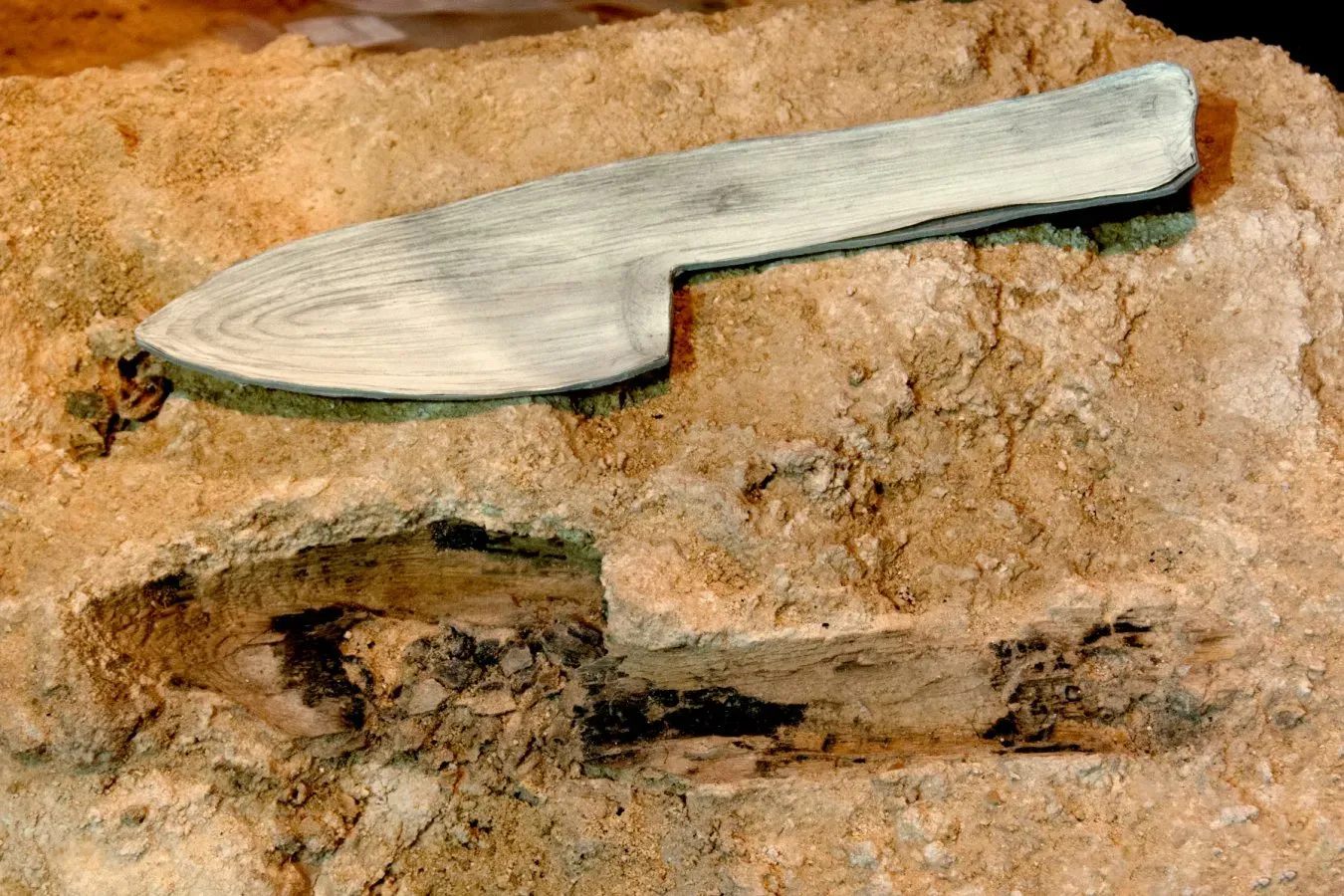
A major archaeological discovery in Spain has turned on its head long-held assumptions about Neanderthal technology. A team of researchers has completed a systematic review of nearly 600 wooden objects found at the Abric Romaní site near Barcelona.
The finds include tools, weapons, building materials and domestic items that date back between 40,000 and 62,000 years. This challenges the prevailing view that Neanderthals' technological life was primarily based on stone, according to Josep Vallverdú of the Catalan Institute of Human Paleoecology and Social Evolution in Spain.
The objects were excavated at the rock shelter site over several generations since the 1980s, providing an unprecedented glimpse into everyday Neanderthal life.
The excavation at the rock shelter site has uncovered a wealth of information about Neanderthal woodworking skills. One key discovery is the presence of timber imprints in travertine, a type of rock that forms when water rich in calcium carbonate precipitates out.
These imprints preserve the patterns of the wood grain even though the original timber has long since rotted away. Alongside these finds, charred artefacts and actual preserved timber have also been discovered at the site.
The wooden artefacts discovered at Abric Romaní provide a unique insight into the daily lives of Neanderthals in Europe. Alongside charred remains and preserved timber, these finds suggest that wood played a significant role in their technological behaviours.
A mysterious wooden tripod has been unearthed alongside timber trays similar to those used by Indigenous Australians to carry food and water. Some of the wooden objects appear to be structural poles, indicating a level of sophistication in Neanderthal construction techniques.
The team's findings have been particularly surprising due to the discovery of a "club-like" object with no precedent from other palaeolithic sites. Characterised by its narrow handle and enlarged asymmetrical head, this object suggests a complex and deliberate design.
Preliminary analysis indicates that wood was an integral part of Neanderthals' daily lives, used for various activities including hunting, domestic tasks, containers, and organisational purposes. The site's archaeological levels spanning thousands of years demonstrate the enduring importance of woodworking in their culture.
The discovery of numerous wooden artefacts in Neanderthal Europe has significantly expanded our understanding of their technological repertoire. The presence of these organic materials challenges the traditional notion of a strictly stone-age culture, revealing a more nuanced and complex picture of daily life for Neanderthals.
According to Mariana Nabais at the Catalan Institute, wooden objects were likely central to Neanderthal existence, but their fragile nature means they rarely survive in the archaeological record. Naoki Morimoto from Kyoto University agrees that these finds are remarkable, shedding new light on a previously hidden aspect of Neanderthal society.
Facts based on reporting originally published by New Scientist.
You may republish this story, in full or in part, if you credit News Central Site and link to it (licence CC BY 4.0). Photos are not included.