NATO Exercises Test Drones' Ability to Operate Independently in Electronic Warfare Environments
NATO has been conducting exercises to assess the capabilities of various unmanned aerial vehicles (UAVs) in electronic warfare environments, with a focus on their ability to operate independently and navigate targets without GPS or external guidance systems.
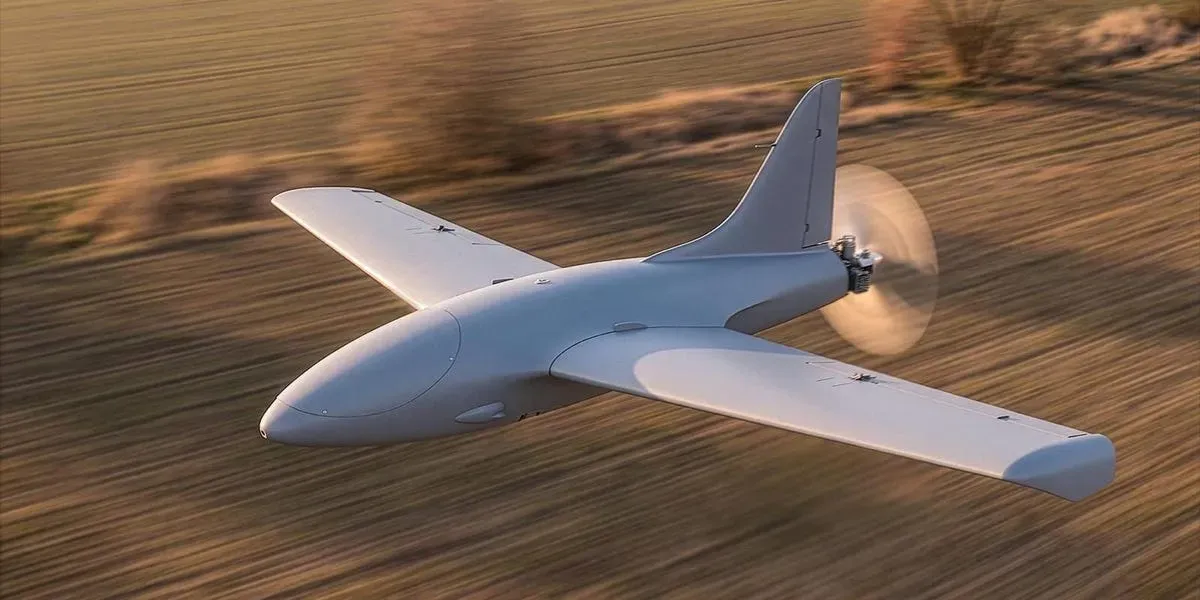
Reports from the Ukrainian conflict have highlighted the importance of unmanned aerial vehicles (UAVs) being able to operate independently in electronic warfare environments.
Electronic warfare is a significant factor on the battlefield in Ukraine, and Western militaries are beginning to acknowledge that long-range strike systems need to be capable of functioning even when disconnected from their operators. This means they must be able to navigate and engage targets without relying on GPS or other external guidance systems.
NATO has been conducting a series of exercises to assess the capabilities of various UAVs, including those developed by Ukrainian and Western firms. One recent challenge focused on the ability of these drones to swarm an airfield and prevent enemy aircraft from operating there.
Czech defense firm LPP Holding emerged as a winner in this challenge due to its MTS-40 drone, which has been used extensively by Ukraine in strikes against targets inside Russia over the past 18 months.
The battlefield in Ukraine has presented a stark reality for military planners: reliance on strike weapons that require continuous communication links can be a liability when operating in areas where such access is denied. This limitation was highlighted by Martina Tauberová, head of government and strategic relations at LPP Holding, a Czech defense firm that has supplied drones to Ukraine.
In response to this challenge, NATO has made the ability to operate independently of communication links a key requirement for its recent Innovation Challenge. The contest sought cost-effective systems resistant to electronic warfare that could be used in strikes against enemy airfields. This approach is part of a broader effort by Western defense firms to develop low-cost, long-range weapons.
The ultimate goal of these solutions would be to enable the persistent denial of enemy airfield operations. French Navy Commander Bastien Salasca, project manager for NATO's Innovation Challenges, emphasized that this initiative is not about preparing the alliance for war, but rather about modernizing its capabilities and staying ahead of emerging threats.
The NATO Innovation Challenges initiative continues to yield innovative solutions for modern warfare. Recent conflicts have highlighted the importance of complex networks and infrastructure in determining military power, rather than relying solely on individual platforms. This insight is driving the alliance's focus on developing capabilities that can be used on a mass scale.
Three finalists emerged from a competitive pool in early September, each showcasing cutting-edge technology. LPP took top honors with its drone design, while Polish aerospace startup Supercluster and an unnamed Ukrainian company followed closely behind with innovative autonomy systems for uncrewed aircraft.
Ukraine's war has underscored the need for cheap weapons that can be launched systematically against targets. Drone swarms have proven particularly effective in this regard, capable of pursuing multiple objectives such as aircraft, runways, buildings, and fueling stations simultaneously.
In contrast to expensive missiles like the multimillion-dollar Tomahawk, cheap drone swarms may offer a more effective means of overwhelming an enemy's air defenses. This approach has already shown promise in combat, albeit with limited public disclosure by LPP regarding its products' performance in Ukraine.
LPP is seeking validation from NATO through its participation in the Innovation Challenge, where it aims to demonstrate the effectiveness of its drones in operating offline.
The company's next step will be testing its drone alongside other finalists in Eastern Europe, which could potentially lead to deals with NATO militaries and increased manufacturing capacity. This would mark a significant milestone for LPP, allowing it to scale up production and meet growing demand.
LPP is also developing a turbojet-powered cruise missile, the "MTS Narwhal", designed to operate in GPS-denied environments like its drone counterpart. The company is currently testing a prototype and hopes to see the missile make its combat debut later this year.
Facts based on reporting originally published by Business Insider.
You may republish this story, in full or in part, if you credit News Central Site and link to it (licence CC BY 4.0). Photos are not included.