Medieval Public Health System Found to Have Spread Disease in Trondheim
Excavations at two ancient cemeteries have provided insights into how people lived and died during medieval times, revealing significant differences in diet and health between residents of different social backgrounds.
A medieval public health system once in place in Trondheim has been found to have inadvertently spread disease among its population.
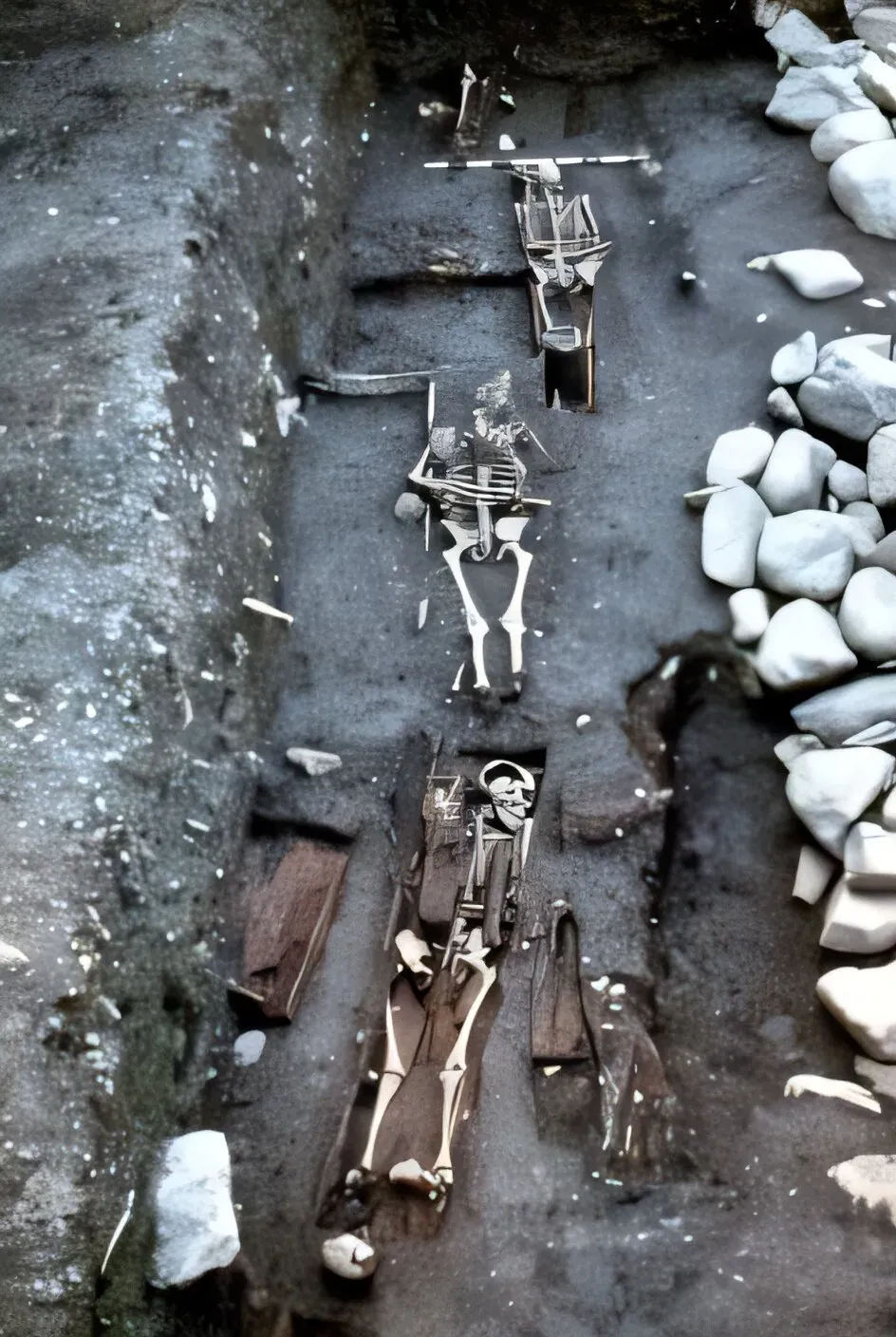
Excavations at two ancient cemeteries within the city have provided valuable insights into how people lived and died during this period. The sites, one beneath a library and another beneath a bank building, contain remains of individuals from different social backgrounds.
In the cemetery located in the oldest part of Trondheim, near the public library, archaeologists have found evidence of a more diverse diet among its residents. Their remains suggest they consumed seafood and had better living conditions compared to those buried elsewhere.
The other cemetery, situated on the outskirts of the city's core, is associated with craft workers who lived in less affluent conditions. Bone analysis reveals that child mortality was significantly higher among this group, suggesting poorer health overall.
Differences in diet between these two groups are evident from the remains found at the cemeteries. The residents near the library had a more varied diet, while those on the outskirts of town were limited to fewer food sources.
The findings suggest that social inequality affected both the health and mortality rates of individuals in Trondheim during medieval times, mirroring similar patterns observed today.
The introduction of a public health system in medieval Trondheim brought about significant changes in how the city's inhabitants approached healthcare.
Public authorities played a crucial role in facilitating access to healthcare, and their efforts were focused on limiting the spread of infectious diseases such as leprosy, typhoid fever, and tuberculosis.
Research into skeletons from the time period reveals that many people died prematurely due to these diseases, which were likely exacerbated by poor living conditions and inadequate nutrition.
The city's inhabitants experienced significant physiological stress during childhood and adolescence, often caused by an insufficient or overly monotonous diet, leading to a range of health problems.
As Axel Christophersen notes, society was familiar with these diseases, but the introduction of public measures aimed at limiting their spread marked a significant shift in responsibility from private individuals to the city as a whole.
The implementation of measures such as improved hygiene and waste management also contributed to the development of a more comprehensive public health system.
The medieval public health system in Trondheim underwent significant changes during the Middle Ages and early modern period. These changes did not follow a straightforward progression from simple to advanced or from private to public management systems.
Researchers have noted that the distinction between private and public spheres is difficult to apply to medieval society, where practices and responsibilities often blurred these boundaries.
Elisabeth Forrestad Swensen's Ph.D. dissertation explored the development of a functional water and waste management system in Trondheim during this period. Her research examined how the city managed its waste, sewage, and drinking water, and how these factors impacted public health and disease spread.
Archaeological evidence suggests that the inhabitants of Nidaros actively addressed challenges related to water and waste management. This proactive approach indicates a clear intention to improve public health, even if not all measures were equally effective in practice.
The city's waste management system was designed with specific protocols for human waste, which was handled separately from other types of waste. Latrine waste was disposed of in separate locations from general waste pits, indicating a recognition of the need for distinct management practices.
During the High Middle Ages, Europe experienced significant population growth, leading to increased numbers of people, houses, and waste. This growth coincided with the rise of the theory of miasmas, which linked unpleasant smells to disease causation.
The introduction of a medieval public health system aimed at reducing disease by removing fetid waste from urban areas had an unintended consequence: it exposed the population to roundworms.
This is evident in Trondheim, where authorities decreed that latrine waste be transported to pits outside the city center, a measure that seemed sensible and smart. However, analysis of these latrines revealed that nearly the entire population was infected with roundworms.
The reason for this widespread infection lies in how the latrine waste was handled after it left the city center. It was incorporated into manure, which is an ideal breeding ground for roundworms, according to Swensen. This parasite thrives especially well in manure and can easily contaminate food supplies.
As a result, a perpetual cycle developed between humans and roundworms. The latrine waste was transported out of the city but then spread across agricultural land where food was grown, allowing the roundworm parasite to enter the food supply and infect people living in the city.
The fact that most other waste pits remained within the city limits suggests that inhabitants understood the health benefits of keeping organic waste at a distance. However, these pits were situated on separate plots of land, which may not have been sufficient to prevent infection.
Sawdust or wood chips were mixed with latrine waste to dampen its smell, but this measure was not enough to prevent the spread of roundworms. The volume of wood chips used dropped significantly towards the end of the 13th century due to a decline in construction activity.
This decline in construction is linked to a massive volcanic eruption in Indonesia in 1257, which sent ash clouds across vast distances and had a profound impact on climate and society. Temperatures fell sharply for several years, tree growth slowed, and societal activity was dampened.
The worsening stench from waste pits within the city's streets became a pressing issue due to the shortage of wood chips.
Excavations have revealed that organic waste was previously discarded directly into these pits, but this practice ceased during this period. Instead, organic waste was transported out of the city for disposal. The loss of wood chips and the intensified stench from the waste pits may have contributed to the shift in managing waste.
This change in waste management practices likely reduced the risk of infectious diseases spreading through the population. The conditions that existed in the city's streets were already challenging, with temperatures falling sharply for several years, tree growth slowing down, and societal activity being dampened.
The introduction of a medieval public health system did little to alleviate these conditions, and it is now clear that this system exposed the population to roundworm. The combination of factors created an environment conducive to the spread of disease.
As the plague continued to ravage Europe, Norway was particularly hard hit, with the deadly disease arriving in 1349 via trade routes from Asia. An estimated one-third of the country's population perished, although the exact death toll remains unknown.
The long-term effects of the plague on Norway's population were profound, with repeated outbreaks contributing to a decline that persisted for centuries. By the early 16th century, the country's population had dwindled to approximately 200,000 inhabitants from an estimated 500,000 around 1340.
The introduction of a medieval public health system had a profound impact on the population of Trondheim, Norway. According to experts, it is likely that this new infrastructure exposed residents to roundworm, a parasitic infection.
Construction activity in the area suggests that the population experienced periods of relative growth during this time, which would have put additional strain on the city's sanitation and hygiene systems. This scenario aligns with broader European trends, further supporting the notion that Trondheim's population was vulnerable to the introduction of roundworm.
Facts based on reporting originally published by Phys.org.
You may republish this story, in full or in part, if you credit News Central Site and link to it (licence CC BY 4.0). Photos are not included.