Mario Sorrenti Exhibition in Paris Sheds Light on Photographer's Personal Diaries
A recent exhibition at LSD gallery during Paris Photo showcased Mario Sorrenti's personal diaries from the 1990s, offering a glimpse into his life and relationships.
A recent exhibition in Paris has shed light on the personal diaries of renowned photographer Mario Sorrenti from the 1990s, offering a glimpse into his life, relationships, and experiences behind some of fashion photography's most iconic images.
The show, held at LSD gallery during Paris Photo, is an intimate journey into the world of a photographer who has significantly impacted how we perceive beauty, desire, and sensuality in fashion. The small gallery space was packed with visitors, mostly young people who seemed captivated by Sorrenti's handmade books filled with photographs, Polaroids, and handwritten notes.
These objects are a far cry from the digital images that dominate our lives today, and it is clear that their physicality and tactility have sparked a fascination among this generation. I couldn't help but wonder what drew these young people to these tangible artifacts of a bygone era. Was it nostalgia for a time they had never experienced?
The answer may lie in the way we interact with images today, increasingly through screens, devoid of the physicality and authenticity that Sorrenti's diaries represent. As I delved deeper into the exhibition, I began to notice something more profound at play: a longing for real experiences, for a connection with images that feels lost in our digital age.
Mario Sorrenti is one of the most influential photographers of his generation, whose work has had a lasting impact on fashion photography since the early 1990s. His contributions to Vogue Italia are particularly noteworthy, with an extensive body of editorials that have shaped not only the visual language of fashion but also how it communicates desire and emotion.
Sorrenti's photographs have helped redefine the aesthetics of fashion and paved the way for a more nuanced exploration of intimacy and emotion in his work. As I continued to explore the exhibition, I couldn't help but feel that there was something more to Sorrenti's diaries than just their historical significance or aesthetic appeal, they offered a glimpse into a life lived authentically.
The young people gathered around Sorrenti's diaries seemed entranced by the fragments of his life, the Polaroids and handwritten notes offering a tangible connection to the past. It was as if they were searching for something more profound in these objects: a sense of authenticity that is increasingly elusive in our digital lives.
Mario Sorrenti's photographs are instantly recognizable, even without seeing his name attached to them. His unique style cannot be reduced to a single technique or aesthetic approach, but rather it's a culmination of various elements that come together in his work.
Light is a crucial aspect of Mario's photography, and he handles it with extraordinary sensitivity. Whether it's soft and natural or carefully controlled, light plays a pivotal role in setting the tone for his images. His attention to detail extends beyond just lighting, as he also focuses on skin texture, physical presence, and the overall body language of his subjects.
One of Mario's defining characteristics is his ability to seamlessly transition between spontaneous, informal shots and more formally constructed images. This range allows him to capture a wide array of moods and emotions, from intimate moments to more dramatic scenes. His photographs often have a sense of authenticity that feels genuine and unforced.
Sensuality is a key element in Mario's work, but it never feels imposed on his subjects. Rather, it emerges organically from the relationship between him and the person in front of his camera. Even when an image is provocative or pushes boundaries, there's often a sense of tenderness and vulnerability that prevents it from becoming overly suggestive.
In fashion photography, desire has always been a complex theme to tackle. Mario wasn't the first photographer to explore intimacy or eroticism, but he brought a unique perspective to the tradition. His subjects are not mere bodies to be admired; they retain their individuality and interiority within the carefully constructed world of fashion.
Mario's photographs have an uncanny ability to make us feel that something genuine is happening within the image. This quality is perhaps best exemplified by his work with Kate Moss, who was both his girlfriend at the time and a muse for many of his most iconic images. Their collaboration led to the now-iconic Calvin Klein Obsession campaign in 1993.
The true power behind those photographs lay not just in Mario's technical skill or Kate's beauty but in the genuine intimacy that had developed between them. These were not staged moments, but rather a natural extension of their existing emotional connection. The resulting images have become an integral part of our collective visual memory, and they continue to captivate audiences with their raw emotion and authenticity.
The Paris exhibition takes a different approach to showcasing Mario's work, one that delves into the world from which his photographs emerged.
Instead of displaying the iconic images that solidified his reputation, the show focuses on the everyday life and personal experiences that inspired them.
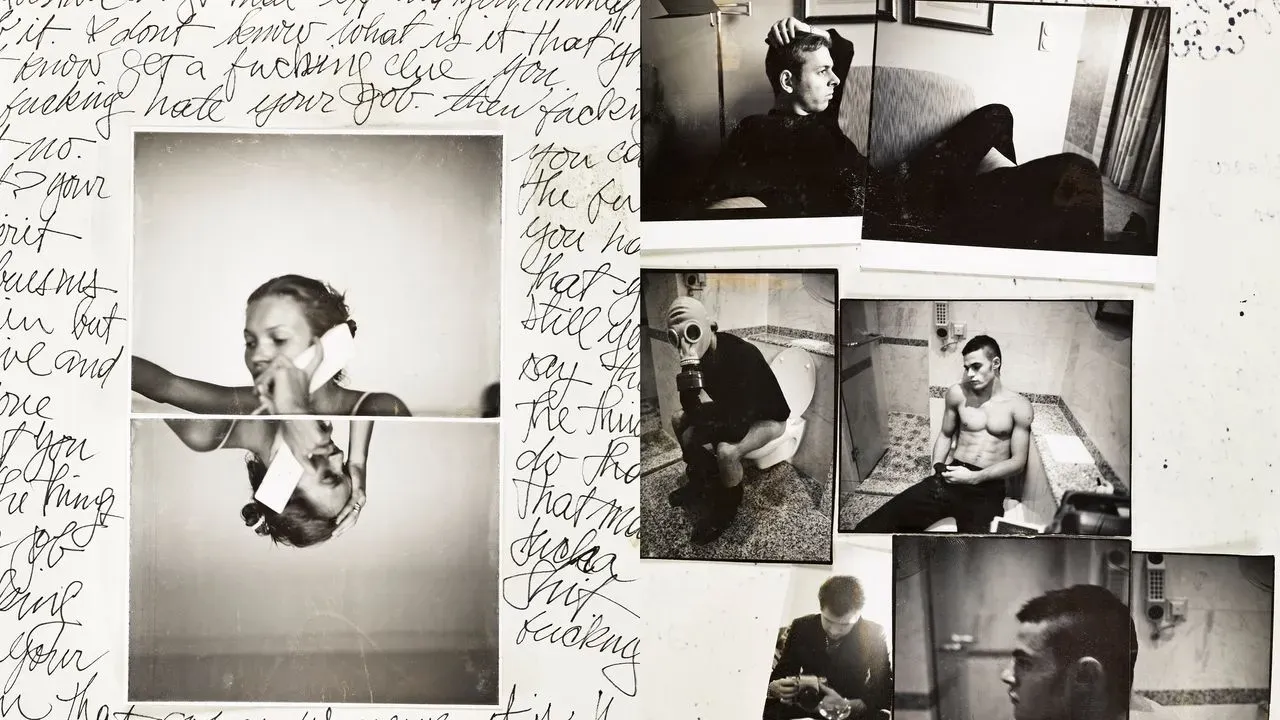
This is where the five diaries come in, handwritten notes, drawings, contact sheets, and fragments of daily life spanning 1991 to 2000.
Each diary page has been meticulously reproduced using color Xerox machines and reassembled by hand into unique volumes.
These are not traditional photographic books or mere archival documents; rather, they occupy a fascinating space where memory, artistic experimentation, and the physical act of creation blend together.
As we flip through these pages, we're met with an array of faces, bodies, and moments from everyday life, friends, lovers, and familiar figures from the fashion world, all intertwined with deeply personal reflections on those around him.
The diaries are not showcases for finished masterpieces but rather invitations into the process of becoming a photographer.
Fashion photography has evolved to become more than just a means to showcase products; it's now a platform for artists to explore their creativity freely.
These photographs are not standalone images but are deeply intertwined with Mario Sorrenti's life experiences, the people he loved, and the environments that shaped him.
The diaries reveal the development of a unique photographic style that is inextricably linked to his personal growth as an individual.
Living in New York during those same years gave me a unique perspective on this era. I share Mario's generation, having grown up amidst the city's vibrant cultural landscape.
New York City in the 1990s was a hub of creative exchange where various art forms, fashion, photography, music, and nightlife, converged to create something entirely new.
The atmosphere that pervaded the city during those years was characterized by an infectious sense of freedom, experimentation, and possibility, but also a rawness and urgency.
Photography was more than just a job for Mario's family, it was a way they connected with each other and the world around them.
This shared passion is evident in Mario's work, which often feels deeply personal despite being created within the high-stakes fashion industry.
Davide's presence in the diaries adds an extra layer of poignancy to the images.
Knowing his story transforms these fragments of a shared youth into something more, a testament to a relationship, love, loss, and a world that once was but now exists only through the photographs left behind.
Photography has a unique relationship with time; it captures a moment while simultaneously reminding us that it's gone.
In Mario's diaries, this dynamic is amplified as photographs are intertwined with words, drawings, other photographs, and fragments of thought, revisited, rearranged, reproduced, and transformed in a way that blurs the line between memory and creativity.
The use of Xerox machines to reproduce images adds another dimension to the artistic language, making reproduction an integral part of the creative process rather than just a means of copying an original.
Mario Sorrenti's diaries reveal a life spent observing and recording the world around him, a process that involved not just looking but also selecting, arranging, touching, and remembering the fragments of existence.
The physicality of this creative labor is evident in the pages of his diaries, where time is measured by hours spent searching for the perfect image or moment to capture. This dedication to detail is perhaps what resonated with young visitors to a recent Parisian gallery exhibition featuring his work.
Their fascination was not driven solely by nostalgia for a lost era; many had never experienced the world depicted in Sorrenti's diaries, yet they were drawn to its authenticity and imperfections. The allure of these photographs lies in their ability to convey the beauty and complexity of human existence, unvarnished by the conventions of art or photography.
The exhibition at LSD, curated by Aaron Stern, offers a glimpse into Sorrenti's unique visual language, one that is rooted in his personal experiences and perceptions of the world.
Facts based on reporting originally published by Vogue.
You may republish this story, in full or in part, if you credit News Central Site and link to it (licence CC BY 4.0). Photos are not included.