Lobster Cooking Class Hosted by Visit Maine at Bon Appétit Live
Attendees learned how to break down a whole steamed lobster to create a rich and creamy dip during a hands-on cooking class hosted by Visit Maine.
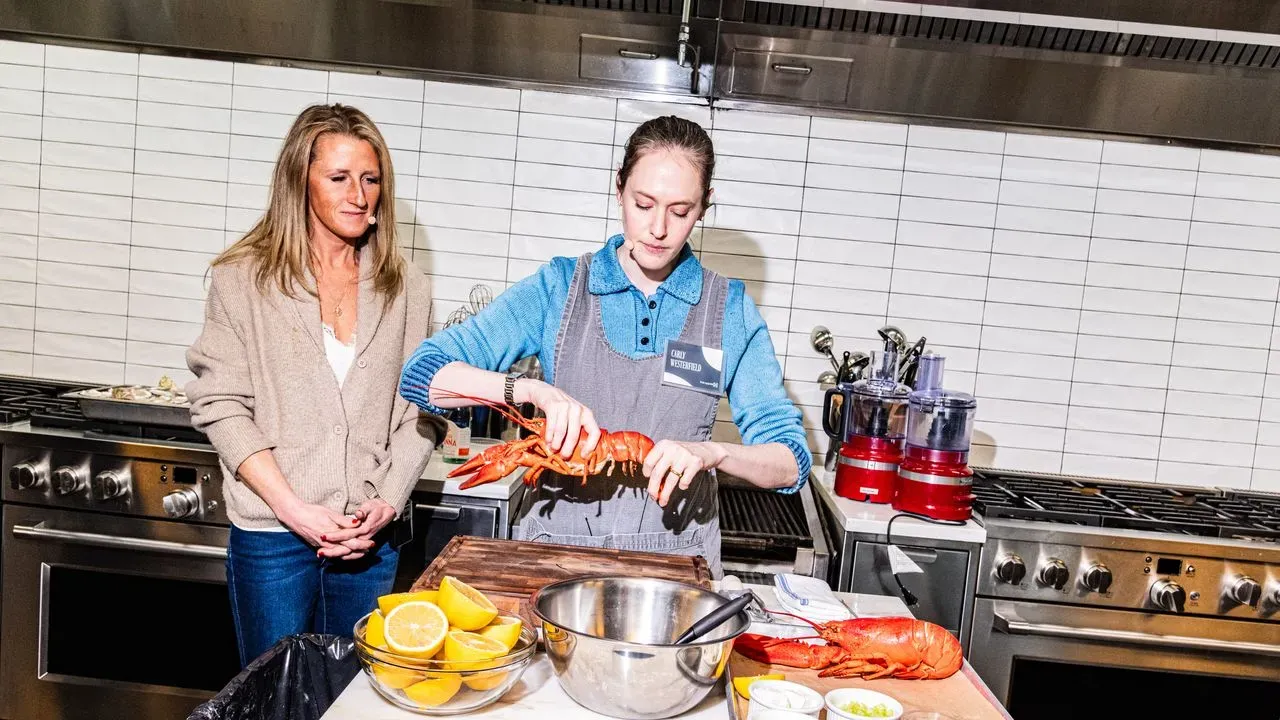
A taste of Maine was brought to Bon Appétit Live attendees through a hands-on lobster cooking class and a demonstration of wild blueberry cornmeal shortcakes hosted by Visit Maine.
The Lobster 101 class was led by Carly Westerfield, Manager of Audience Strategy at Bon Appétit, and Krista Tripp, founder of Aphrodite Oysters in South Thomaston, Maine. Together they guided attendees through the process of breaking down a whole steamed lobster to create a rich and creamy dip.
This ideal holiday dish was made possible by transforming the lobster meat into a delicious dip that could be served with Ritz crackers. Guests enjoyed sampling the freshly made dip before moving on to taste oysters, which were cultivated in the cold tidal waters of the Lower Weskeag River.
Aphrodite Oysters founder Krista Tripp explained that her oysters take three years to reach maturity and are known for their distinctive fluted shells, offering a briny flavor balanced by a mellow sweetness.
Aphrodite Oysters' unique oysters are remarkable for their ability to filter large quantities of water each day, taking in excess nitrogen that is then sequestered within their growing shells.
“Eating an oyster is contributing to the environment,” Krista Tripp emphasized in a stark reminder of the ecological impact of our food choices.
The data from Aphrodite Oysters' farm supports this assertion, as improved water test scores demonstrate the positive effects bivalves have on creating a healthier ecosystem.
Before wrapping up the class, a few attendees volunteered to give oyster shucking a try under Krista's expert guidance.
Wild blueberries have been a staple crop in Maine for thousands of years, with some plants dating back to the end of the Ice Age. This is when the tenacious plants, helped by ericoid mycorrhizal fungi, began to thrive on newly exposed land as glaciers retreated.
Maine's wild blueberry industry has been an important food source for Native American communities, valued for their nutritional benefits long before the modern superfood trend took hold. The state is home to 99% of all wild blueberries grown and harvested in the United States, according to Howard.
The Maine growers face significant challenges, including tariffs and currency exchange fluctuations. A stronger Canadian dollar has had a particularly negative impact on the industry, forcing many farmers to adapt and innovate. "Like many Maine farmers," Howard explained, we've had to get creative.
Howard's family business is one example of this creativity in action. They invested in new equipment, including a more efficient harvester that allowed them to scale up production and sell their product to retailers. The business also developed a shelf-stable, freeze-dried product with no added ingredients, enabling them to ship beyond the local area.
The family has taken their wild blueberry innovation even further by starting a distillery, where they use the fruit to make an eau de vie and vodka. This venture not only brings in additional revenue but also showcases the versatility of Maine's wild blueberries.
The Wild Blueberry Weekend has become a staple event at the farm, offering visitors an exclusive look behind the scenes of the blueberry-growing process.
By opening their doors to the public, Howard and Tripp are not only generating additional revenue but also providing a unique opportunity for people to engage with local growers and producers.
Maine's rich agricultural landscape is being showcased through various initiatives, including the Bountiful Plate video series, which highlights the state's diverse food and beverage producers.
The state's culinary identity is taking center stage, with Visit Maine placing greater emphasis on promoting its local ingredients and heritage industries.
Maine's culinary identity is being showcased like never before, with a focus on its rich heritage and local ingredients. This shift in emphasis is part of an effort to promote the state's unique food culture, which is often misunderstood as being limited to traditional dishes like lobster rolls and blueberries. In reality, Maine has a diverse range of exceptional chefs who are deeply connected to their communities.
One example of this interconnectedness is Tripp's practice of delivering her oysters directly to local restaurants, highlighting the close relationships between food producers, chefs, and consumers in the state. This approach not only ensures that customers get the freshest possible ingredients but also supports the local economy and fosters a sense of community. By emphasizing sustainability and stewardship, Maine is setting an example for other states to follow.
The result is a truly authentic taste of Maine, where food is not just a product but a reflection of the state's values and connection to its landscape. As Ouellette noted, "You can't get much fresher than food in Maine," a statement that sums up the state's approach to its food systems perfectly.
Facts based on reporting originally published by Bon Appetit.
You may republish this story, in full or in part, if you credit News Central Site and link to it (licence CC BY 4.0). Photos are not included.