Laptop Prices Rise Amid Component Cost Increases
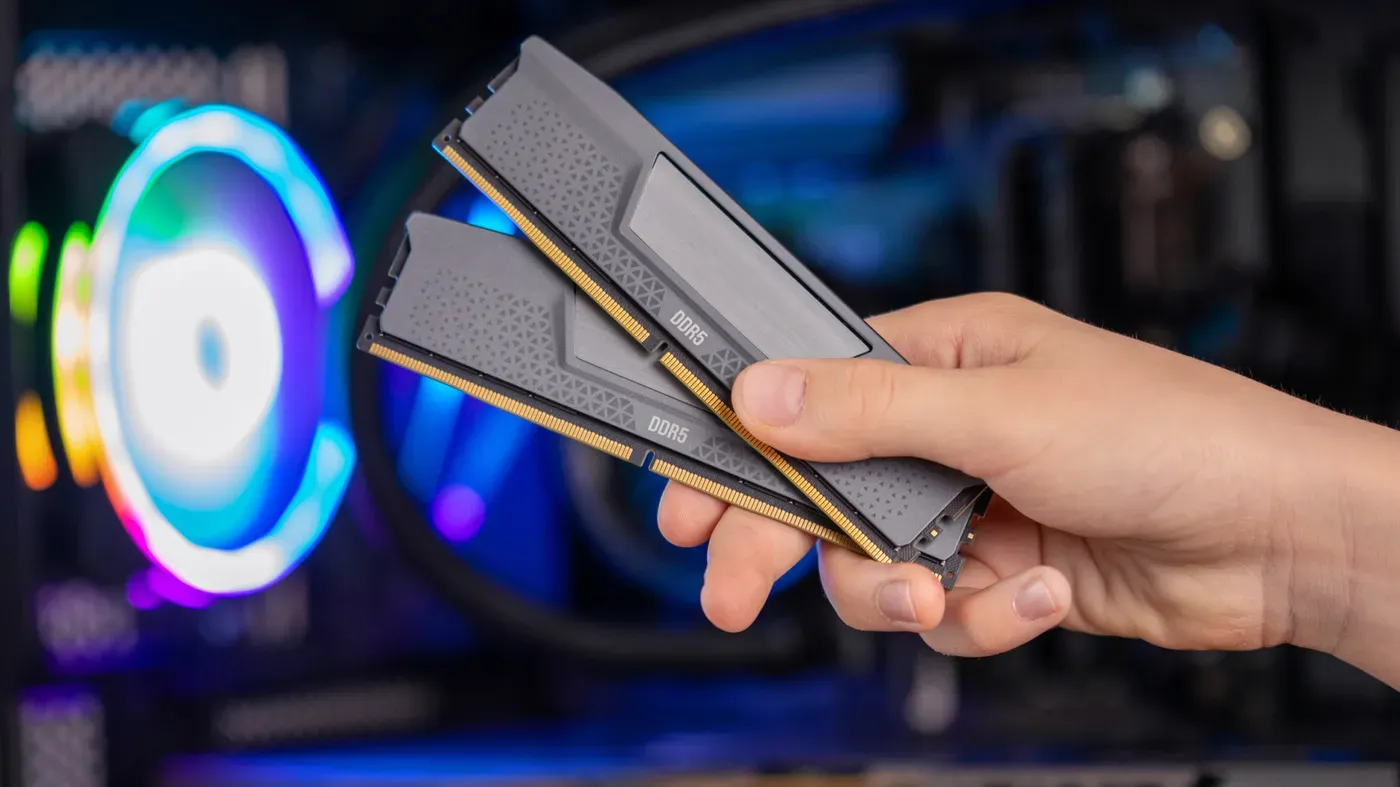
The trend of manufacturers cutting back on memory to preserve profit margins has led to laptops being sold with limited RAM.
A sharp increase in laptop prices has left buyers facing a difficult decision: settle for an 8GB laptop or opt for a higher spec model that may break the bank.
The price hike is particularly evident in Dell's XPS 13, which now starts at $699 with 512GB of storage. However, this is not the only option available - a cheaper variant with 256GB of storage can be had for the same price.
In contrast, Apple's MacBook Neo saw its starting price jump from $599 to $699 in June, along with several other price increases. This trend suggests that manufacturers are struggling to maintain their profit margins due to rising component costs.
According to TrendForce, the bill of materials for a mainstream laptop now consists mainly of CPU, memory, and storage, accounting for 68 percent of the total cost. As a result, it is likely that manufacturers will opt to cut back on memory in an effort to preserve their margins.
The consequence of this trend is that more laptops may be sold with limited RAM, making them less capable and less efficient than higher spec models.
The shift in laptop specifications has been significant over the past two years. In 2024, Microsoft's Copilot+ PC program raised the bar for laptops by requiring a minimum of 16GB of RAM to be labeled as such.
This change was followed by Apple's decision to double the base MacBook Air's RAM from 8GB to 16GB without increasing its price tag in October 2024. Since then, every new Mac model has started at 16GB of RAM.
However, not all manufacturers have adopted this standard. In 2026, Dell brought back its XPS 13 with an 8GB base model, a decision that seems to be driven by the current market trends. Despite having twice the minimum required for running Windows 11, the lowest-end model still struggles with performance.
Our testing of the base model revealed that it had significant issues with memory management. Even after booting up, 80% of its RAM was already committed to invisible processes. This meant that basic tasks like scrolling and switching windows resulted in noticeable hiccups.
The mid-range Dell XPS 13, on the other hand, offers a much smoother experience with its 16GB of RAM. In our tests, it scored about 30% higher in PCMark 10 and lasted an hour and 44 minutes longer in the same battery test compared to the base model.
This highlights the importance of having sufficient RAM for smooth performance. With RAM prices remaining high, it's becoming increasingly difficult for manufacturers to stick to the 16GB minimum. The result is that more laptops may be sold with limited RAM, making them less capable and less efficient than higher-spec models.
The production costs of laptops have been severely impacted by the surge in memory and storage prices. According to TrendForce, memory and storage typically account for around 15 percent of a laptop's overall cost, but this figure is expected to rise significantly.
Intel's budget Wildcat Lake line of processors, used in some low-cost laptops, has only one memory channel, which is shared by the processor and integrated graphics. This limited architecture can further exacerbate performance issues in systems with already restricted RAM capacity.
Samsung's third-quarter operating profit reached a record high of 107.4 trillion won, or approximately $80 billion. A significant portion of this profit, around 110 trillion won, was attributed to memory sales alone, indicating that other sectors may be experiencing losses due to the rising costs of raw materials.
The market has responded to these increased costs by shifting production towards lower-spec models, allowing manufacturers to maintain familiar price points while minimizing losses. Meanwhile, Micron's decision to discontinue its consumer-facing RAM and SSD brand Crucial in February has further reduced supply, contributing to the ongoing surge in RAM prices.
The high cost of RAM has led many manufacturers to opt for base models with limited memory configurations, forcing consumers to pay a premium to upgrade their laptops' performance capabilities.
Dell's XPS 13 is a prime example of this trend, as upgrading from 8GB to 16GB costs an additional $200, pushing the price to $899 even when paired with the standard 256GB storage option.
Meanwhile, Apple has taken a more restrictive approach by eliminating the ability for users to upgrade their MacBook Air's memory. The base model now starts at $1,299 and comes with 16GB of RAM, although it still lags behind its predecessor in terms of baseline storage capacity.
Other manufacturers have also been affected by the shortage, with MSI's Katana 15 HX C14 gaming laptop being one notable exception that allows for older DDR4 memory upgrades. Framework has taken a DIY approach by encouraging buyers to bring their own RAM after significantly increasing the prices of its DDR5 offerings.
Laptops with upgradable memory slots offer consumers more flexibility in managing their storage and performance needs, allowing them to purchase smaller configurations now and upgrade later when prices fall.
As PC manufacturers struggle to keep up with rising costs and dwindling supplies, industry experts predict that prices will continue to climb before eventually stabilizing.
Facts based on reporting originally published by Engadget.
You may republish this story, in full or in part, if you credit News Central Site and link to it (licence CC BY 4.0). Photos are not included.