King Charles III and Queen Camilla Visit the Bahamas Amid Reparations Debate
A nine-day tour of the Caribbean islands has sparked intense debate over historical injustices inflicted upon the region during the transatlantic slave trade.
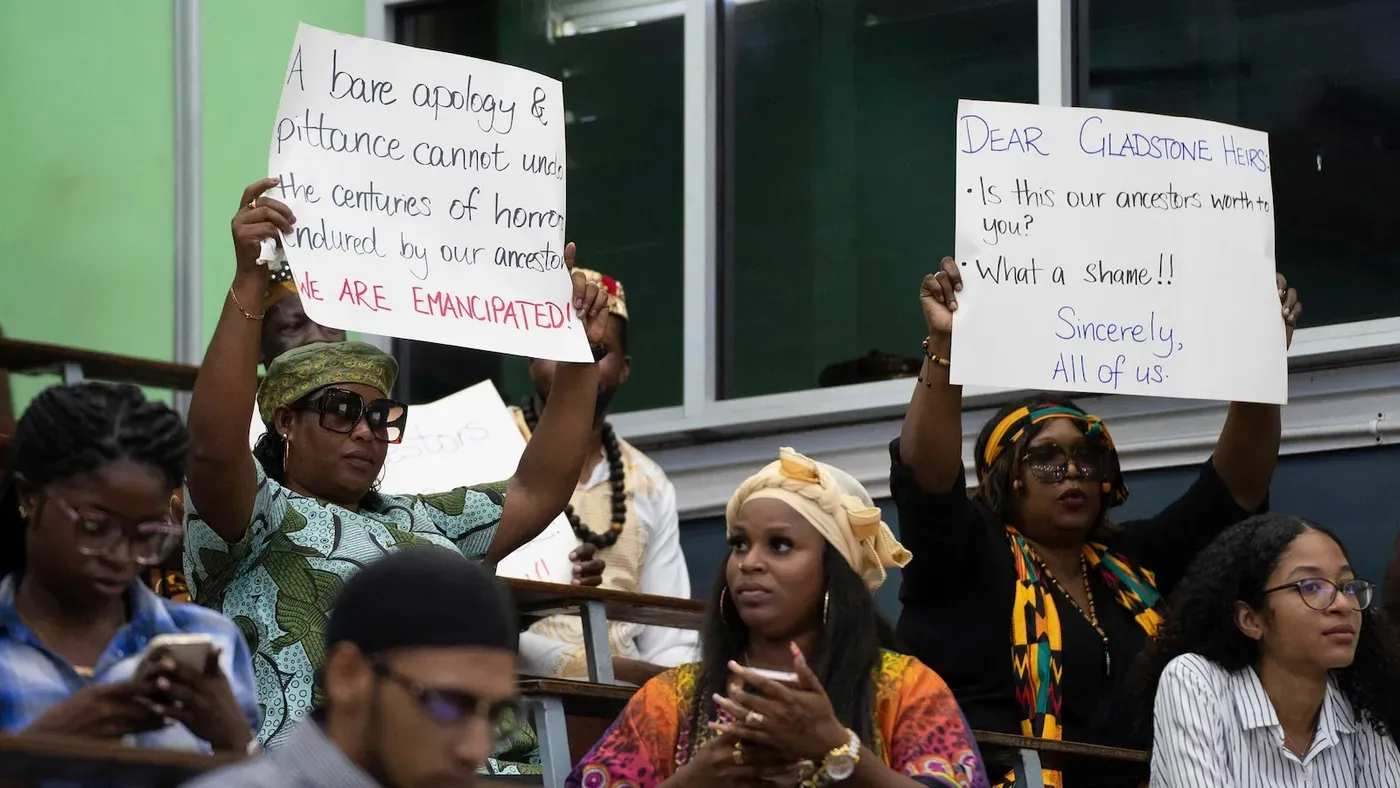
The Caribbean region is gearing up to receive King Charles III and Queen Camilla this week as they embark on a nine-day tour of the islands. However, their visit has sparked intense debate and demands for reparations from the British monarchy.
Islanders are seeking redress for the historical injustices inflicted upon them during the transatlantic slave trade, which was perpetrated by European powers including Britain. The Bahamas National Reparations Committee has expressed its discontent with the upcoming visit, stating that it will be a stark reminder of the colonial legacy that continues to affect the region.
King Charles III is set to arrive in the Bahamas on Tuesday, marking his first official visit to the archipelago since 1973 when he granted the nation independence from British rule. The country's complex relationship with its former colonizer remains unresolved, as it still recognizes Charles as its head of state and part of the Commonwealth realm.
The royal couple will also pay a visit to Clifford Park, where the Bahamian flag was first raised over half a century ago, serving as a poignant reminder of the nation's history.
The visit of King Charles to the Bahamas has sparked debate among locals about the relevance and benefits of his trip. Niambi Hall Campbell-Dean, chair of the Bahamas National Reparations Committee, questions the purpose of the monarch's visit.
Campbell-Dean, a psychology professor at the University of the Bahamas, shared her concerns with students when discussing Charles' upcoming visit. Her message highlighted the importance of considering the historical context and implications of the royal family's presence in the Caribbean.
The push for reparations from Britain is not new to the region. Leaders across the Caribbean have long advocated for an apology and compensation for the harm inflicted during colonial rule. Jamaica recently took its case to King Charles, who referred it to the UK's highest court of appeal.
The British government has consistently rejected demands for an official apology or reparations. The rejection has led some to question the purpose of the royal family's continued involvement in the region.
The brutal legacy of slavery continues to haunt the Caribbean region as Guyana's President Irfaan Ali prepares for a meeting with King Charles. In a recent interview, Ali emphasized that an apology from the royal family is necessary to acknowledge their role in perpetuating the transatlantic slave trade.
Charles has already acknowledged the dark history of slavery, according to Ali, but now it's time for him to take concrete steps towards making amends. This includes addressing the region's ongoing struggles with underdevelopment and poverty, which were exacerbated by colonialism and slavery.
The visit is also expected to focus on climate change, trade, and development, as Charles meets with leaders of 56 Commonwealth member states in Antigua and Barbuda. However, some Caribbean leaders have made it clear that reparations for the slave trade should be a top priority during these talks.
Nikita Miller, a leader from an Amerindian village in northern Guyana, expressed her disappointment at being excluded from Charles' itinerary. She believes that the royal family's visit could potentially benefit Guyana as a whole but will not address the specific concerns of Indigenous communities like hers.
Miller highlighted the long-standing land disputes between her community and miners seeking to extract gold from the area, which she hopes can be resolved through dialogue with government officials.
Jamaican residents are expressing mixed emotions about King Charles' decision to skip visiting the island during his upcoming tour of the Caribbean.
The move has been seen as a welcome respite by some, who argue that the monarchy's historical ties to slavery and colonialism make it insensitive for them to visit at this time.
Rastafarian Steven Bennett, 51, believes that until the British monarchy takes concrete steps towards reparations and formally apologizes for its past wrongdoings, they have no business visiting Jamaica.
Young Jamaicans are also skeptical of the monarchy's intentions, with some viewing their presence as a reminder of the country's colonial past and its ongoing struggle for independence.
As Jamaica continues to push for its own identity and separation from British rule, many see King Charles' decision to skip the island as a tacit acknowledgment of this shift.
As the island nation continues to assert its independence, a sense of nostalgia has settled over those who recall the royal visits of Queen Elizabeth II's era. Retiree Hermine Reid fondly remembers how the British monarch would bring grandeur and respect to Jamaica during her trips.
The shift in dynamics is palpable now, with many feeling that King Charles' decision to skip Jamaica marks a tacit acknowledgment of its growing separation from British rule. This perception is shared by those who have witnessed the island's evolution firsthand, including Reid, who sees it as an inevitability of modern times.
Facts based on reporting originally published by ABC News International.
You may republish this story, in full or in part, if you credit News Central Site and link to it (licence CC BY 4.0). Photos are not included.