Kikai-Akahoya Volcanic Eruption's Impact on Prehistoric Japan Studied
A new international study has shed light on the effects of a prehistoric volcanic eruption in Japan on Jomon foraging communities.
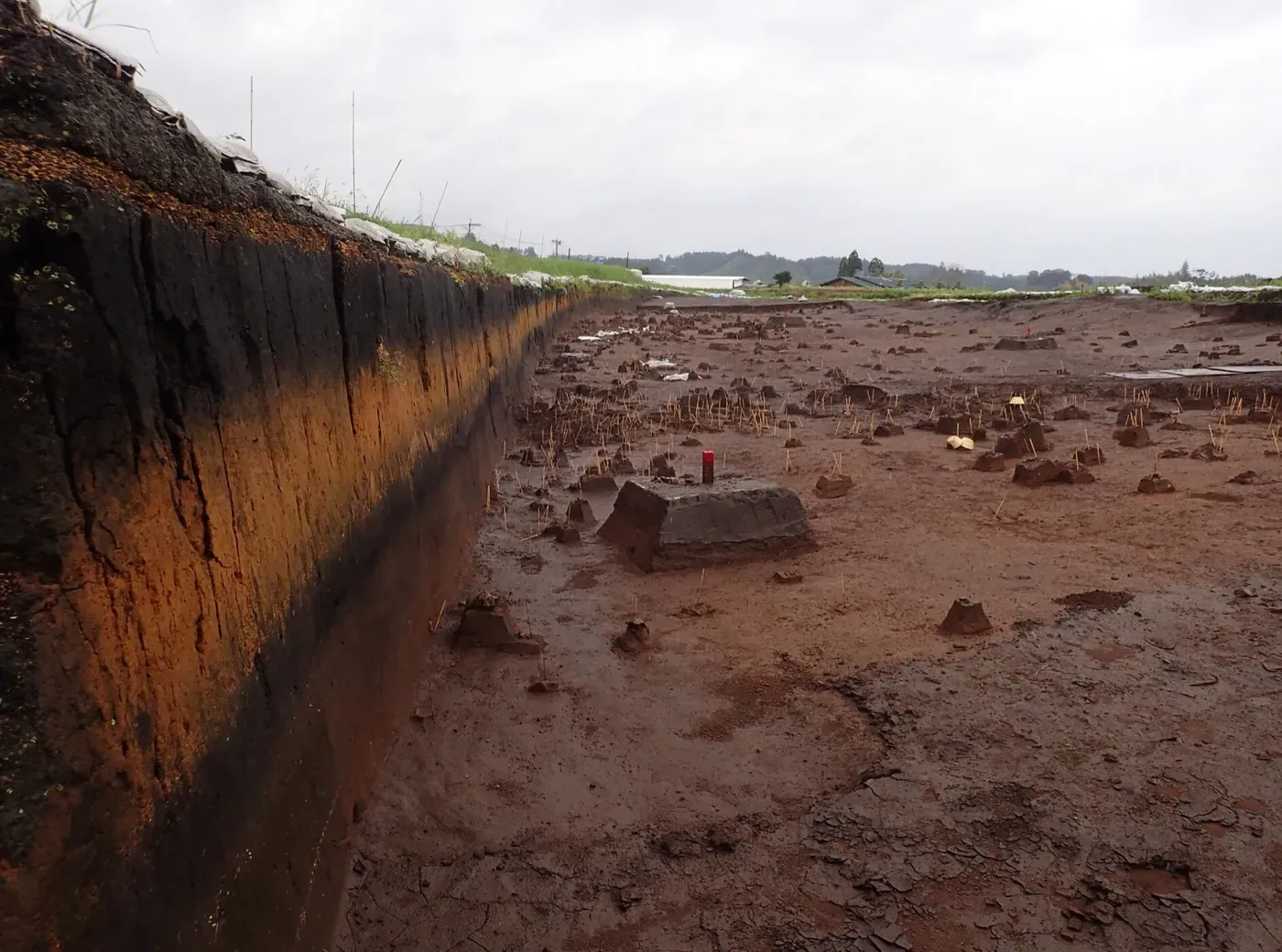
A new international study has shed light on the aftermath of one of Earth's most catastrophic volcanic eruptions in prehistoric Japan. The Kikai-Akahoya eruption occurred approximately 7,300 years ago and had a profound impact on the region.
The researchers focus on the effects of this disaster on Jomon foraging communities, who lived as hunter-gatherers during that time period. According to Peter Jordan, senior author and professor of archaeology at Lund University, the eruption was likely devastating, causing powerful earthquakes, enormous tsunamis, and massive volcanic ash deposits.
For decades, archaeologists have debated the consequences of this eruption. Some argue it led to an abrupt end of human life near the epicenter, while others suggest local populations survived even in areas close to the blast zone.
The new study challenges these simplistic views by presenting a more complex picture of what happened after the Kikai-Akahoya eruption.
This article is part one of three.
The effects of the volcanic eruption on prehistoric Japan's population were complex and far-reaching. While some areas became uninhabitable due to ecosystem damage, there is evidence that populations in other regions actually increased following the disaster.
Lead researcher Enrico Crema notes that survivors of the eruption demonstrated remarkable resourcefulness, adapting to their new environment by forging new social bonds, developing innovative economic systems, and finding creative ways to thrive. This resilience allowed them to not only survive but eventually flourish in the aftermath of the disaster.
The researchers' findings suggest that the impact of a major catastrophe can be unpredictable and multifaceted. Populations may decline in some areas, while growing in others, as communities respond to their new circumstances in diverse ways.
In southern Kyushu, where Jomon forager populations were already dwindling before the eruption, the disaster had a devastating effect on an already sparsely populated region. However, northern Kyushu's population continued to grow throughout the disaster and its aftermath, despite significant ecosystem damage.
The researchers attribute this growth trend in part to the migration of people from areas most severely affected by the eruption. These "refugees" may have brought new skills and perspectives that helped their communities adapt to their changed environment.
In the aftermath of one of Earth's most devastating volcanic disasters, which struck Japan thousands of years ago, a new pattern of population distribution emerged. Those who survived inland appear to have relocated and clustered along northern coastlines, where marine ecosystems rapidly recovered.
This shift may have been driven by the need for new resources in light of the changed environment. As it turned out, the sea offered abundant opportunities that accelerated population growth through adaptation and exploitation of its bounty. The coastal areas became hubs of activity as people adapted to their surroundings.
However, not all regions of Japan fared equally well after the disaster. Areas farther from the eruption site had experienced growing populations before the catastrophe but saw a subsequent decline or stagnation in demographic growth. These effects have been observed for the first time and could be linked to several factors, including short-term climate change triggered by the eruption.
The volcanic disaster may also have had an indirect impact on human health through its effect on local wildlife. The deer and boar that were a crucial food source for the Jomon people may have suffered from tooth wear due to grazing in ash-covered landscapes, further exacerbating the challenges faced by those affected by the eruption.
Facts based on reporting originally published by Phys.org.
You may republish this story, in full or in part, if you credit News Central Site and link to it (licence CC BY 4.0). Photos are not included.