India Announces $1.62 Billion Economic Package for Nepal
The aid package is aimed at helping Nepal recover from devastating floods that ravaged the country in late August.

A massive $1.62 billion economic package was announced by India on November 23rd, aimed at helping Nepal recover from devastating floods that ravaged the country in late August. The aid package comes with a credit line for energy projects and reconstruction grants to rebuild damaged roads and homes.
According to UNICEF, the floods had a profound impact on Nepal's population, affecting an estimated 84,270 people, including over 32,000 children. The disaster claimed at least 1,300 lives, making it one of the worst in Nepal's recorded history. The World Food Programme estimates that many families are still struggling to rebuild their lives.
As winter sets in, conditions for those living in temporary shelters are becoming increasingly harsh, said Andrea Berardo, deputy country director of the World Food Programme in Nepal. "It has been three months and families are still working hard to rebuild," he noted, highlighting the difficulties faced by affected communities.
The $1.62 billion aid package is part of a broader effort by India to strengthen its ties with Nepal, which has been courted by China for years. By linking Nepal's economic future closely to its own, India aims to reinforce its position as the country's largest trading partner.
The aid package from India to Nepal includes a significant grant for reconstruction and infrastructure projects. This $377 million grant is intended to support Nepal's post-disaster recovery efforts. The funds will be utilized for various projects aimed at rebuilding damaged infrastructure and providing essential services.
Nepal is expected to use the credit line, valued at $1.24 billion, to finance energy-related projects. The terms of this loan are favorable, with sourcing requirements that favor Indian companies. This could lead to the development of cross-border supply chains between Nepal and India.
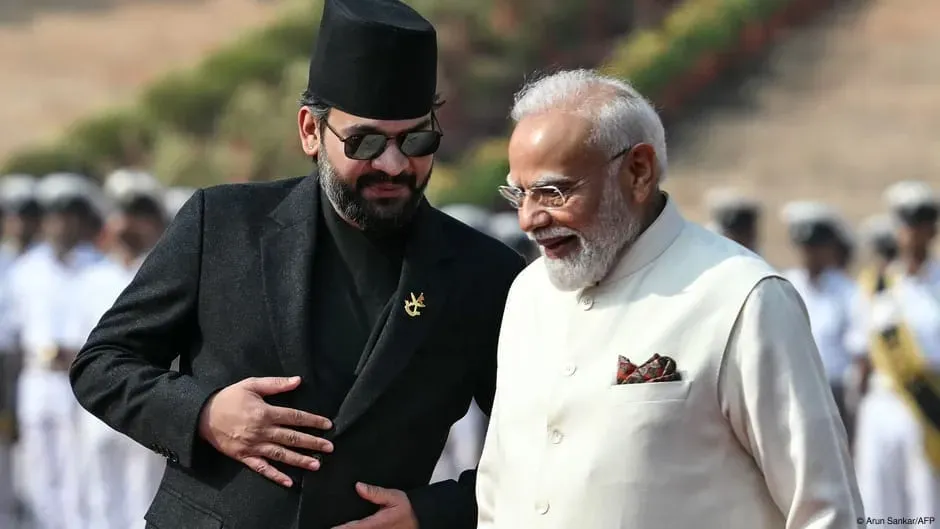
The announcement follows recent talks in New Delhi between Prime Minister Narendra Modi and his Nepalese counterpart, Balendra Shah. These high-level discussions demonstrate India's commitment to strengthening ties with its southern neighbor. The talks mark a significant milestone in the bilateral relationship between the two countries.
Prime Minister Modi expressed his government's commitment to supporting Nepal during times of crisis. He stated that his aim is to help affected families rebuild their lives and create new opportunities for growth. This support will also enable Nepal to enhance its capacity to respond to future disasters.
The Indian government has consistently demonstrated its willingness to provide aid to Nepal during times of need. Its prompt response to the August floods was a testament to this commitment. The invitation extended by Prime Minister Shah for Modi to visit Nepal is seen as an opportunity to further strengthen ties between the two nations.
A recent Post-Disaster Needs Assessment by Nepal's National Planning Commission has revealed that recovery and reconstruction efforts will require a staggering sum of 706.65 billion Nepali rupees, equivalent to $5.2 billion.
This significant investment is not new for India, which has long maintained close economic, diplomatic, and security ties with its neighbor through the 1950 Treaty of Peace and Friendship. The bilateral trade between the two countries reached a substantial figure of $9.38 billion in the 2025-26 fiscal year.
However, past experiences have shown that such gestures can be met with skepticism by Nepal's population. In 2015, India donated $1 billion for post-earthquake reconstruction after a devastating quake killed over 8,000 people. Yet just five months later, many Nepalis accused India of imposing an undeclared fuel blockade due to protests on the border.
India has consistently demonstrated its willingness to invest in regional influence through financial aid, as seen in its provision of nearly $4 billion to Sri Lanka in 2022 during its economic crisis.
India's generosity towards Nepal has raised questions about its true intentions. Analysts suggest that India may be trying to prevent Nepal from leaning too heavily towards China.
China and Nepal share a significant border, stretching 878 miles across the Himalayas. Beijing is also a major investor in Nepal, accounting for nearly half of foreign direct investment in the country. Trade between the two nations is substantial, with China being Nepal's second-largest trading partner.
However, trade is heavily skewed in favor of China, indicating that Nepal relies heavily on Chinese goods and investments. Beijing has identified several projects to be implemented under its Belt and Road Initiative (BRI), including a proposed railway linking Kathmandu with Tibet, road corridors, and a cross-border electricity transmission line.
China has also responded to natural disasters in Nepal by providing financial aid and relief supplies, as well as sending rescue and forensic experts. The aid provided by China is significant, but still lags behind India's generosity towards Nepal.
India has consistently outdone China in terms of aid disbursement to Nepal, with over four times more aid being disbursed by New Delhi in the 2024–25 fiscal year.
India's economic aid to Nepal has been a significant factor in maintaining regional influence and potentially countering China's growing presence.
The aid package is part of India's strategy to ensure its relationships with neighboring countries remain strong, as many South Asian states rely heavily on New Delhi for development and humanitarian assistance. This approach allows India to maintain its position as a dominant player in the region, even as China expands its footprint.
Facts based on reporting originally published by Fortune.
You may republish this story, in full or in part, if you credit News Central Site and link to it (licence CC BY 4.0). Photos are not included.