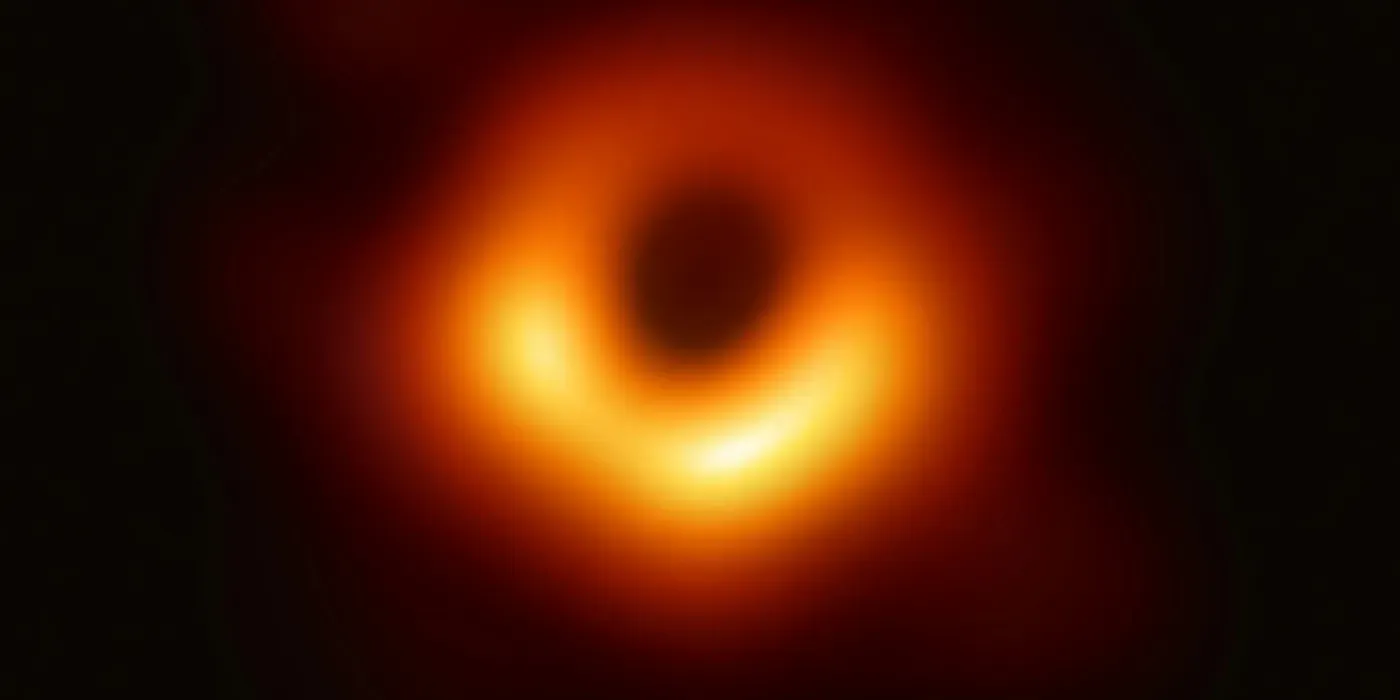
Event Horizon Telescope Captures Relativistic Jets from Two Supermassive Black Holes
The international collaboration has provided unprecedented detail of the relativistic jets emanating from two supermassive black holes, 3C 84 and M87*.

The Event Horizon Telescope has once again delivered groundbreaking images of cosmic phenomena. In its latest findings, the international collaboration has provided unprecedented detail of the relativistic jets emanating from two supermassive black holes: 3C 84 and M87*. These remarkable observations have shed new light on the dynamics and geometry of these enigmatic features.
The EHT's achievement is a testament to the power of collaborative research in astronomy. The team has been working tirelessly since 2019, when it first revealed the image of the supermassive black hole at the heart of the M87 galaxy (M87*). Since then, they have produced images of Sagittarius A*, the SMBH at the center of the Milky Way, and now, detailed views of the relativistic jets.
Blazars are a type of active galactic nucleus that consists of a supermassive black hole at its center. These galaxies emit intense radiation as their relativistic jets shoot straight towards Earth. The EHT has been studying one such blazar, 3C 279, which is approximately 538 million light-years away from us.
The central jet of 3C 279 is powered by a supermassive black hole estimated to be around 800 million solar masses in mass. This makes it significantly more massive than Sagittarius A*, the SMBH at the center of our own galaxy, which has an estimated mass of about 4.3 million solar masses.
The EHT's observations have revealed that the jet of 3C 279 bends towards Earth-based instruments on subparsec scales. This finding is a significant breakthrough in understanding the nature and mechanisms driving these relativistic jets. The team's results are helping astronomers to better comprehend the complex dynamics at play in these cosmic phenomena.
The EHT's work has far-reaching implications for our understanding of supermassive black holes and their role in shaping the universe. By continuing to push the boundaries of what is possible with radio interferometry, scientists hope to uncover even more secrets about these mysterious objects and the galaxies they inhabit.
The addition of two new sites to the Event Horizon Telescope (EHT) array marked a significant milestone in its 2021 campaign. These new locations were the Kitt Peak Observatory in Arizona and the Northern Extended Millimeter Array (NOEMA) interferometer in the French Alps.
These additions brought crucial intermediate baselines that greatly improved coverage, especially at intermediate scales. This enhanced capability allowed for more precise constraints on specific angular scales, a critical factor in studying both compact and extended structures within the jet.
Hendrik Müller, lead author of the paper published in Astronomy & Astrophysics, highlighted the importance of these new additions to the EHT array. As he noted, the continuous growth of the EHT, with new telescopes being added every year, has been a key factor in its success.
The Kitt Peak and NOEMA observatories were particularly significant due to their proximity to other telescopes in the array. This proximity enabled the collection of information that was not available in previous years, providing valuable insights into the dynamics and geometry of the black hole jet.
The physical baseline between two antennas determines the spatial scale that can be resolved, with shorter baselines allowing for a larger field of view but lower resolution. Conversely, longer baselines result in higher resolution but a smaller view of the sky.
By strategically placing telescopes to achieve optimal baselines, scientists can unlock new details about celestial objects. In this case, the inclusion of Kitt Peak and NOEMA observatories enabled researchers to probe structures within the jet that were previously inaccessible.
The integration of these new sites has contributed significantly to the EHT's ability to study black holes in unprecedented detail. As research continues to push the boundaries of radio interferometry, scientists remain hopeful about uncovering even more secrets about these enigmatic objects and their surroundings.
The team behind the Event Horizon Telescope's groundbreaking observations relied on a combination of software packages to process the vast amounts of data collected from their arrays. This multi-faceted approach drew inspiration from previous endeavors, such as the 2019 reconstruction of the M87 black hole image.
To verify the accuracy of their findings, researchers employed different imaging software tools that made distinct assumptions about the nature of the observed phenomena. By cross-checking these methods, they aimed to ensure consistency in their results and build confidence in their conclusions.
The data processing involved not only imaging but also earlier stages, including correlation and calibration, which were tackled by a larger team of collaborators utilizing various software packages.
The research suggests that the jet emanating from the black hole has a unique curvature, with one section pointing closer to Earth than others. This subtle shift in orientation can have two notable effects on our observations:
As the plasma within the jet approaches light speed, its radiation becomes concentrated in the direction it's traveling, resulting in brighter emission when that direction aligns more closely with Earth. Conversely, features within the jet appear to move more slowly across the sky due to their nearly straight trajectory toward us.
The bending of the inner jet towards Earth offers an explanation for various features observed in 3C 279. Brighter emission and slower apparent motion can result from a change in direction, even if the plasma's speed remains constant. This is evident farther along the inner jet where brighter spots appear to move more slowly across the sky.
The EHT images also reveal that the direction of the inner jet changes over time, providing valuable clues about what drives the jet. Features moving more slowly along a particularly bright stretch of the jet suggest that the flow's speed may not be as uniform as previously thought. This could indicate that the plasma's velocity increases or decreases at specific points.
According to Müller, the team has found a clue about where the jet picks up speed. Even near the apparent base of the jet, some features are already moving across the sky at speeds comparable to those much farther downstream. If these features travel with the plasma, it suggests that the jet gains most of its speed over a short distance near its base.
The narrowing of the fast flow may form a shock that adds to the brightness observed near the bend. This could be an important factor in understanding the mechanisms driving the central jet of 3C 279. However, more research is needed to fully comprehend these phenomena and their role in shaping our understanding of quasars.
While 3C 279 has been extensively studied in radio astronomy, its central jet remains a mystery. Future observations may reveal new behaviors that have not yet been seen, shedding further light on the complex dynamics at play in this quasar.
The Event Horizon Telescope (EHT) Collaboration has provided astronomers with a unique opportunity to study the behavior of a black hole jet in unprecedented detail.
Previous observations have offered glimpses into how the jet behaves on larger scales, but the EHT's high-resolution capabilities allow researchers to zoom in on its innermost region and detect features that were previously invisible. This is particularly significant for 3C 279, one of the few quasars that has been studied extensively using the EHT.
The data collected by the EHT will continue to yield new insights as it is analyzed over the coming years. In fact, several studies are already underway, combining observations made at different frequencies with those taken around the same time using other wavelengths. By comparing these datasets, scientists can tease out which changes in the jet's behavior are due to variations in frequency and which are caused by actual shifts in the jet itself.
The researchers expect a steady stream of findings from their data over the next few years, shedding new light on the complex dynamics at play within 3C 279. As more results emerge, they will provide an increasingly detailed picture of how black holes launch jets that can accelerate to nearly the speed of light.
This ongoing research has already begun to reveal the intricate geometry and behavior of the jet's innermost region, setting the stage for further discoveries as the data is analyzed in greater depth.
The Event Horizon Telescope has captured stunning images of a black hole jet's inner workings, providing unprecedented insights into its dynamics and geometry.
By analyzing these intricate details, researchers are gaining a deeper understanding of how matter behaves in extreme environments, far beyond the reach of traditional telescopes. This ongoing research is poised to continue revealing new secrets about the universe as scientists delve further into the data.
Facts based on reporting originally published by Phys.org.
You may republish this story, in full or in part, if you credit News Central Site and link to it (licence CC BY 4.0). Photos are not included.