Increased Sales of Toys Among Young Adults
A recent trend shows that young adults are rediscovering childhood toys as a way to hold onto their youth, with sales increasing by 25% in the first half of this year.
Millennials and Gen Z adults are rediscovering the joys of childhood toys as a way to hold onto their youth. Many of these young adults had been fascinated by certain toys when they were younger but lost interest as they grew older. Now that they're earning steady incomes, they can revisit these interests without worrying about the financial burden on their parents.
According to an analysis by the Bank of America Institute, there's been a significant increase in sales of toys and collectibles among young adults. In August, this demographic accounted for 9% of year-over-year growth. This trend is evident across various toy categories, including Lego sets and plushies.
For some individuals, rekindling their childhood passion for certain toys is about nostalgia and preserving a part of their youth. Devin Byron, a 25-year-old office worker, had been fascinated by American Girl dolls as a child but lost interest around middle school. However, she recently visited the American Girl store in New York with her friend and purchased the historical doll representing the '60s, Melody.
Byron's purchase wasn't just about collecting a toy; it was also about reconnecting with her childhood self. According to Byron, many collectors are now "healing their inner child" by buying these toys as adults. This sentiment suggests that for some young people, revisiting childhood interests is not only about indulging in nostalgia but also about filling emotional gaps from their past.
The toy industry is witnessing an unexpected surge in demand from adults, with market research showing that over half of toy sales in the first half of this year came from adult-only households. This trend is not limited to a niche group; overall toy sales for adults have increased by 25%. While some may view this as a return to childhood nostalgia, others are drawn to toys as a way to supplement their income.
Toys are no longer seen as solely children's products but rather as hobbies, fandom ecosystems, and social experiences. This shift is reflected in the growing popularity of adult-oriented collectibles such as Pokémon cards and vintage items like lava lamps. Store managers like Jay Berino at Timbuk Toys in Denver attribute this trend to adults seeking distractions from their daily lives.
The phenomenon of "kidulting" has gained traction, with adults embracing childlike toys and hobbies as a way to unwind and reconnect with their past. This nostalgia-driven demand is driving sales not only for individual stores but also for online marketplaces specializing in vintage items like Syls Farmer's store, which caters specifically to girls.
The toy industry's expansion into the adult market has significant implications for businesses looking to tap into this lucrative demographic. As Kristen McLean from Circana notes, toys are increasingly being viewed as a means of escapism and social connection, rather than solely as children's products. This shift in perception is likely to influence marketing strategies and product development in the toy industry.
Mema's Doll Shop has become a haven for adults seeking nostalgic toys from their childhood. The store's owner draws inspiration from her grandmother, who ran several toy stores in the past.
The nostalgia trend is evident as customers buy toys not just for their children but also for themselves, allowing them to relive fond memories. Adults are drawn to classic brands like Lego and plushies, which have become big business.
Some enthusiasts even take it a step further by creating their own custom charms inspired by popular toys. Crafters are capitalizing on the trend by making handmade bag charms that resemble Labubu-like accessories, using materials such as crochet or felt.
Craft industry experts note that people's spending habits remain steady despite economic fluctuations. When times are good, hobbyists tend to invest in premium materials and travel to craft-related destinations.
Emma Wynn's toy collection is a testament to the growing trend of adults investing in playful items. The 28-year-old has amassed an impressive haul of 120 Jellycat products, which include a diverse range of stuffed animals, food items, and other whimsical objects.
Wynn's fascination with Jellycat began unexpectedly while shopping at a garden center with her family. She stumbled upon a scuba diver egg that sparked a sense of childlike wonder within her, reigniting a passion for collecting toys from the brand. This chance discovery marked the starting point of her extensive collection.
The prices of Jellycat items vary significantly, with some pieces fetching higher sums than others. For instance, a heart dragon can be purchased for $80, while a carrot cake costs $45 and bear winter decorations are priced at $28. Wynn's content creation endeavors provide her with the means to fund her toy purchases, rather than relying on her corporate income.
Wynn believes that adults buy toys as a way to reconnect with happy memories from their childhood. She thinks these items can evoke a sense of excitement and satisfaction when acquired, much like finding a long-sought item. Additionally, collecting toys allows individuals to connect with others who share similar interests and passions.
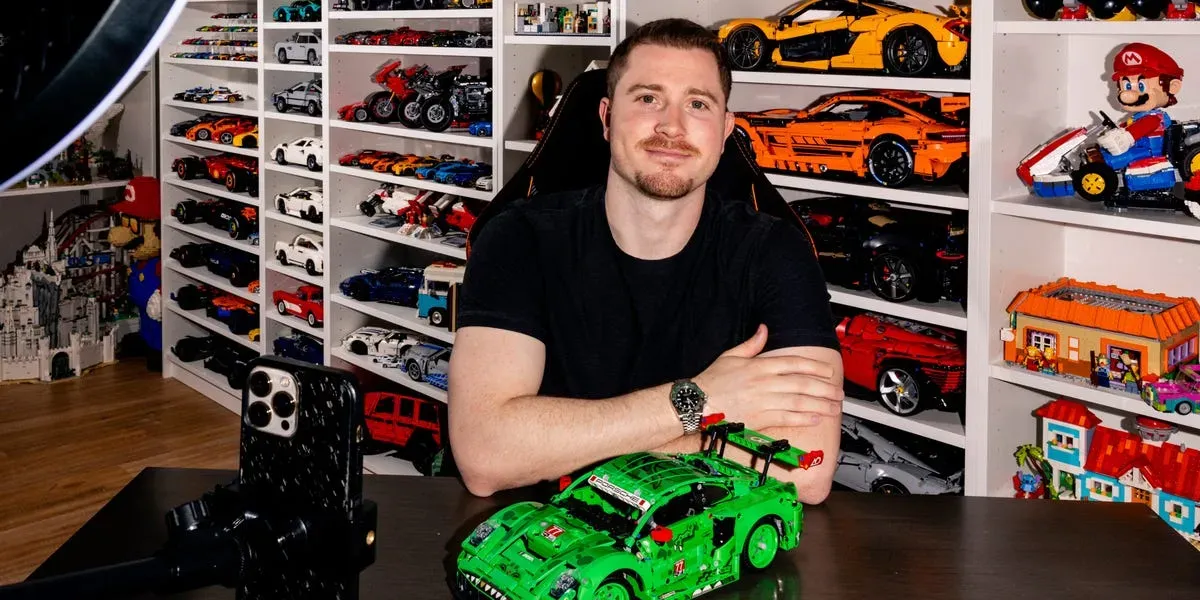
For many, building and playing with Lego sets is a nostalgic reminder of childhood. However, for some adults, this hobby is not just a relic of their youth but a passion that has endured into adulthood. Harrison Woodward, 28, is one such individual who still enjoys creating with Lego bricks.
As an adult, Woodward's love for Lego was rekindled by his aunt, who gifted him a Lego Porsche car model on his birthday in his early twenties. This sparked a renewed interest in the iconic toy brand, and he began to build complex sets, including ones with over 1,000 pieces. He even started streaming his building sessions online.
Woodward's passion for Lego has become so intense that he has left his job in insurance to focus on content creation full-time. His social media accounts are filled with photos and videos of his extensive Lego collection, as well as other childhood favorites like Hot Wheels. With thousands of dollars spent on these toys, Woodward is now facing the challenge of finding space for them.
Woodward believes that adults are increasingly turning to collecting toys as a way to invest time in their hobbies and prioritize their mental health. He thinks that the stigma associated with toy collecting has lifted, allowing people to openly pursue their interests without fear of judgment.
The toy industry is experiencing a significant surge in demand from adults, particularly millennials and Gen Zers who are openly collecting toys without fear of judgment.
Trading cards have become a major area of interest for some adults, with Pokémon being a lucrative side hustle. This trend has been fueled by the analytical skills that collectors can apply to their hobby, such as assessing risks and making informed decisions about when to buy or sell. Some collectors have even used these skills to turn their passion into a profitable venture.
Byron, a Gen Zer who recently purchased an American doll, is not alone in revisiting her childhood interests. Her collection of dolls from her childhood is still on display, and she's now considering adding more to it, with the possibility of buying another doll during her next visit to the store.
Facts based on reporting originally published by Business Insider.
You may republish this story, in full or in part, if you credit News Central Site and link to it (licence CC BY 4.0). Photos are not included.