Hungarian Archaeologists Uncover Over 200 Celtic Silver Coins
Archaeologists have unearthed a significant trove of over 200 Celtic silver coins in Hungary's western Szombathely region, dating back more than 2,000 years.
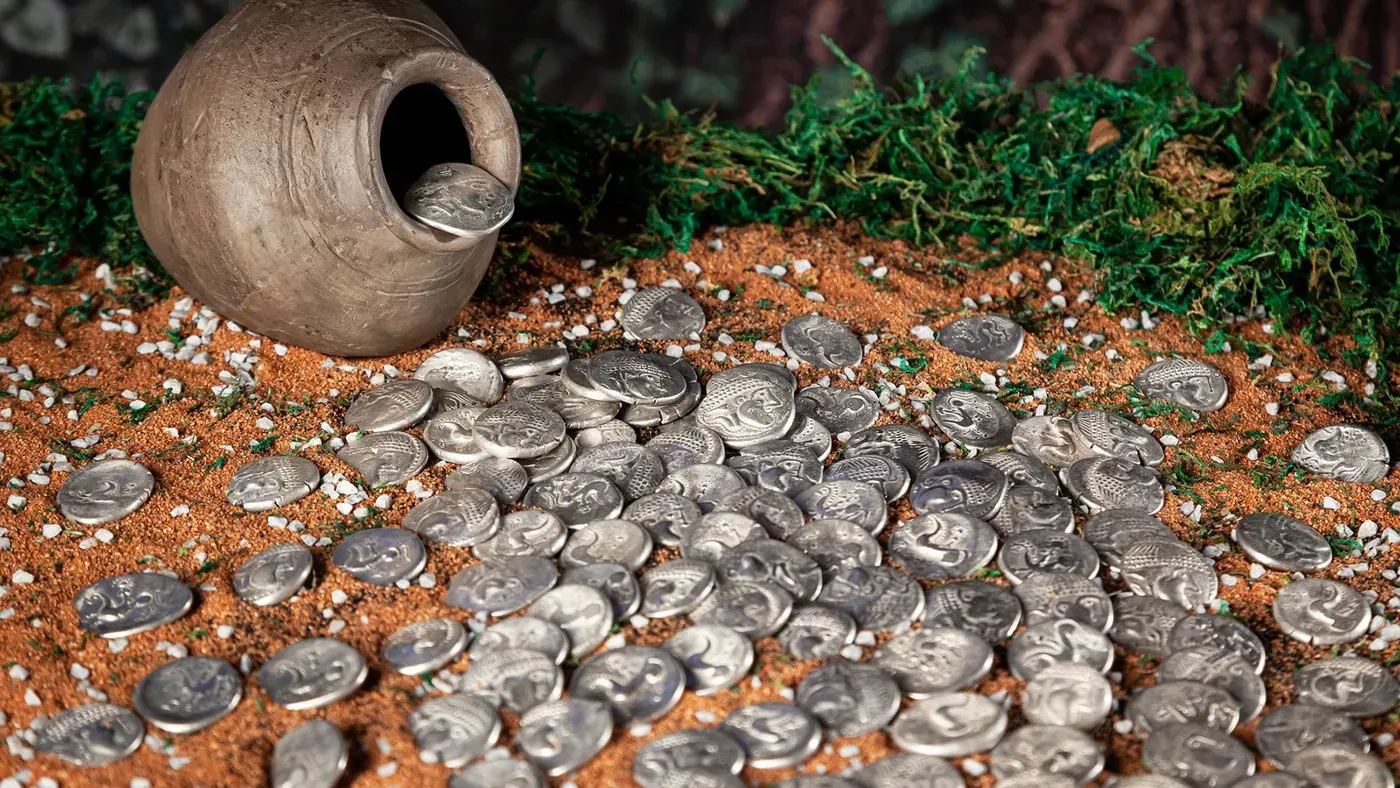
Archaeologists in Hungary have unearthed an impressive trove of over 200 Celtic silver coins dating back more than 2,000 years. This significant discovery is one of the largest hoards found in the region in recent decades.
The treasure was discovered at a construction site that was once part of a farm, where plowing had previously uncovered individual coins. Recent excavations led archaeologists to use metal detectors, which ultimately revealed the larger coin hoard buried about 40 centimeters below ground.
According to experts, the raw silver value of these coins would be worth around $2,000 in today's market. However, their rarity and historical significance render them priceless, making this discovery truly invaluable. The treasure was carefully stored inside a small ceramic vessel.
Eszter Kreiter, an archaeologist at Hungary's National Archaeological Institute, described the find as "a rarity in Europe. Notably, the last similar discovery of Celtic silver coins was made in Hungary in the late 1960s.
Archaeologists have made a significant discovery at a construction site in Hungary's western Szombathely region, where a hoard of Celtic silver coins was unearthed. The coins are known as Velem" tetradrachm copies, named after the fortified Celtic hilltop settlement or oppidum located nearby. Situated about 10 miles west of Velem-Szent Vid, this site has yielded numerous artifacts from over 7,000 years of occupation.
The newly discovered coins feature a stylized head on one side that is thought to represent the Greek god Apollo, while the other side depicts a helmeted rider and horse. This design is characteristic of Celtic art during the Iron Age period. The discovery highlights the rich cultural heritage of the region, which has been shaped by various civilizations over millennia.
Excavations at the site have uncovered a range of artifacts, including a glass bead estimated to be around 2,500 years old. This find serves as a testament to the extensive occupation and human activity that has taken place in the area. According to officials, the excavations revealed evidence of more than 7,000 years of continuous settlement at the site.
A Roman-era villa was later built on top of the original Celtic settlement without disturbing the buried silver hoard. The excavation process itself took place between 2023 and 2025 as part of preparations for an electricity substation project in the area.
Archaeologists have managed to reconstruct the floor plan of a long-demolished villa in Hungary, thanks to recent excavations that uncovered its underfloor heating system among other artifacts. This detailed blueprint is a valuable find for historians and researchers studying ancient civilizations.
A Roman-era brick bearing an unusual impression was also discovered during the excavation process - it features a clear dog's paw print. The discovery of this artifact adds another layer of interest to the site, which has already yielded significant finds that will be put on display in a forthcoming museum exhibition.
The discovery of a 2,200-year-old silver coin hoard in Hungary has shed new light on the minting practices of ancient Celtic tribes. According to Christopher Howgego, an expert in Greek and Roman numismatics, these tribes began producing their own silver coins after being exposed to Hellenistic designs while serving with armies in Greece and Macedonia.
The Celtic coins were heavily influenced by classical Greek portraits, but also featured distinctively Celtic designs. These coins, known as tetradrachms, held significant value for their makers and were rarely used for everyday transactions.
Instead of circulating freely, the precious coins were often hoarded or buried as ritual offerings, highlighting the importance of wealth and material possessions in ancient Celtic culture.
Facts based on reporting originally published by Live Science.
You may republish this story, in full or in part, if you credit News Central Site and link to it (licence CC BY 4.0). Photos are not included.