Healthcare Reform Plan Emerges Amid Concerns Over Escalating Medical Costs
Senator-elect Abdul El-Sayed has devised an unorthodox strategy for healthcare reform that involves using the name "TrumpCare" for a public insurance program, aiming to circumvent potential vetoes from President Trump.
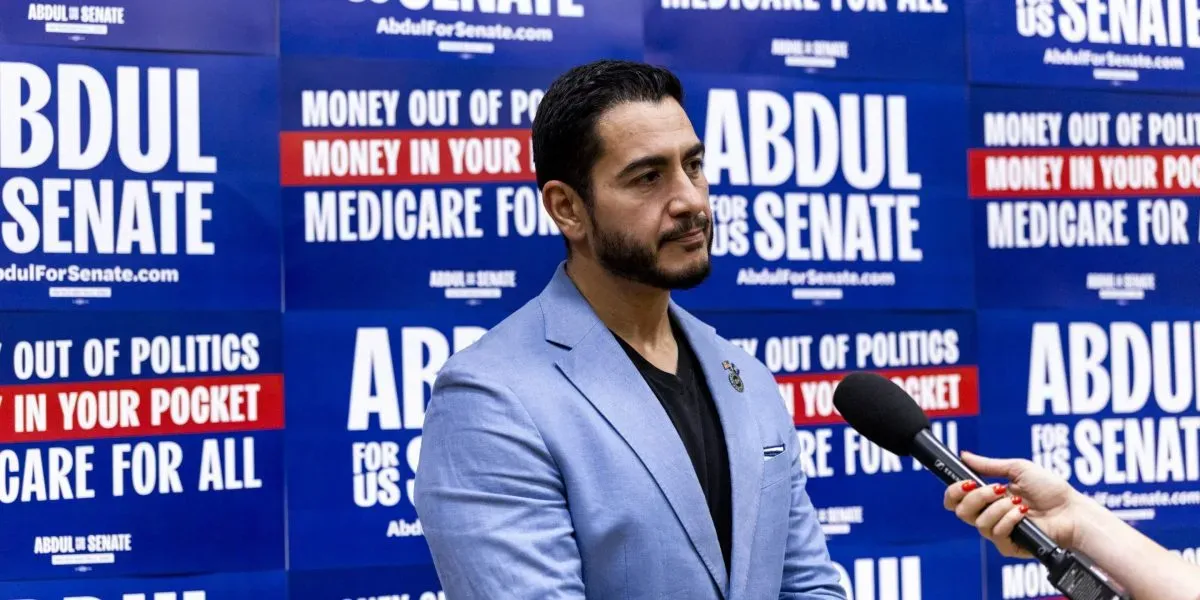
A key plank of the Democratic legislative agenda has emerged as healthcare reform, driven by concerns over escalating medical costs that dominated midterm election discussions about affordability.
The party will enjoy strong majorities in both the House and Senate when Congress reconvenes in January, but President Donald Trump has made it clear he's prepared to veto any legislation he disapproves of.
In a bid to circumvent this obstacle, Senator-elect Abdul El-Sayed - a former health official who campaigned on Medicare for all - has devised an unorthodox strategy that plays off Trump's ego. He posted a picture of a hypothetical "TrumpCare card on social media, proposing it as a guarantee of universal healthcare.
El-Sayed emphasized that the name given to such a public insurance program is secondary; what matters most is its impact on people's lives. In an interview with CNN, he dismissed concerns over branding, suggesting that most politicians focus on solving real problems rather than assigning labels.
By calling his proposal TrumpCare, El-Sayed has managed to pique the interest of President Trump himself, who reposted the initial appeal on his social media account and responded with a call to action.
The phrase There is no limit to what a man can do or where he can go if he doesn’t mind who gets the credit has become synonymous with former President Ronald Reagan's leadership philosophy. This mantra was often displayed on his Oval Office desk as a reminder of the importance of teamwork and collaboration.
Reagan's words have endured long after his presidency, serving as a beacon for politicians willing to put aside partisan differences in pursuit of meaningful policy changes. However, the current American political landscape has become increasingly polarized, making it difficult for leaders to transcend party lines.
The incoming Democratic senator has been vocal about his willingness to work across the aisle, even with those who have previously maligned him. El-Sayed's determination to expand health coverage has drawn attention from President Trump, who appears to be considering a more conciliatory approach.
Trump's apparent openness to negotiating with Democrats on healthcare reform has raised hopes that a lasting solution can be achieved. This development has sparked renewed optimism among those advocating for comprehensive healthcare reform, which would provide individuals with uninterrupted access to medical care without the burden of premiums, co-pays, and deductibles.
The senator's proposal has been dubbed TrumpCare for all, a nod to its potential appeal to the president's base while also underscoring its expansive nature. This clever branding strategy may yet prove effective in securing support from both parties.
As the open enrollment season unfolds across the country, workers are experiencing sticker shock at the rising premiums for next year's health insurance coverage. This surge in costs is affecting not just those who get their insurance through their employers but also individuals buying Affordable Care Act plans. The enhanced subsidies that were put in place during the pandemic have expired, leaving many without a safety net to cushion the blow.
Despite this gloomy picture, some Democrats are seizing an opportunity to make headway on Medicare for all by capitalizing on President Trump's willingness to attach his name to health care policies. Senator-Elect Peggy Flanagan of Minnesota has expressed her openness to adopting such an approach in order to get comprehensive health coverage across the finish line.
Flanagan isn't alone in this thinking, as Abdul El-Sayed had previously suggested that if Trump is genuinely interested in signing legislation for TrumpCare for all, many Republicans in Congress may be willing to support it. It seems that El-Sayed's prediction has some merit, given the current political climate and the president's penchant for self-promotion.
With plans already underway to meet with President Trump or Vice President JD Vance, El-Sayed is optimistic about the prospects of securing bipartisan support for his vision of universal health care. As he noted, those plans are in the works," suggesting a sense of urgency and determination behind his efforts to make Medicare for all a reality.
The irony of a new health program being named TrumpCare is not lost on critics who recall President Donald Trump's efforts to repeal and replace the Affordable Care Act during his first term in office. This would mark a significant shift from his previous stance, where he actively sought to dismantle the healthcare law.
A change in nomenclature could also signal a departure from the Obama administration's legacy, which was marked by the Republican criticism of the ACA being branded as ObamaCare. However, former President Barack Obama himself seemed to have taken this label in stride, even joking about it at the Democratic National Convention in 2024 that people were now referring to it as the Affordable Care Act again.
Facts based on reporting originally published by Fortune.
You may republish this story, in full or in part, if you credit News Central Site and link to it (licence CC BY 4.0). Photos are not included.