Groundbreaking Observation of Ultraquantum Turbulence Made by Researchers
A team led by Sebastian Morris at the University of Cambridge has discovered a new type of turbulence that exists solely in the quantum realm.
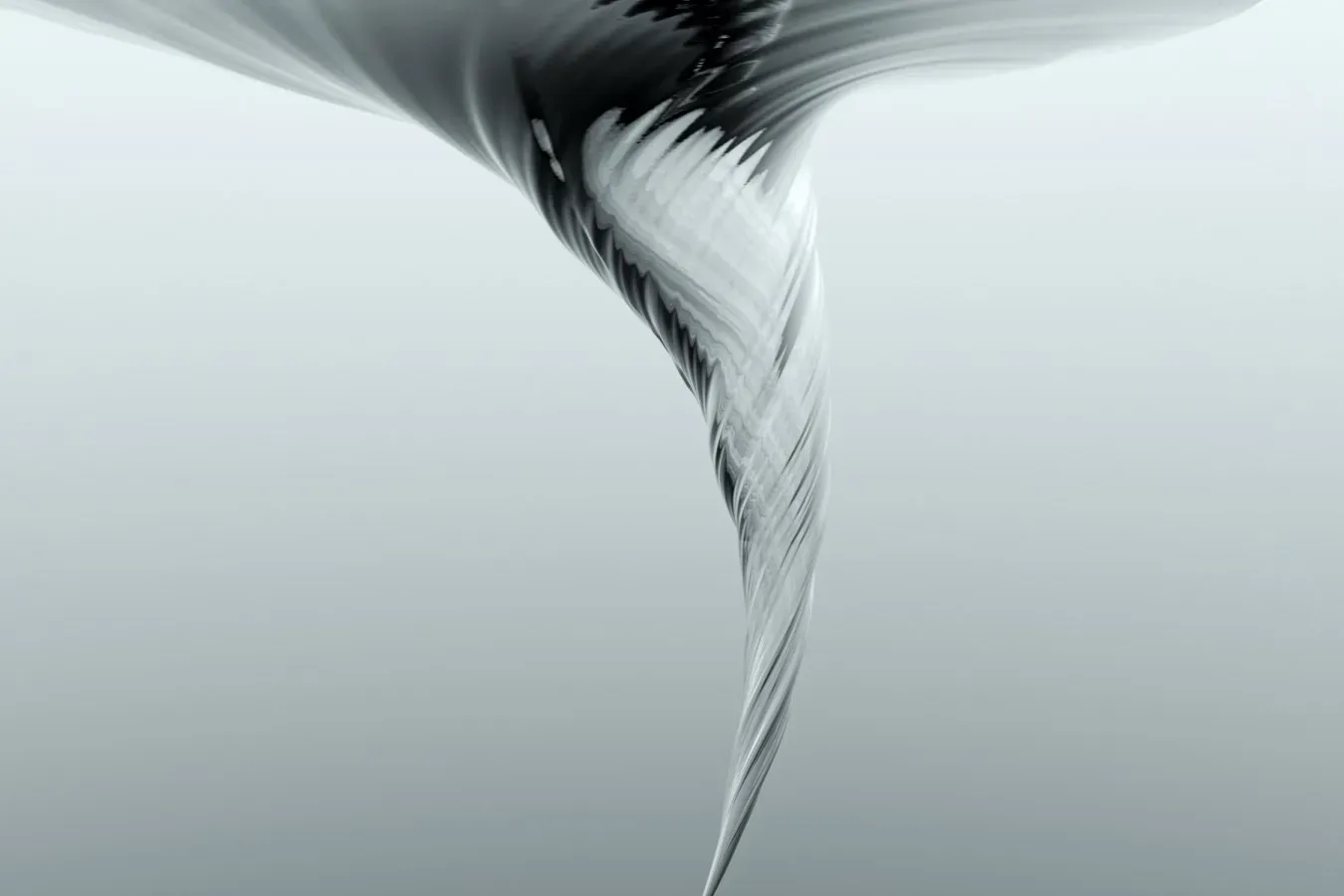
Researchers have made a groundbreaking observation of a previously unknown type of turbulence that exists solely in the quantum realm. Dubbed "ultraquantum" turbulence, this phenomenon is characterized by chaotic and irregular currents that deviate from classical fluid dynamics. In normal fluids, turbulence manifests as whirlpools or eddies, but in quantum fluids, it takes on a more exotic form.
Ultraquantum turbulence may be representative of the behavior of various exotic systems, including liquid helium and neutron stars. These environments are governed by unique rules that differ significantly from those governing everyday fluids and gases. When perturbed, quantum fluids tend to remain still, but they develop intricate patterns of thin, string-like whirlpools before returning to equilibrium.
To study ultraquantum turbulence, a team led by Sebastian Morris at the University of Cambridge used an innovative setup involving thousands of potassium atoms cooled to extremely low temperatures using lasers and electromagnetic fields. This allowed the researchers to create a dilute quantum gas that mimicked the behavior of a fluid in the quantum realm.
The team then contained the atoms within a cylindrical shape, just a few dozen micrometres in size, to study their behavior under controlled conditions.
The researchers then created a disturbance within the ultra-quantum fluid by controlling the interactions between its constituent atoms and their energies. This induced turbulence and vortices within the fluid, which was contained within a cylindrical shape just a few dozen micrometres in size.
To study this phenomenon, Morris and his colleagues used a sheet of laser light to isolate and image just one slice of the cylinder at a time, rather than attempting to capture the entire structure. This approach allowed them to observe the intricate tangles and patterns that emerged within the fluid as it became more turbulent and disordered.
The team obtained numerous images, which revealed the distribution of vortices as they formed, merged, or broke apart. They observed how these vortices connected into rings or migrated towards the edge of the cylinder, tracing the gradual decline in turbulence and disorder within the quantum fluid.
Intriguingly, the researchers discovered that this process exhibited similarities with a previously studied quantum system: liquid helium. While helium is much denser than the ultra-quantum fluid, its atoms interact more strongly, yet the formation of order within both systems appears to follow a universal pattern.
Researchers have long struggled to visualize vortices in ultraquantum fluids due to their complex nature and three-dimensional structure. However, a recent breakthrough has provided precise experimental evidence supporting mathematical models of this phenomenon.
The new study's findings have been hailed as phenomenal by experts, with some even suggesting that future experiments could reveal more about the behavior of vortices if they image multiple slices of atoms simultaneously. This approach is indeed being explored by the research team behind the study.
The universal pattern observed in both helium and ultraquantum fluid turbulence suggests that this phenomenon may be more widespread than previously thought, with potential implications for understanding similar processes in distant environments.
Facts based on reporting originally published by New Scientist.
You may republish this story, in full or in part, if you credit News Central Site and link to it (licence CC BY 4.0). Photos are not included.