George Washington's Involvement in Reading Thomas Paine's Pamphlet Questioned
Historians have perpetuated the story of officers reading The American Crisis aloud to freezing soldiers before the crossing of the Delaware River, but there is surprisingly thin evidence supporting George Washington's involvement.
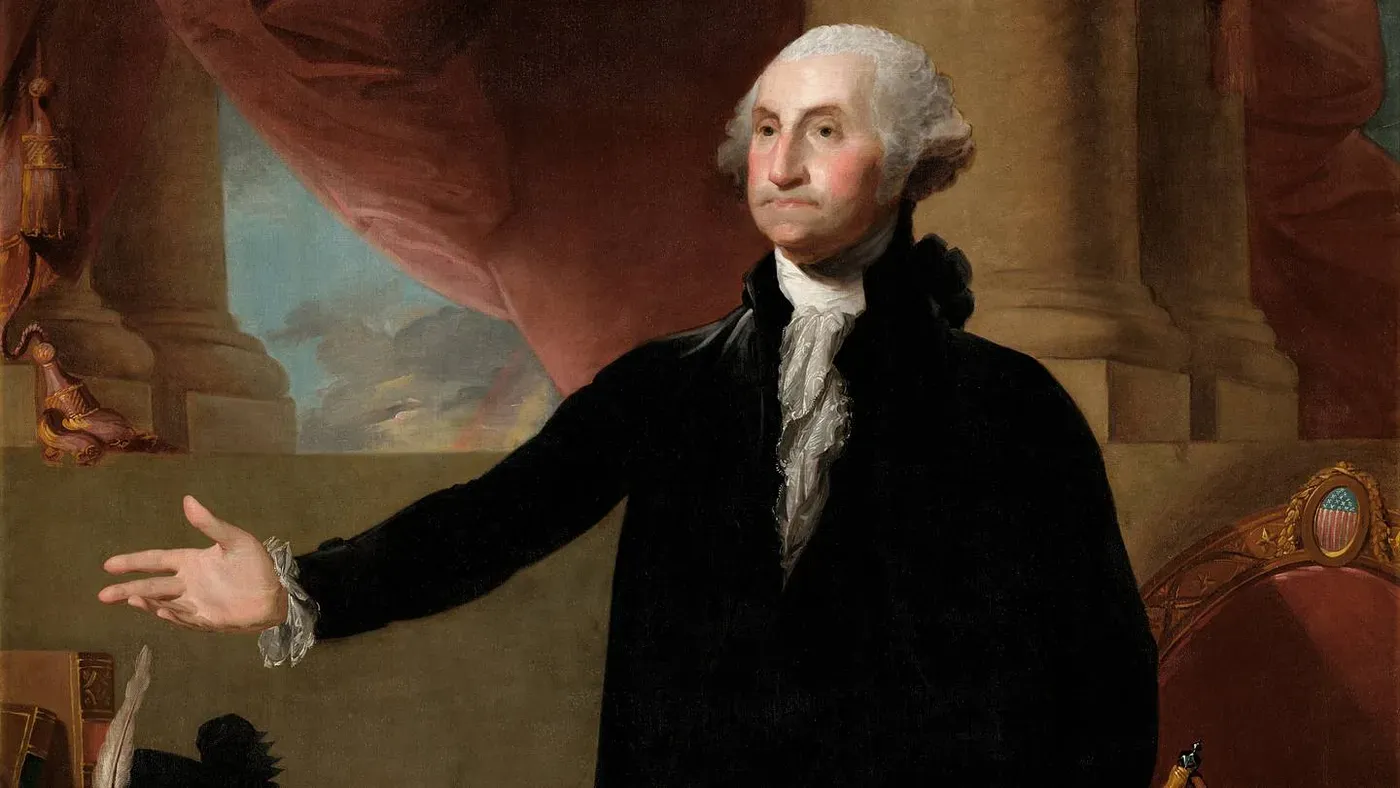
Barack Obama's 2009 inaugural address highlighted a pivotal moment in American history, where "a small band of patriots huddled by dying campfires on the shores of an icy river" received words of encouragement from Thomas Paine's pamphlet. The president described George Washington as "the father of our nation who ordered these words to be read to the people.
The scene is often depicted in historical accounts, with officers reading aloud from Paine's pamphlet before the crossing of the Delaware River. However, a closer examination reveals that the evidence supporting this claim is surprisingly thin. Despite its widespread acceptance, there's a lack of concrete proof to confirm George Washington's involvement.
Historians and biographers have perpetuated the story of officers reading The American Crisis aloud to freezing soldiers on the eve of the crossing. But where did this narrative originate? One possible source is David Hackett Fischer's 2004 history, which recounts the events leading up to Washington's Crossing.
The standard account states that Thomas Paine's essay first appeared in the Pennsylvania Journal on December 19, 1776, and was later published as a pamphlet four days later. However, there's a crucial detail that undermines this narrative: the Journal suspended publication from December 4 to January 22, 1777, due to the impending British invasion of Philadelphia.
This information raises questions about how Paine's essay could have been widely read in the Pennsylvania Journal during its supposed publication date. The lack of clarity surrounding this event highlights the need for a more nuanced understanding of American history.
The myth of George Washington ordering The American Crisis to be read to his troops has become an enduring part of American folklore. But as we delve deeper into the facts, it's clear that there's more to uncover before we can separate fact from fiction.
The account of The American Crisis's publication has been a topic of debate among historians for some time now. According to conventional wisdom, the essay first appeared in the Pennsylvania Journal on December 19, 1776, and was later published as a pamphlet four days later. However, this narrative is challenged by the fact that the Journal suspended its operations from December 4, 1776, until January 22, 1777, due to the looming threat of a British invasion.
Thomas Paine, who had been serving as a volunteer aide to General Nathanael Greene during the retreat, traveled to Philadelphia in early December to complete his essay. In hindsight, he recalled that he began writing The American Crisis while on the move and managed to get it printed in Philadelphia by December 19, 1776. Notably, Paine mentioned that the printer chose not to attach their name to the publication.
Further examination of the facts reveals inconsistencies in the standard account. As previously stated, the Journal had ceased operations during the period in question, casting doubt on its ability to publish The American Crisis as described. Moreover, Paine's own testimony suggests that he was actively working on the essay while on the retreat and saw it through to publication.
The first copies of The American Crisis were released anonymously, bearing only the signature the Author of Common Sense. Interestingly, the Pennsylvania Packet, a newspaper known for its coverage of local events, printed the first half of the essay on December 27, just one day after the pivotal battle at Trenton. This sequence of events raises questions about the accuracy of the traditional narrative.
Historians have long debated the role of The American Crisis in boosting morale among Washington's troops during a critical period in the war. While Paine's essay is often credited with inspiring the Continental Army, its actual impact remains unclear. Further investigation into this topic is warranted to separate fact from fiction.
The publication history of The American Crisis remains shrouded in mystery, with several key details yet to be fully illuminated by historical research. To better understand the context surrounding this pivotal event, it is essential to continue examining the facts and shedding new light on the circumstances surrounding its release.
The earliest known account of The American Crisis being read to George Washington's troops comes from James Cheetham's book on Thomas Paine's life, published in 1809. This biography was written by a man who had soured on Paine due to his religious writings and was even described as being inspired by enmity by one 19th-century encyclopedia.
Cheetham claimed that the pamphlet was read to every corporal's guard in the camp, crediting it with contributing to a significant event at Trenton. However, he failed to provide any source or date for this reading, and did not attribute it directly to Washington's orders. Instead, he mentioned that the pamphlet was published early in December.
The story of The American Crisis being read to Washington's troops gained more detail over time. In 1847, writer George Lippard described the event as happening when every corporal in the army read the pamphlet aloud. This account differed from Cheetham's only in its specificity about who was responsible for reading it.
By 1861, a Boston publisher was advertising reprints of The American Crisis as essays that were ordered by General Washington to be read to each regiment of the army as they became available. This account added a level of detail and authority to the story, but still did not provide any concrete evidence or source for its claims.
Moncure Conway's 1894 edition of Paine's writings further elaborated on the story, stating that the first Crisis was read by order of the Commander to groups of his dispirited and suffering soldiers. This account added a sense of context and motivation to the event, but still did not provide any concrete evidence or source for its claims.
In 2007, Craig Nelson's biography of Paine provided a specific time for the reading: December 23, 1776. However, this account did not offer any source or explanation for how it arrived at this date. Instead, it seemed to rely on previous accounts and interpretations without providing any new evidence.
The lack of concrete evidence and sources has made it difficult to verify the accuracy of these claims about The American Crisis being read to Washington's troops. Despite the varying details and interpretations, one thing is clear: the story of this event continues to be a topic of debate among historians and scholars.
Historians have continued to add details to the story of George Washington's troops listening to The American Crisis being read by their commanders.
In an 1847 account, writer George Lippard claimed that every corporal in the army had read the Crisis aloud to his fellow soldiers under Washington's command. This narrative was further embellished by a Boston publisher in 1861 who advertised reprints as essays ordered by General Washington himself for each regiment to hear.
However, there is no written record of such an order being given by Washington or any other high-ranking officer. A closer look at the general orders issued on July 9, 1776 reveals that Washington did indeed instruct his brigades to assemble in the evening to hear the Declaration of Independence read aloud.
The absence of a similar order for Paine's Crisis suggests that it may not have been widely disseminated among the troops in this manner. In fact, Jett Conner's research uncovered no written evidence of such an order in the Library of Congress's collection of Washington's papers.
Furthermore, none of the published papers or biographies of notable figures from the time period, including Greene, Hamilton, Knox, Glover, and Monroe, mention Paine's Crisis being read to the troops. This lack of documentation raises questions about the accuracy of later accounts that claim such a widespread reading of the Crisis took place.
Despite these discrepancies, some historians have cited Craig Nelson's 2007 biography as evidence that Washington did indeed order the Crisis to be read to his dispirited and suffering soldiers at dusk on December 23, 1776. However, Nelson provides no source for this claim.
Washington's own records suggest a more formal approach when it came to disseminating important documents to his troops. His general orders for July 9, 1776 demonstrate that he preferred written instructions over oral readings.
In the absence of concrete evidence, it remains unclear whether Paine's Crisis was indeed read aloud to Washington's troops as some accounts claim. The lack of documentation and conflicting narratives highlight the challenges historians face when reconstructing events from the past.
The notion that George Washington's troops never heard The American Crisis is challenged by some historians who suggest it may have been read aloud to them.
J.L. Bell, a blogger on the site Boston 1775, views Cheetham as an unreliable witness but believes many soldiers in the Continental Army under Washington's command likely heard Paine's influential work in late 1776.
Despite Washington's praise for Paine's writings, which had a significant impact on public opinion, there is no concrete evidence to support the claim that The American Crisis" was officially read to his troops.
In an 1784 letter to James Madison, Washington expressed concern about Paine's financial situation and acknowledged the powerful effect of his writings on the public mind.
Facts based on reporting originally published by Mental Floss.
You may republish this story, in full or in part, if you credit News Central Site and link to it (licence CC BY 4.0). Photos are not included.