Fossil Discovery Reveals New Insights into Bird Evolution and Flight
A previously unknown bird species, Yuezhuornis yangyuanensis, lived around 148-150 million years ago and never developed the ability to fly.
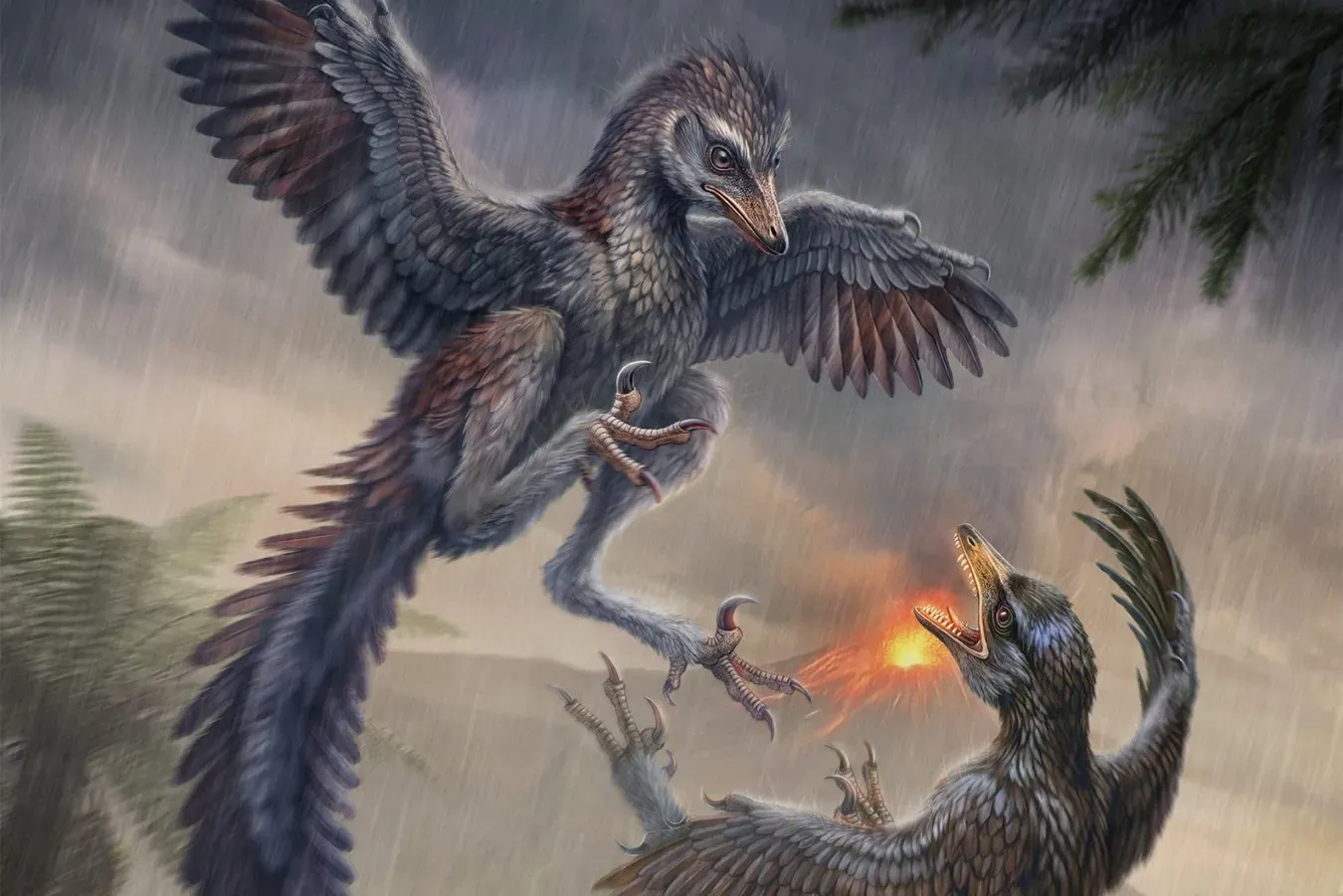
A remarkable fossil discovery in China has shed new light on the evolution of birds and flight. The find, announced by Min Wang at the Chinese Academy of Sciences, is that of a previously unknown bird species that never developed the ability to fly.
The species, named Yuezhuornis yangyuanensis after a mythological Chinese bird, lived around 148-150 million years ago during the Late Jurassic period. The almost-complete fossil was unearthed in August 2024 near Yangyuang village, Fujian Province. Its discovery has significant implications for our understanding of avian evolution.
Wang's team suggests that Yuezhuornis yangyuanensis may have abandoned flight soon after it evolved, rather than developing powered flight as a driving force behind the unique anatomy of birds. This contradicts previous assumptions about the relationship between bird evolution and flight.
The researchers' analysis suggests that Yangyuanornis lived in a swampy environment and was likely an agile runner. This assumption is based on its anatomy, which bears some striking similarities to that of modern ground-dwelling pheasants.
These birds have forelimbs shorter than their hindlimbs, a characteristic shared by Yangyuanornis. While modern pheasants are capable of short bursts of flight, they are essentially ground-dwellers, and it's likely that Yangyuanornis was similarly adapted for life on the ground.
Yangyuanornis also had a distinctive sickle-shaped claw on its second toe, which was highly functional according to Wang. This feature is reminiscent of those found in distant relatives such as Velociraptor, but modern birds have lost this trait altogether.
The bird's tail was long and similar to that of Archaeopteryx, while its teeth were closely packed and serrated, a characteristic more typically associated with deinonychosaur dinosaurs. However, Yangyuanornis shares many other anatomical features with modern birds, complicating our understanding of the evolution of winged creatures.
The discovery of Yangyuanornis has revealed that its hip bones and lower leg bone, known as the fibula, share striking similarities with those found in later Cretaceous birds. This finding suggests that these characteristics evolved early on in the development of bird-like species.
In contrast to the prevailing view that the evolution of flight was a gradual process driven by selective pressures, Yangyuanornis' mix of primitive and advanced features indicates a more complex and rapid process. The researchers suggest that early bird species quickly diversified into different lifestyles, including those that didn't involve flying, challenging the idea that flight was the primary driver of avian evolution.
The presence of both dinosaur-like and bird-like traits in Yangyuanornis has significant implications for our understanding of the early evolution of birds. According to Wang, this "mosaic" of features blurs the lines between primitive and advanced characteristics, indicating a more nuanced picture of bird evolution than previously thought.
Facts based on reporting originally published by New Scientist.
You may republish this story, in full or in part, if you credit News Central Site and link to it (licence CC BY 4.0). Photos are not included.