Congo Basin Kayaking Expedition Captures Mysterious Water Disturbance
A kayaking expedition through the Congo Basin has sparked a viral sensation on social media after a mysterious water disturbance was captured on camera.
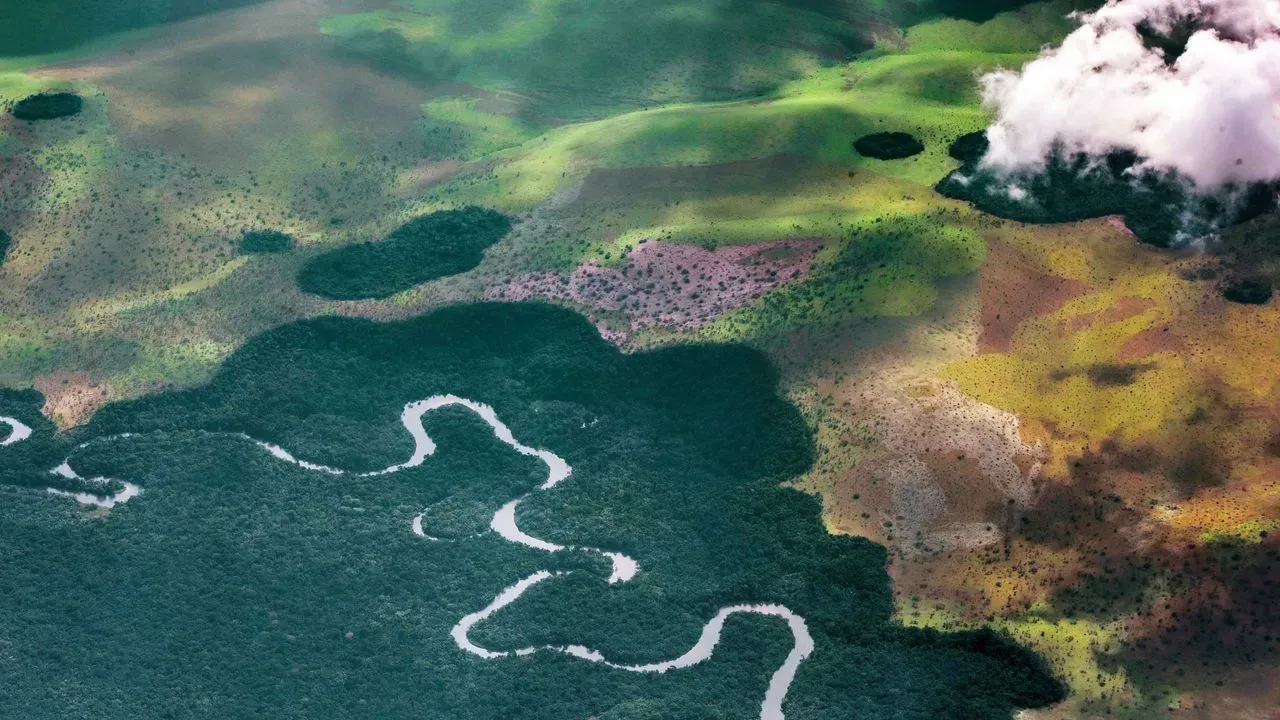
Welsh adventurer Ash Dykes recently embarked on a 500-mile kayaking journey through the Congo Basin, the world's second-largest rainforest. He was accompanied by local guide Obed Temba Tuyumvire and cameraman Will Perez as they navigated the tranquil waters of the Sangha River, which flows through Cameroon, Central African Republic, and Republic of the Congo.
Their expedition had the potential to attract various wildlife, including lowland gorillas or forest elephants. However, the team was also aware of a more formidable threat lurking in the water: hippos. These large mammals can be aggressive when feeling threatened or surprised, making them a significant hazard for travelers on the river.
As they paddled along, Perez suggested that a hippopotamus might have caused the ripples in the water. If this were indeed the case, the team would need to take immediate action to avoid potential danger. Hippos are notorious for their aggressive behavior when provoked or surprised, making them a formidable force on the river.
The sudden movement in the water was captured on camera and later posted by Dykes on TikTok. The minute-and-a-half-long video racked up over 8 million views within a short period of time, sparking a frenzy of theories about what might have caused the disturbance.
Comments poured in from viewers eager to share their own explanations for the mysterious occurrence. Some speculated that Mami Wata, a water spirit said to inhabit the riverbanks, had intervened. Others focused on Perez's visibly tense expression, wondering if they were indeed witnessing a "real game of Hungry Hungry Hippos."
The team's social media dispatches from the Sangha expedition have captivated millions of viewers worldwide. For weeks, fans were glued to their TikTok and YouTube videos, eagerly following the team's every move as they navigated the challenges of kayaking down the Congolese river. The online audience was treated to a behind-the-scenes look at the logistical hurdles, including the scorching heat and the threat of parasites and disease.
The viewers' reactions ranged from awe-inspiring to humorous, with many celebrating alongside the team when they spotted forest elephants or outran swarms of bees chasing their kayaks. However, when the team went silent for a prolonged stretch due to a power bank failure, fans began to worry that something catastrophic had occurred. The sudden absence only added to the sense of anticipation and suspense surrounding the expedition.
The Sangha expedition was just the first leg in an ambitious undertaking called Project 6, which involves Welsh adventurer Dykes traversing extreme parts of the globe by pushing his physical limits. With a career built on breaking world records, including walking the length of the Yangtze River, Dykes is no stranger to taking on formidable challenges.
The team's experience with the Ba'Aka people, a seminomadic Indigenous tribe in Dzanga-Sangha Protected Area, was a highlight of their journey. The encounter included foraging for wild coconuts and joining a traditional hunt, providing a unique glimpse into the lives of this isolated community.
Dykes' expedition down the Congo River was not just about paddling 500 miles, but also about immersing himself in local culture.
He aimed to showcase the beauty of the Congo Basin and its inhabitants in a responsible way, stressing that visitors can explore these areas as long as they are properly prepared.
The encounter with Tuyumvire, who works in conservation advocacy and ecotourism through his Kigali-based company, Kumbukumbu Tours, was instrumental to Dykes' journey.
Tuyumvire's experiences growing up in a forest village near Virunga National Park, fleeing the region during the civil war, and living in a refugee camp for over a decade have shaped his approach to responsible tourism.
He believes that tourism can be a means of making a local impact, particularly for young people, and was eager to join Dykes' excursion to share meaningful stories about the Congo Basin with a wider audience.
The team's online presence was a crucial aspect of their journey, as they aimed to share their experiences with a wider audience. Despite the challenges posed by the forest canopy, which limited internet connectivity, Dykes insisted on maintaining an online presence throughout the trip.
"I can't be claiming that this is a lifetime expedition and then we use either recycled content or we go dark," he says, highlighting the importance of staying connected with their viewers. This approach sparked a mix of fascination and criticism from online commenters, who seemed to blur the lines between entertainment and reality.
Some viewers appeared genuinely interested in the team's journey, even during less-exciting moments, but others expressed a disturbing enthusiasm for destructive content. Dykes noticed that some commenters were betting on how the trio might meet their demise in the Congo Basin, with scenarios involving hippopotamuses or crocodiles being cited as possibilities.
The online response was not limited to criticism of the team's expedition; some commenters also drew parallels between Dykes and other foreigners who enter remote areas, unintentionally reinforcing outdated stereotypes. This tension highlights the complexities of sharing meaningful experiences with a global audience while avoiding cultural insensitivity and misrepresentation.
The phrase "heart of darkness" has been used by several adventurers and explorers before, but its use in this context has sparked controversy among locals who feel it erases their presence in the region.
Dykes' expedition was meant to raise awareness about the Congo Basin's dire situation, with widespread deforestation threatening the area. However, some have questioned whether his project truly benefits the local community or if it primarily serves his own business interests through Project 6.
The Sangha River, where Dykes paddled for miles, is not an unexplored territory as he has suggested in some posts. People have been living along its banks for centuries, and their presence cannot be ignored when discussing the region's challenges.
Colonialism and slavery have left a lasting legacy in the Congo Basin, contributing to issues such as poverty, corruption, and illegal mineral mining. These problems are deeply ingrained and require more than just awareness-raising expeditions to solve them.
Locals feel that the arrival of outsiders, including Dykes, brings back painful memories of the past and undermines their hopes for development in the area.
Since returning from his record-breaking kayaking trip in late October, Tuyumvire has been taking it easy and getting back into his normal routine after the grueling physical demands of paddling 500 miles down a Congolese river.
The massive interest generated by his viral TikTok videos hasn't translated into bookings for his guided tours, which wasn't exactly what he was aiming for. According to Tuyumvire, the audience that tuned in to watch him navigate the treacherous waters isn't typically made up of travelers looking to book a trip.
Tuyumvire has been reflecting on how broadcasting his journey could have been more effective at sparking tangible change and economic benefits for the region he showcased so vividly.
Facts based on reporting originally published by Conde Nast Traveler.
You may republish this story, in full or in part, if you credit News Central Site and link to it (licence CC BY 4.0). Photos are not included.