Uncanny Valley Phenomenon Gains Mainstream Attention
A viral TikTok makeup trend has brought the concept of "uncanny valley" into mainstream conversation, sparking renewed interest in this phenomenon that occurs when a creation is designed to appear lifelike but ultimately falls short.
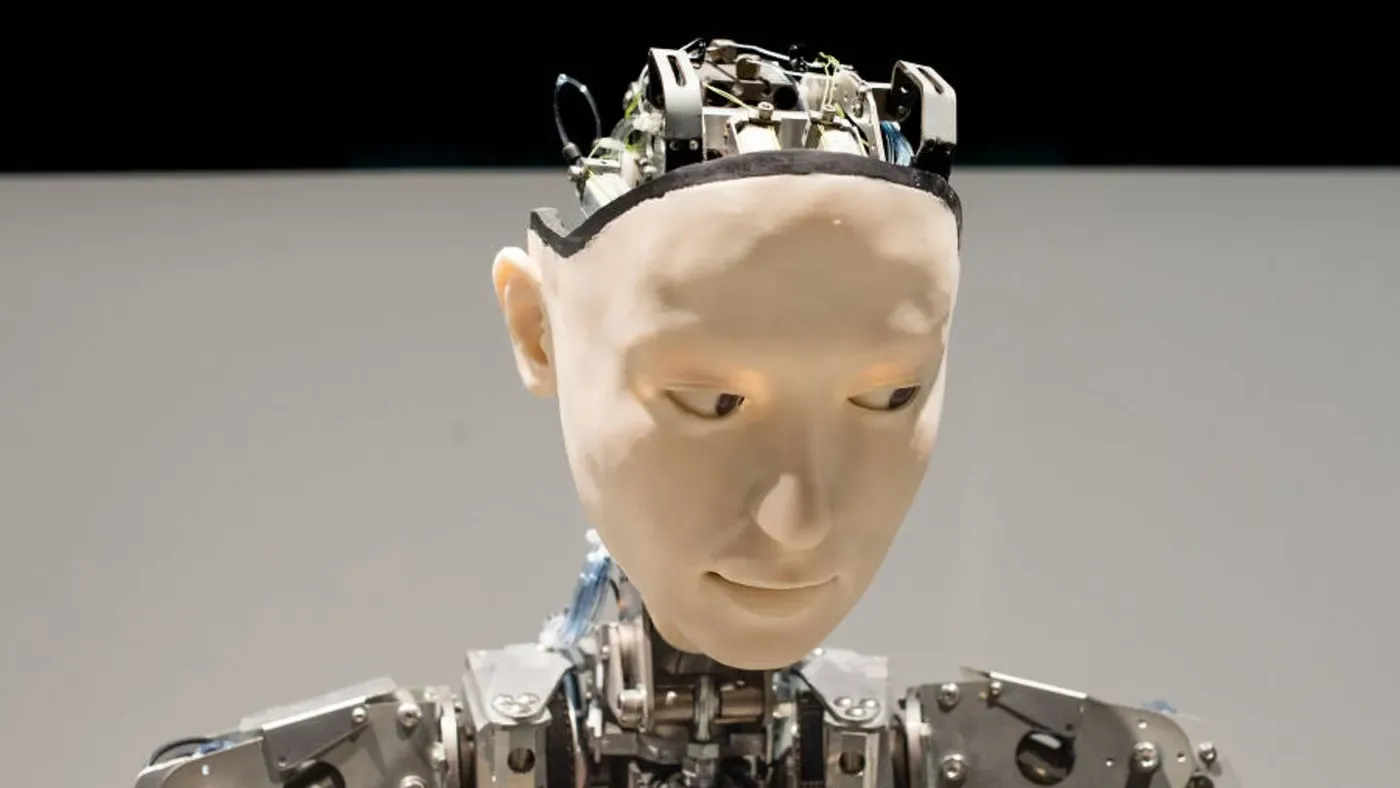
A viral makeup trend on TikTok has brought the concept of "uncanny valley into mainstream conversation, sparking renewed interest in this phenomenon that occurs when a creation is designed to appear lifelike but ultimately falls short.
The phrase itself refers to a specific feeling of unease that people experience when encountering something that is meant to be human-like but lacks authenticity. This can range from humanoid robots and AI-generated faces or voices to synthetic dolls, toys, puppets, waxworks, and computer-generated characters.
Researchers have found that the more a creation tries to mimic human appearance or behavior, the greater the feeling of unease it evokes in viewers. In other words, the closer something gets to being lifelike, the more it seems to fall short, creating an unsettling effect.
This concept was first identified by Japanese robotics professor Masahiro Mori in 1970, who observed that as a robot's human likeness increased, people's emotional response shifted from empathy to revulsion. The uncanny valley term has since been used to describe this phenomenon.
The uncanny valley can be seen in various areas of technology and design, including robotics, computer-generated imagery, and artificial intelligence. It highlights the challenges that creators face when trying to make digital or robotic entities appear truly human-like.
As researchers continue to explore the uncanny valley phenomenon, they are also raising questions about what it means for humans to interact with increasingly lifelike machines.
Masahiro Mori, a renowned Japanese roboticist, spent over 40 years working in the field of robotics at the Tokyo Institute of Technology. He made significant contributions to the development of humanoid robots and was instrumental in creating pioneering bipedal robots that could walk upright on two legs. One notable example is the knee joint design he developed for these robots, which allowed them to move more naturally.
Mori's work extended beyond designing robots; he also explored human attitudes towards increasingly humanoid machines. He observed a fascinating phenomenon where people's perception of robots shifted as they became more lifelike. Initially, simple and functional robots elicited little or no response from humans, but this changed as robots began to resemble humans more closely.
As robots started to exhibit characteristics that made them appear more human-like, such as having faces or moving in a way that mimicked humans, people began to feel an affinity with them. This increased recognizability and human-likeness led to a stronger emotional connection between humans and robots.
However, Mori noted that there is a critical point where the relationship between humans and robots becomes inverted. While it's initially positive when robots become more lifelike, this enthusiasm can quickly turn into unease and eeriness as they approach an uncanny threshold. This tipping point marks a significant shift in how people perceive robots.
The phenomenon Mori described has come to be known as the uncanny valley. It suggests that humans have a natural preference for robots or machines that are either clearly non-human or remarkably human-like, but tend to feel uneasy when they fall into an intermediate zone where they're almost-but-not-quite indistinguishable from humans.
Mori's theory has sparked debate and further research on the uncanny valley phenomenon. While it remains a topic of discussion among experts in robotics and AI, its implications extend beyond the technical realm. The concept raises questions about how humans will interact with increasingly lifelike machines and what this means for our relationships with technology.
The study of the uncanny valley has also led to explorations into human psychology and behavior. By examining why people respond negatively to robots that are almost-but-not-quite human-like, researchers can gain insights into fundamental aspects of human nature. This knowledge can have practical applications in fields like robotics and AI development, where it's crucial to create machines that interact with humans effectively and without causing discomfort or unease.
The more human-like features a robot possesses, the stronger its connection to humans becomes. This phenomenon was first observed by robotics researcher Masahiro Mori, who noted that simple, functional robots tend to elicit little or no reaction from people. However, as robots become increasingly lifelike, they start to resonate with us on a deeper level.
A toy robot with a face, for instance, is more easily recognized as human-like than a metal arm clanking away in a factory. As robots continue to evolve, they approach a point where they are almost indistinguishable from humans, but still not quite. This proximity to human likeness can have an unsettling effect on people.
Mori visualized this concept by plotting it on a line graph. The graph shows that as a robot's human-likeness increases, our affinity with it grows. However, when the robot approaches perfect similarity to a human, something unexpected happens: our affinity plummets into revulsion and negativity.
This dip in affinity is what Mori termed the uncanny valley. It's a noticeable negative trend on the graph that extends far below the x-axis. The uncanny valley represents a point where robots become almost-but-not-quite indistinguishable from humans, creating an unsettling effect on people.
The concept of the uncanny valley has been used to explain why some human-like robots or characters in films and video games can be more disturbing than others. It highlights the importance of subtle differences between humans and machines in avoiding this eerie feeling.
This phenomenon is not limited to robotics; it also applies to other areas where human-likeness is key, such as animation and special effects. Understanding the uncanny valley can help creators avoid inadvertently creating characters or robots that are too close to being indistinguishable from real people, but still evoke a sense of unease.
Mori's original theory on the uncanny valley was based more on intuition than empirical evidence, and it was intended as a commentary on robot design rather than a scientific statement. He later clarified that pointing out the existence of the uncanny valley was meant to serve as advice for robotics designers, rather than a problem to be overcome.
In his view, humanoid robots should be intentionally made less lifelike in order to avoid alienating or unnerving people who encounter them. This approach suggests that Mori saw the uncanny valley not as an obstacle to be eliminated, but rather as a phenomenon that designers should be aware of when creating robots that are meant to resemble humans.
While Mori's theory provided some insight into the concept of the uncanny valley, it did not offer a clear explanation for its cause. The question remains unanswered, although researchers and scientists are actively working to uncover the underlying reasons behind this phenomenon.
Theories about what causes the uncanny valley abound, but no definitive answer has been found yet. Despite Mori's own inability to provide an explanation, his work laid the groundwork for further research into this complex issue.
Studies on the uncanny valley have led some researchers to suggest that it may be related to our brain's ability to recognize and process human-like features in robots or other artificial entities. However, more research is needed to confirm these theories and shed light on the underlying mechanisms at play.
The search for an explanation of the uncanny valley continues, with scientists from various fields contributing their expertise and insights to better understand this phenomenon and its implications for robotics design and beyond.
The brain's response to humanoid robots has been a topic of interest for neuroscientists in recent years. A study conducted by researchers at Aachen University in Germany found that interacting with these robots triggers activity in two specific areas: the medial prefrontal cortex and the ventromedial prefrontal cortex.
These regions work together to process information, generating a human detection" signal from the first part of the brain and then converting this response into an evaluation of likeability by the second part. This complex package of data is then sent to the amygdala for emotional processing.
The findings not only confirmed the existence of the uncanny valley as theorized by Mori but also revealed that people's reactions vary greatly when it comes to humanoid robots. While some individuals exhibit a strong negative response, others may be less affected or even respond positively.
This unpredictability suggests that there is no one-size-fits-all solution for designing robots that elicit a positive reaction from everyone. Instead of striving for greater human-like features in an effort to overcome the uncanny valley, researchers might consider following Mori's advice and intentionally making robots appear less human.
By doing so, they could potentially avoid triggering any emotional response altogether. This approach may be more effective than trying to create a robot that perfectly replicates human appearance or behavior.
The study's results highlight the complexity of human emotions and our brain's processing mechanisms when it comes to interacting with artificial entities that resemble humans. The uncanny valley remains an intriguing phenomenon that continues to fascinate researchers across various fields.
Ultimately, understanding the brain's response to humanoid robots can lead to more effective design strategies for robotics and help mitigate the negative effects of the uncanny valley on human users.
Facts based on reporting originally published by Mental Floss.
You may republish this story, in full or in part, if you credit News Central Site and link to it (licence CC BY 4.0). Photos are not included.