Chinese Spaceplane Resembles US X-37B Design
A commercial imaging satellite has captured high-resolution images of China's top-secret spaceplane, revealing similarities with the US Space Force's X-37B.
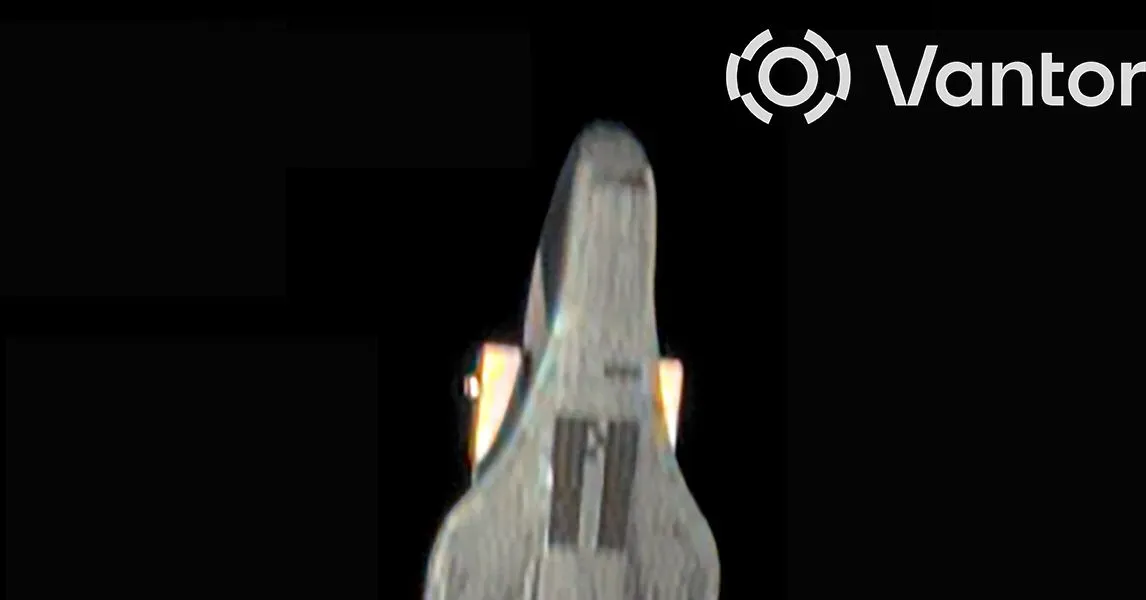
A top-secret Chinese spaceplane has been spotted by a commercial imaging satellite, revealing details about its design that closely resemble those of the US Space Force's X-37B spaceplane.
The spaceplane, which has delta wings and a payload bay door, bears an uncanny resemblance to its American counterpart. Its dark heat shield and rear-mounted service module with solar arrays further confirm the similarities between the two vehicles. This suggests that China may have studied or even copied aspects of the X-37B's design.
The image was captured by Maxar, a company that provides reconnaissance imagery to the US military and intelligence agencies. The satellite's high-resolution view offers a rare glimpse into the Chinese spaceplane's features, which were previously only visible in lower-resolution images.
The Pentagon has confirmed that the image is real, releasing it as part of an unclassified report by the Defense Intelligence Agency on threats to the United States in space. However, the report does not reveal any new information about what the spaceplane is used for or its capabilities.
China's space program has been ramping up in recent years, with four spaceplane missions launched since 2020. The latest mission, which launched in February, remains in orbit today and has a duration of around nine months.
The Chinese spaceplane is shrouded in secrecy, and it's unclear whether there's one or multiple units in service.
In contrast, the US Space Force has two X-37B vehicles that have been used on eight missions to date, with the longest-running mission lasting nearly two-and-a-half years from launch to landing.
Details about the X-37B's design and capabilities are publicly available, including photos released by US officials and information about its dimensions. However, most of its activities in space remain classified.
China's spaceplane operates similarly to the X-37B, launching inside a rocket payload shroud before deploying as a satellite in orbit.
A key advantage of spaceplanes like China's is their enhanced maneuverability, making them more suitable for certain missions than traditional satellites, according to a report from the Defense Intelligence Agency.
China's spaceplane program has made significant strides in recent months, with the vehicle demonstrating its ability to catch objects in orbit. According to an analysis of open-source orbital tracking data, the Chinese spaceplane released a sub-satellite in June and successfully recaptured it in July.
This feat was repeated in August and September, showcasing the spaceplane's capability for orbital maneuvers and object capture. The demonstration highlights the advanced technology behind China's spaceplane program, which has been shrouded in secrecy.
The official name of the Chinese spaceplane remains a mystery, with Western publications referring to it as Shenlong based on reports from the 2000s about China's development of a robotic spaceplane. In contrast, Chinese state media refer to the vehicle as Chongfu Shiyong Shiyan Hangtian Qi, or CSSHQ, meaning reusable experimental spacecraft.
The Secure World Foundation has published a fact sheet detailing the terminology used by Chinese state media to describe the spaceplane. The foundation's document highlights the complexity of nomenclature surrounding China's space program and the challenges it poses for international observers.
The development of advanced space capabilities by China's military is being closely monitored by international observers, who are seeking to understand the implications of these technologies for global security.
China's pursuit of anti-satellite technology, also known as "counterspace" weapons, has been identified as a key area of concern. This includes the use of directed-energy weapons (DEWs), which can be used to permanently or temporarily disable a satellite.
The potential applications of DEWs in space are varied and concerning. One possible use is to dazzle sensors on an adversary's satellite, rendering it unable to gather critical information. China has reportedly developed ground-based laser systems with varying power levels that can disrupt, degrade, or damage satellites in low Earth orbit (LEO).
China has also been testing anti-satellite missiles and has demonstrated the capability to refuel a satellite in geosynchronous orbit, a feat no other country has achieved above LEO. This development marks an important milestone in China's space program and highlights its growing capabilities.
In addition to these developments, China has tested a robotic arm that could be used to snag a spacecraft out of orbit, raising concerns about the potential for on-orbit capture and manipulation. The country is also operating a fleet of satellites called TJS that are capable of approaching foreign spacecraft.
The United States has been making progress in overcoming limitations related to its inspector satellites in geosynchronous orbit. The US Space Force has recently acquired additional satellites that can be refueled, allowing for greater maneuverability and potentially expanding their capabilities.
This development comes as the Pentagon has acknowledged fielding weapons in space, marking a significant milestone for the United States. According to Air Force Secretary Troy Meink, the country is now the first nation to openly possess orbital weapons. This move highlights the growing importance of space-based military assets.
Russia is also actively pursuing its own orbital combat program, with ambitions that include deploying nuclear weapons in space. US intelligence officials have confirmed this intention, indicating a heightened level of competition between the two nations in space.
Facts based on reporting originally published by Wired.
You may republish this story, in full or in part, if you credit News Central Site and link to it (licence CC BY 4.0). Photos are not included.