Chinese Film Producers Release Country's First AI-Generated Feature Film
The sci-fi thriller Sanxingdui: Future Past has been a commercial disappointment at the Chinese box office, generating an estimated $180,000 through Monday.
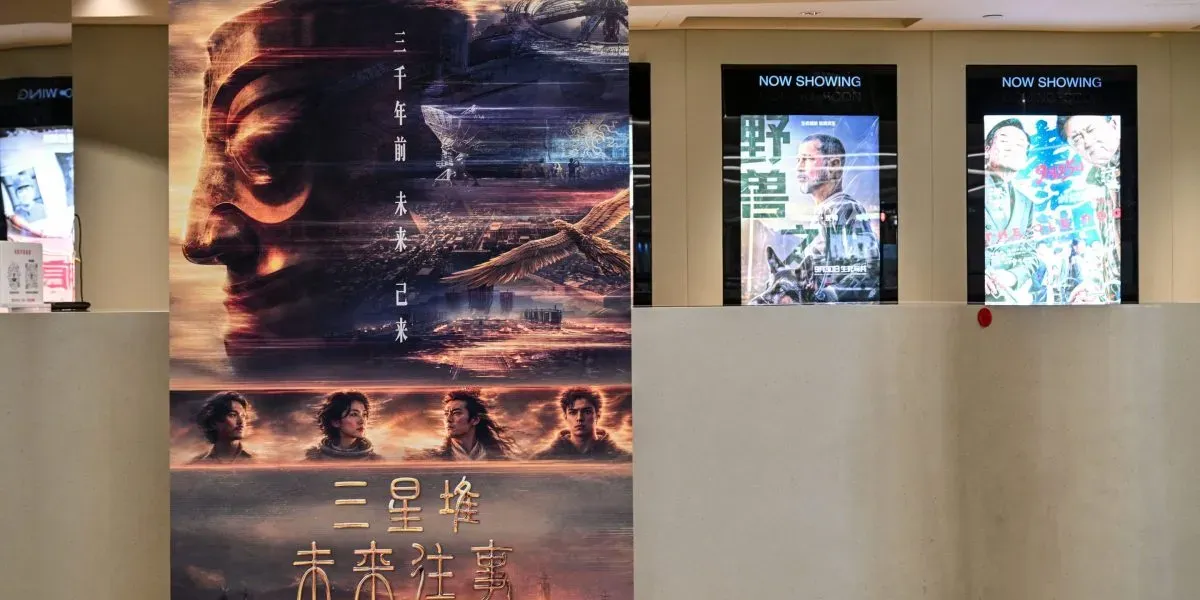
Chinese film producers Bona Film Group have made history by releasing the country's first AI-generated feature film in cinemas, but it seems audiences may not be ready for this new technology just yet.
The sci-fi thriller Sanxingdui: Future Past has been a commercial disappointment at the Chinese box office, generating an estimated $180,000 through Monday. This is a far cry from what was likely expected, given the film's reported budget of $1.5 million. Ticketing platform Maoyan provided the figures.
The movie tells the story of an archaeologist who must save the world from AI enslavement, according to Chinese state media. It's a premise that might have resonated with audiences in China, but it seems they weren't convinced by the film's execution. The low box office takings suggest that viewers were not impressed.
Despite the film's failure at the box office, Jiang Defu, Bona Film Group's chief operating officer, is optimistic about the experiment. He believes that Sanxingdui: Future Past was an important test for AI-generated films and that it paved the way for future releases. In an interview with Chinese film outlet Yuli, he acknowledged the challenges of making a film entirely generated by artificial intelligence.
The release of Sanxingdui: Future Past has sparked mixed reactions on social media in China. While some users have expressed their disappointment with the film, others see it as a pioneering effort that could revolutionize storytelling at low costs and with greater creative freedom.
The growing presence of AI-generated content in China's entertainment industry has been a notable trend, particularly in microdramas designed for social media platforms like TikTok.
According to recent data, over 95% of the more than 120,000 Chinese microdramas released in the first quarter of this year were created using artificial intelligence. This is a significant increase from just a year ago when nearly zero such dramas were AI-generated. The cost of producing these short-form narratives has also plummeted to as little as $3,000.
Despite the success of AI-generated microdramas, however, China's first AI-generated film, Sanxingdui, failed to make an impact at the box office. This raises questions about consumers' willingness to accept AI-generated content in full-length feature films.
Stanley Rosen, a University of Southern California professor who specializes in Chinese film and society, notes that the public is skeptical about AI use in major feature films. While there may be some acceptance of short-form films generated by AI, this skepticism suggests that consumers are hesitant to see these technologies used in longer, more complex narratives.
In the US, the use of AI in filmmaking has sparked controversy, with screenwriters and actors demanding protections against its use. Some Hollywood productions have already incorporated AI models into their work, including Netflix's crime thriller "Animals," which was directed by Ben Affleck.
Industry experts are questioning whether audiences can accept AI-generated films as a viable option in theaters. According to Rosen, viewers would need to see significant quality improvements before considering an AI-created film on the big screen.
The financial failure of Sanxingdui: Future Past may discourage others from pursuing AI-generated feature films, and instead they might opt for streaming platforms like Netflix or Amazon Prime Video as a more suitable outlet.
Facts based on reporting originally published by Fortune.
You may republish this story, in full or in part, if you credit News Central Site and link to it (licence CC BY 4.0). Photos are not included.