CEO Advaithi Discusses Battling Breast Cancer at Fortune Summit
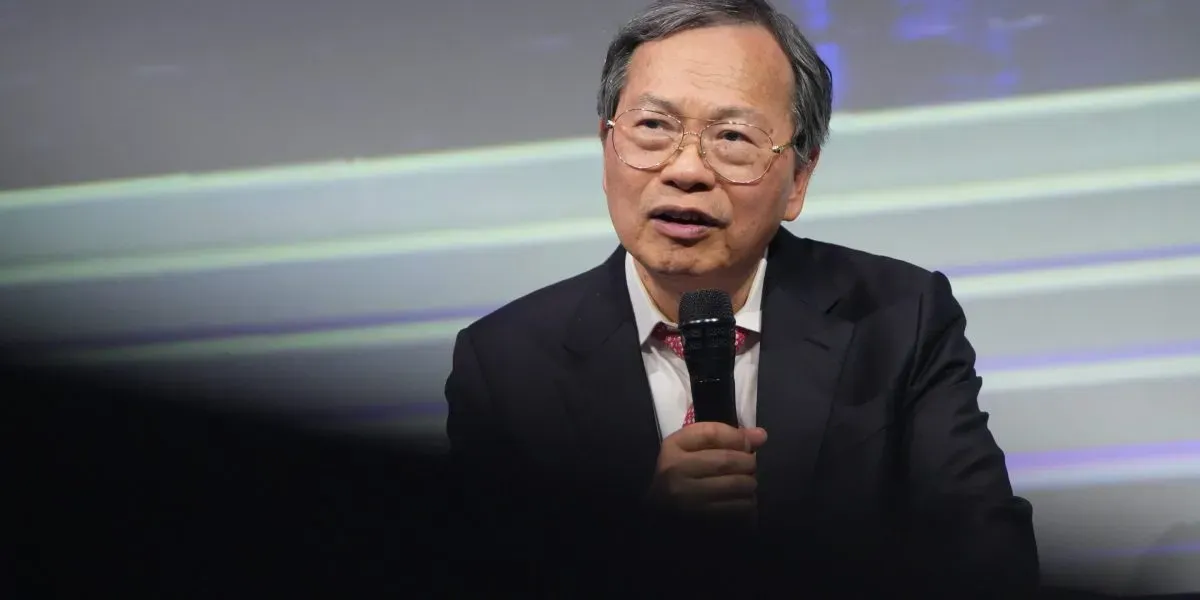
Fortune Most Powerful Women Summit attendees witnessed a rare moment of vulnerability when Flex CEO Revathi Advaithi spoke about battling breast cancer while serving as CEO.
A chance encounter with an injury during an interview at the Fortune Most Powerful Women Summit left me momentarily flustered, but also unexpectedly humanized my conversation with Flex CEO Revathi Advaithi. A recent lip injury had still been causing minor bleeding when we spoke on stage, and as I tried to maintain a composed demeanor, Advaithi's kind concern was palpable despite the awkwardness.
The unexpected interruption actually allowed us to delve into more personal topics, including her decision to speak publicly about battling breast cancer while serving as CEO. This vulnerability is a rare quality in corporate leaders, but one that can have a profound impact on their relationships with employees and stakeholders alike.
Advaithi's willingness to be open about her struggles was evident throughout our conversation, and it created a warm and supportive atmosphere during the interview. The levity that followed, albeit initially awkward, added a humanizing touch to what could have otherwise been a formal discussion about data centers and geopolitics.
As we navigated this unexpected turn of events together, Advaithi's responses remained thoughtful and insightful, never faltering despite my own brief moment of discomfort. It was clear that her ability to laugh at herself and acknowledge the imperfections of the situation had helped put both of us at ease.
The incident served as a poignant reminder that even in high-pressure settings like business summits, being vulnerable and authentic can be a powerful asset for leaders.
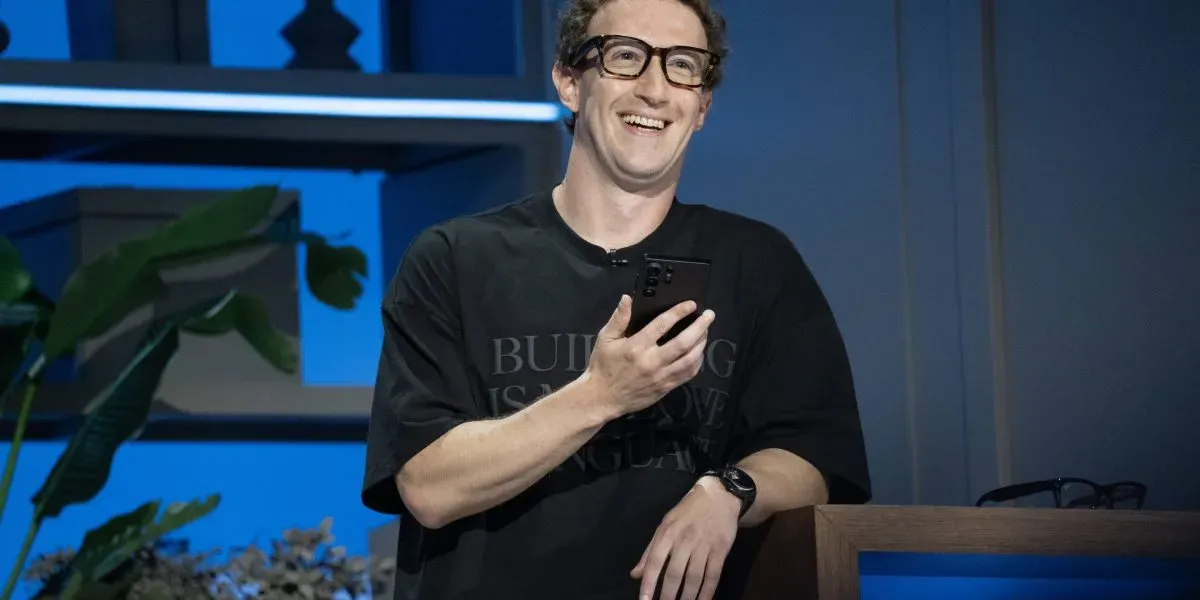
Watching Mark Zuckerberg squirm while trying to sip a pint of Guinness on John Collison's podcast was a priceless moment. His reaction was genuinely amusing, and many people can relate to having a similar face when trying new or unfamiliar foods, especially in Ireland where Guinness is a staple.
A good sense of humor is an underappreciated asset for leaders in today's business world. Richard Branson has long been known for his ability to laugh at himself, as has Warren Buffett. Even Tim Cook, Apple's Executive Chairman, often uses humor to deflect attention and poke fun at himself.
For instance, after President Trump referred to him as "Tim Apple during a White House meeting, Cook replaced his last name with an Apple logo on social media. He also playfully mocked himself for posting a blurry iPhone photo a decade ago, showing that even leaders can laugh at their own mistakes and imperfections.
Humor is a valuable tool in any public role, allowing individuals to connect with others and diffuse tension. At the Fortune CEO Initiative generations" dinner, ADP CEO Maria Black and I shared a laugh about what our Gen Z kids said during the event. Other CEOs have also used humor to break the ice, such as Lumen's Kate Johnson and EY's Janet Truncale, who joked about their first meeting at the Business Roundtable.
Marissa Mayer, the former Yahoo CEO who recently launched Dazzle AI, has a wry take on some of the men now spouting doomsday rhetoric in Silicon Valley. Her ability to laugh at herself and others is just one example of how humor can be an effective asset for leaders in today's fast-paced business world.
A pivotal moment in her professional development occurred during her time at the University of Nairobi, where she was tasked with writing speeches for Mostafa Tolba, then-executive director of the United Nations Environment Programme.
Tolba's instruction to infuse humor into a speech about desertification at a conference for the homeless seemed counterintuitive. However, he clarified that his intention was not to make light of serious subjects but rather to use humor as a way to connect with others on a human level.
This approach resonated with Tolba, who emphasized the importance of building relationships before tackling complex problems. He recognized that effective communication involves more than just conveying information, but also establishing a rapport with one's audience.
Meanwhile, another industry leader has taken steps to address its own financial woes. Supermicro has appointed Mark Long as its new chief financial officer, nearly two years after vowing to replace longtime finance chief David Weigand.
JPMorgan has taken a firm stance against external AI agents accessing customer accounts due to security concerns. The bank's CEO, Jamie Dimon, revealed this during an earnings call, highlighting the risks associated with allowing such access. According to a spokesperson, JPMorgan supports secure data sharing with customer authorization but rejects any attempts by AI agents to access accounts using customers' banking credentials.
The impact of U.S. chip export controls has been significant, particularly in China's semiconductor industry. University of Illinois professor Rakesh Kumar notes that these restrictions have inadvertently encouraged China to develop its own alternatives. Chinese AI models are reportedly approaching the performance levels of their U.S. counterparts despite the export controls. However, China's workarounds still face challenges related to cost and efficiency.
Global markets are experiencing a mixed reaction in early trading. The S&P 500 futures are up by 0.19%, following a 0.33% increase in the previous session. In contrast, the U.K.'s FTSE 100 is down by 0.12%. Japan's Nikkei 225 and South Korea's KOSPI are both showing significant gains, with increases of 1.39% and 2.05%, respectively.
Asian markets are also experiencing a positive trend, with Hong Kong's Hang Seng up by 0.52% and India's NIFTY 50 up by 0.44%. China's CSI 300 is slightly higher at 0.11%, while Bitcoin has reached $82k.
The concept of CEOs being able to laugh at themselves has gained significant attention in recent times. This trait is often associated with leaders who are confident in their abilities and can admit when they are wrong or uncertain.
As an example, Microsoft's CEO still reflects on a past meeting where he remained silent in the presence of co-founder Bill Gates. He was later taught by his boss Steve Ballmer to speak up and express his opinions, which has helped him grow as a leader.
Facts based on reporting originally published by Fortune.
You may republish this story, in full or in part, if you credit News Central Site and link to it (licence CC BY 4.0). Photos are not included.