Donald Trump Implements Tariffs on Imports
Nelson Vandermeer, a 62-year-old product designer at Howard Miller, lost his job due to the company's inability to compete with foreign parts after President Donald Trump implemented tariffs on imports.
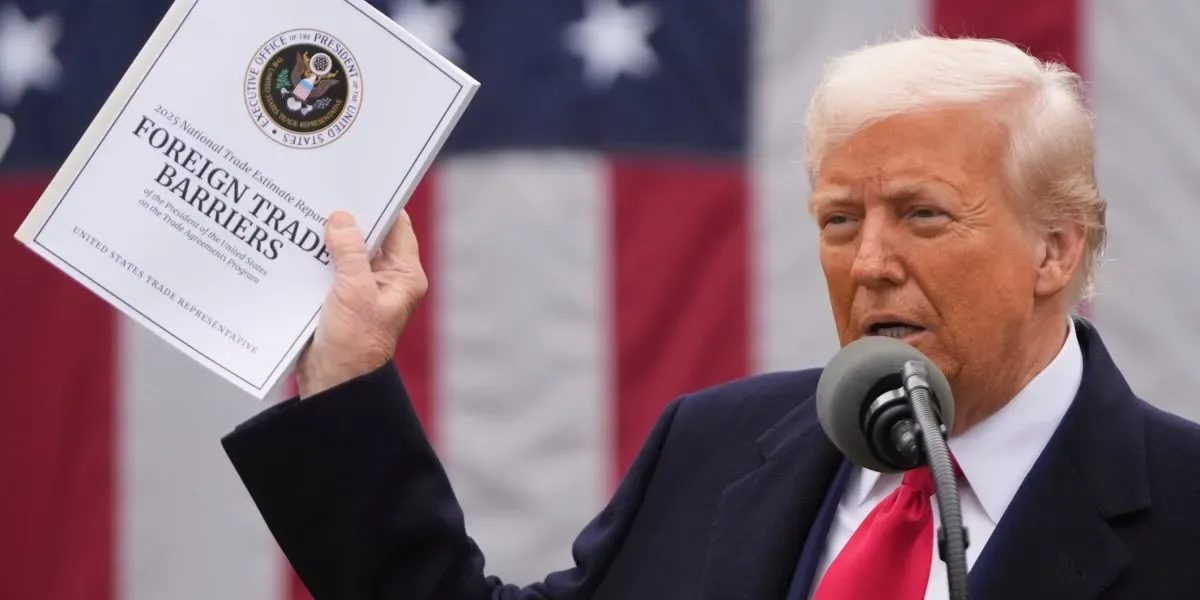
Nelson Vandermeer's decades-long loyalty to the Republican party came to an abrupt end when President Donald Trump implemented tariffs on imports, which he had feared would harm workers more than help them. The 62-year-old product designer at Howard Miller, a clockmaker in Zeeland, Michigan, was among those who lost their job due to the company's inability to compete with foreign parts.
After a century of operation, Howard Miller closed its factory, sold off its inventory and brand name, and laid off nearly 200 workers. Vandermeer's experience is a stark contrast to Trump's promise of bringing jobs back to the US through tariffs on imports. As he prepares to vote straight Democrat in the midterms next month, Vandermeer's disillusionment with the Republican party is clear.
Trump's tariffs have been widely criticized for their failure to deliver on promised factory renaissances and job creation. Despite a slight increase in manufacturing jobs this year, the sector still has fewer employees than when Trump returned to the White House in January 2025. This trend raises questions about the effectiveness of Trump's economic agenda.
The backlash against Trump's tariffs is not limited to the economy alone; it also reflects growing discontent with his administration's handling of issues such as inflation and foreign policy, including the ongoing tensions with Iran. As Republicans struggle to regain voter trust, they are facing a mounting challenge from Democrats who are poised to capitalize on these concerns in the midterms.
White House officials have sought to downplay criticism of Trump's tariffs by pointing to increases in manufacturing output and growth in certain sectors such as nonresidential construction trades. However, this argument has been met with skepticism by critics who argue that these gains do not necessarily translate into long-term job creation or a genuine factory boom.
The decline of Howard Miller's clock-making business was already underway due to changing consumer preferences in the US market. The company had attempted to diversify its product line by introducing bar carts, cabinets, and consoles to cater to shifting tastes.
However, this expansion did not shield the business from the impact of Trump's tariffs on imported goods. The tariffs forced Miller to lay off workers, including Vandermeer, who now finds himself without a job.
Vandermeer resides in Michigan's 4th Congressional District, which is represented by Republican Bill Huizenga. Prior to the implementation of the broadest set of tariffs last year, Huizenga expressed support for Trump's policy, stating that it was "the right thing to do.
A spokesperson for Huizenga recently acknowledged that while the congressman sees potential benefits in using tariffs to boost domestic manufacturing, he is also aware of their broader economic implications.
The economic downturn caused by President Trump's tariffs has left a trail of devastation across US factories and communities. Tracy Chew, a 55-year-old former worker at Case, a backhoe manufacturer, lost her job in April when the company announced it would close its plant in Burlington, Iowa.
Chew is not alone in her struggles; her daughter, husband, and son-in-law also lost their jobs in the following weeks. This personal tragedy has led Chew to reevaluate her voting habits, with many longtime Republican voters like her now leaning towards Democrats due to their dissatisfaction with Trump's handling of tariffs.
The impact of tariffs on businesses is evident in the case of Winnebago Industries, which produces recreational vehicles and campers. The company was forced to cut 200 jobs last year after the increased cost of importing aluminum, steel, and electronics took a significant toll on its finances.
Michael Happe, CEO of Winnebago Industries, described the situation as a day-to-day battle for his company, emphasizing the challenges posed by Trump's tariffs. The economic strain is particularly acute in areas where manufacturing is a vital component of the local economy, such as Iowa and Kansas.
In these states, there are tight Senate races brewing, with Democratic candidates like Adam Hamilton in Kansas and Josh Turek in Iowa vying for seats previously held by Republicans. Cole Hoppock, CEO of Vornado Air, which laid off over 70 factory workers in February due to higher prices for imported parts, has spoken out against the tariffs, stating that they impacted virtually everything.
The tariffs imposed by President Trump's administration are having far-reaching consequences, potentially forcing another Kansas employer to cut back operations. Canadian jet manufacturer Bombardier is facing a threat from Trump, who has vowed to block sales of its planes in the US unless the company begins manufacturing them domestically.
Bombardier relies on parts sourced from over 2,800 companies across 47 states, including those in Kansas where it employs more than 1,000 people. This highlights the complex supply chains that underpin global trade and the difficulties of imposing tariffs without causing unintended harm to domestic industries.
Economists have long argued that Trump's trade policy is misguided, pointing out that broad universal tariffs will cause more pain than benefits. Despite this, the president has continued to push forward with his approach, which has been met with growing skepticism from the public.
A recent poll conducted by The Associated Press-NORC Center for Public Affairs Research found that only about 3 in 10 US adults approve of Trump's handling of trade negotiations, a significant drop from the 4 in 10 who supported him in March.
The effects of Trump's tariffs on US factories have been far-reaching, forcing some to close down or lay off workers.
Bicycle Corp. of America is one such example, having closed its factory in South Carolina last year due to rising prices for imported parts.
Koby Bird, a retired quality control worker, expressed frustration with the unpredictable nature of Trump's tariffs policies.
Bird stated that businesses struggled to plan under the constant changes in tariff rates, likening it to being hit by taking a knife to the back".
Despite his reservations about Trump's handling of trade negotiations, Bird remains likely to stick with Republicans next month.
The ripple effect of Trump's tariffs has been felt far beyond the factories directly affected by the trade policies. Companies such as Trivium Packaging, a local can manufacturer, have had to cut jobs due to reduced orders from Post Holdings and other clients.
One former Trivium worker, Heather Kingston, expressed her frustration with the situation. She left the company before the layoffs occurred, but her husband is still working there. Kingston stated that she understands the underlying motivation behind Trump's tariffs, but believes they are not achieving their intended goals.
The impact of these trade policies is being felt in local communities and may even influence voting decisions in upcoming elections. With several congressional districts in the state considered competitive, it remains to be seen whether voters will continue to support Republican candidates who have aligned themselves with Trump's policies.
Facts based on reporting originally published by Fortune.
You may republish this story, in full or in part, if you credit News Central Site and link to it (licence CC BY 4.0). Photos are not included.