Breakthrough in Tattoo Technology Allows for Color-Changing Inks
Researchers have developed inks that can be activated by light, potentially revolutionizing the way we decorate our skin.
A breakthrough in tattoo technology could soon allow people to turn their body art on and off at will. Researchers have developed inks that can be activated by light, potentially revolutionizing the way we decorate our skin.
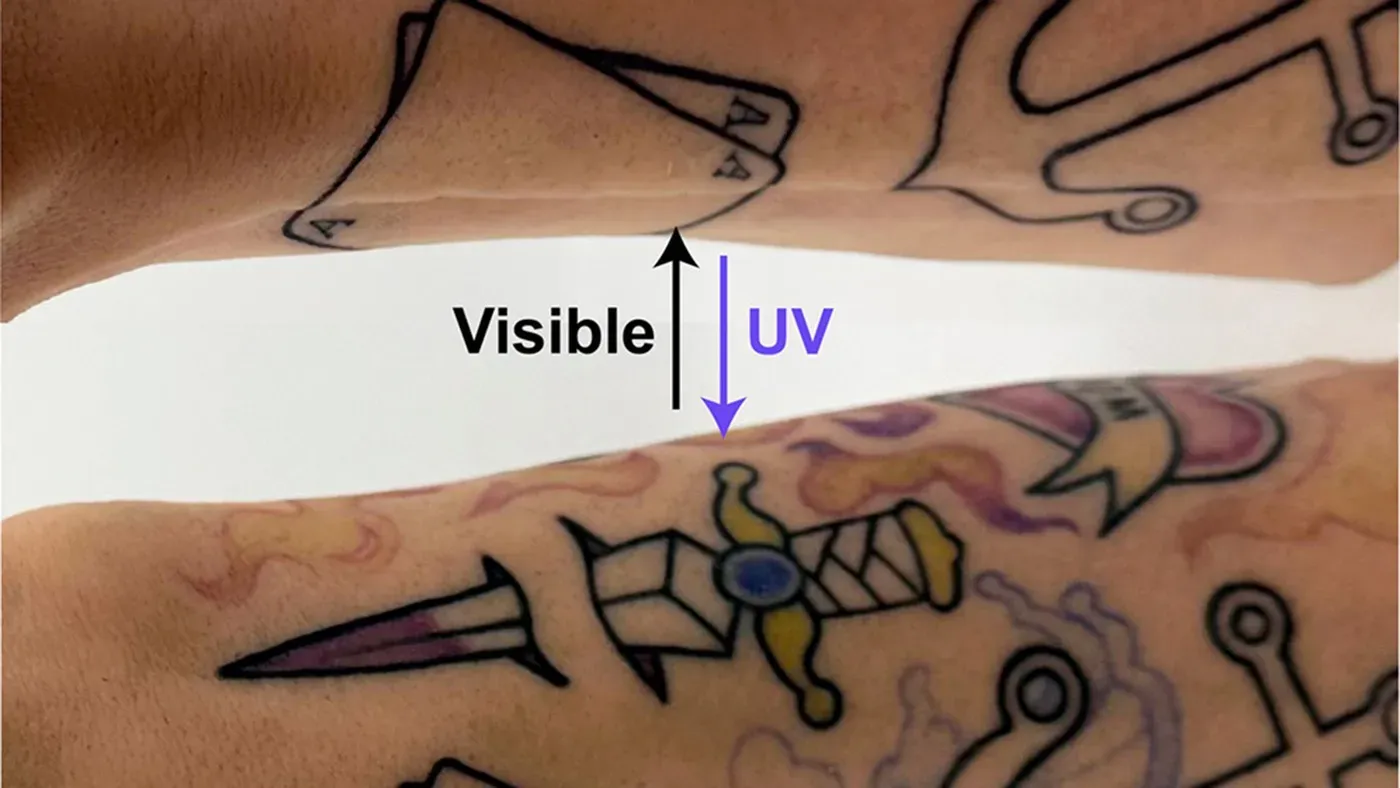
The innovative technique uses photochromic dyes, which change color when exposed to specific wavelengths of light. This means that tattoos made with these inks can be "turned on" and "off as needed. The new technology has been dubbed PhotoTat".
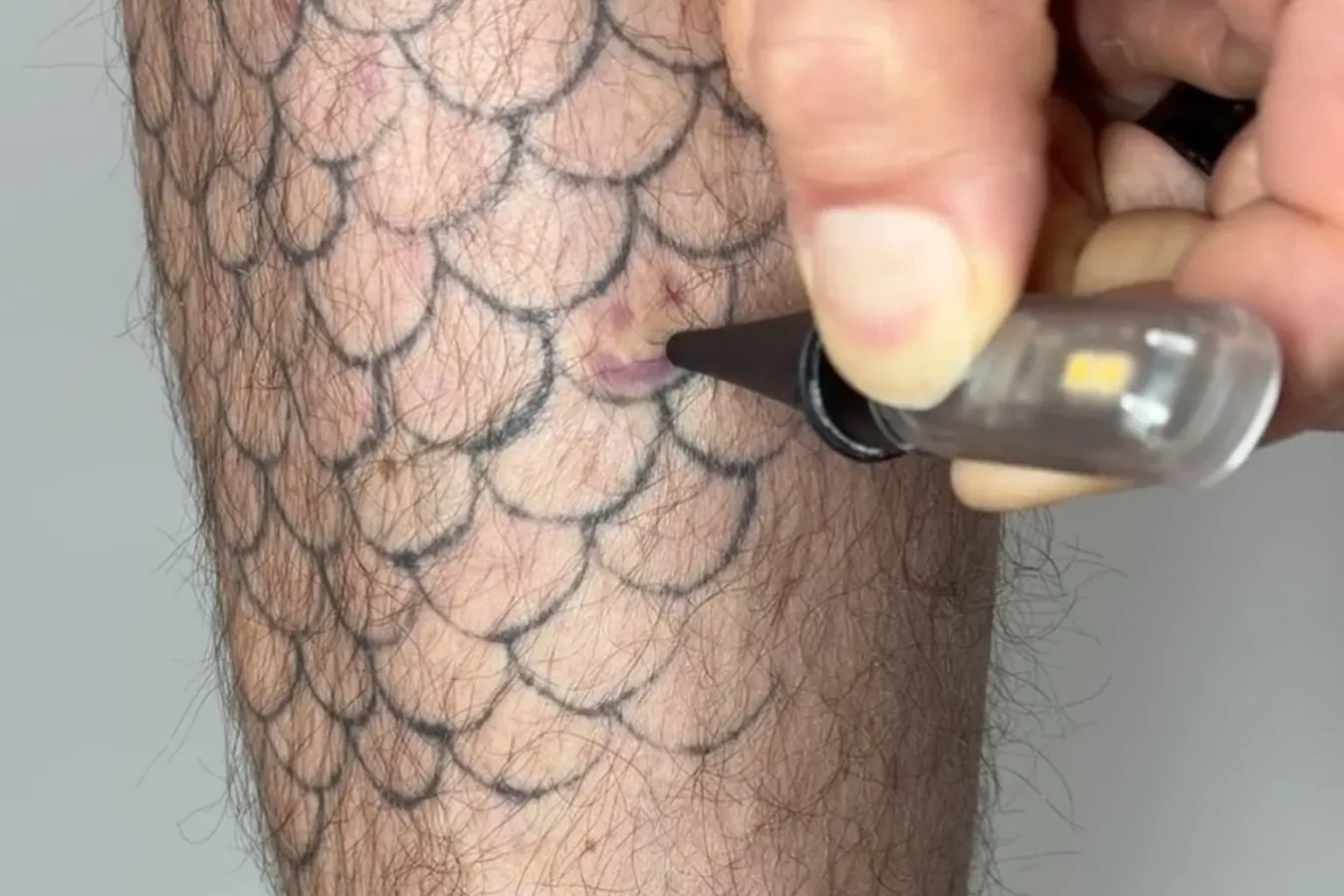
Carson Bruns, a researcher at the University of Colorado, is one of the pioneers behind this development. He has had his own tattoo created using PhotoTat, which features fish scales that he can turn on or off with light.
Bruns' tattoo has been a part of him for two years now, and he claims to have experienced no adverse effects from it.
A key aspect of PhotoTat technology lies in its ability to be switched on and off using light. According to Bruns, this is achieved through the use of pigment particles that respond differently to various wavelengths of light.
The process involves implanting these sensitive particles into the dermis with a needle, just like traditional tattoos. However, unlike permanent ink, PhotoTat inks can be erased and rewritten multiple times using different colours. This reversible nature makes them particularly useful in medical applications.
One potential use for PhotoTat technology is in creating temporary guides for radiation therapy. Doctors often use permanent tattoos to help target specific areas of the body during treatment, but these marks can leave patients with lasting scars. With PhotoTat, these markings could be made and erased as needed, reducing the long-term impact on patients.
Bruns' team has developed a range of colours that can be used with PhotoTat technology, including 16 distinct hues. However, there are some limitations to the current formulation, white, for example, cannot be created because it reflects light rather than absorbing it. Additionally, certain colours, such as blue, may develop an unwanted purplish tint over time due to photo-degradation.
To use these colour-changing tattoos safely, individuals would need to apply sunscreen to prevent the colours from activating when exposed to sunlight.
The polymer that encapsulates the dyes is non-toxic and has been used in permanent biomedical implants for a long time, providing some assurance about its safety profile.
However, experts acknowledge that there are still unknown risks associated with these tattoos, particularly regarding the toxicity of the colour-changing dye itself. The toxicities of most tattoo pigments remain poorly understood.
The development of these tattoos is contingent upon extensive safety studies being conducted before they can be made available to the public for use.
Facts based on reporting originally published by New Scientist.
You may republish this story, in full or in part, if you credit News Central Site and link to it (licence CC BY 4.0). Photos are not included.