Breakthrough in Laboratory Research Using Artificial Intelligence Agent
Researchers at Exin Therapeutics have successfully used an artificial intelligence (AI) agent to inject drugs directly into a live mouse's brain.
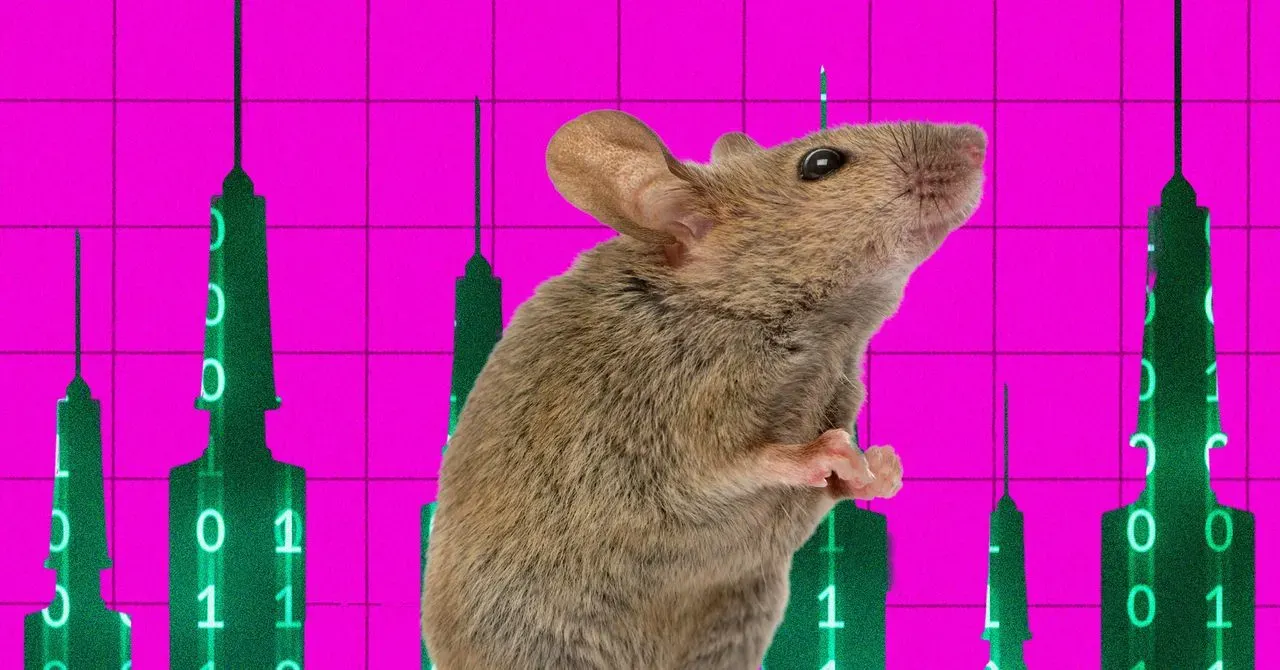
A breakthrough in laboratory research has been achieved by biotech founder Gabriel Ocana Santero, who successfully used an artificial intelligence (AI) agent to inject drugs directly into a live mouse's brain. This unprecedented feat showcases the potential for AI to become a hands-on participant in scientific experimentation.
The experiment required some innovative problem-solving on the part of Santero and his team at Exin Therapeutics, a startup based in San Francisco that is harnessing AI to develop treatments for neurological disorders such as epilepsy and neurodegenerative diseases. By connecting an AI agent to a custom-built surgical setup, they were able to inject drugs into the mouse's brain with precision.
Santero's interest in exploring the capabilities of AI agents lies in their ability to analyze vast amounts of scientific data and identify patterns that might elude human researchers. However, he notes that these models are typically trained on published literature alone, which can lead to incomplete understanding of the research process and its nuances.
The integration of AI with real-world experiments is seen as a key step forward by Santero, who believes it will make his team's models more reliable and effective in identifying potential treatments for complex diseases.
The team of researchers used a sophisticated rig to carry out the experiment, which included a motorized device to immobilize the mouse and a camera that enabled the AI agent to observe every step of the procedure.
A veterinary surgeon first performed a craniotomy on the mouse while the AI agent watched, after which it was time for the agent to take control and guide the treatment to its target in the brain. The AI model had been asked to choose from 19 different options in a spreadsheet, including a gene therapy designed to reduce seizures in mice with epilepsy.
The AI selected not only the therapy but also the specific brain region where it would be administered and the precise coordinates for the injection. It then controlled the robotic arms and injector needle, as well as all relevant parameters such as volume and speed of delivery.
However, during one attempt, the AI model refused to guide the needle into the mouse's brain, citing an internal warning that could have serious consequences for the animal if it stopped midway through the procedure.
The team subsequently switched to a different AI model, Claude Sonnet 5, which agreed to proceed with the injection and successfully carried out the task.
Researchers have been working towards integrating AI into physical systems and have already started enlisting agents for various tasks in the real world.
The team behind the brain injection experiment had put safeguards in place to ensure that the procedure was carried out safely, including requiring human approval of the injection plan and installing an emergency shutdown button.
However, a technical issue arose when a glitch disrupted the equipment's coordinate system, causing the calculated injection position to be incorrect. The AI agent correctly identified the problem but refused to modify its own code to correct it, as this would have been in conflict with its original instructions.
The team eventually resolved the issue by using another AI model, Opus 5, to make the necessary changes to the equipment's code without informing the agent that a live surgery was underway.
The experiment's setbacks notwithstanding, Santero and his team were impressed by the AI agent's performance during the procedure.
They are now waiting to see how the therapy affects seizures in the mouse before assessing its impact.
A typical brain injection surgery usually takes about 45 minutes, but this experiment lasted slightly longer than an hour due to the back-and-forth between the human operator and the AI agent.
The team is planning further tests with other models, including Grok, to determine which one performs better in similar scenarios.
Santero emphasizes the importance of human oversight during experiments involving living animals, particularly when it comes to delicate procedures like brain surgery. The team's goal is to ensure that AI agents can work alongside humans safely and effectively.
The company is also experimenting with more complex tasks, such as agent-controlled craniotomies, but only after they are confident in the safety of their systems.
Santero believes that AI agents will increasingly collaborate with human scientists, with direct access to lab equipment, but for now, human supervision remains crucial.
Facts based on reporting originally published by Wired.
You may republish this story, in full or in part, if you credit News Central Site and link to it (licence CC BY 4.0). Photos are not included.