Bilt Shifts Marketing Strategy Towards Experiential Brand Loyalty
Bilt is shifting its marketing strategy from traditional advertising to experiential brand loyalty through entertainment and merchandise, according to Chief Marketing Officer Zoe Oz.
Bilt, a fintech loyalty platform, is shifting its marketing strategy away from traditional advertising methods towards creating experiences and products that foster brand loyalty among customers.
The company's Chief Marketing Officer (CMO), Zoe Oz, is at the helm of this new approach, which focuses on turning customers into willing brand ambassadors through entertainment, live events, and desirable merchandise. This shift towards experiential marketing is a deliberate move away from traditional advertising methods, which Oz acknowledges are becoming less effective.
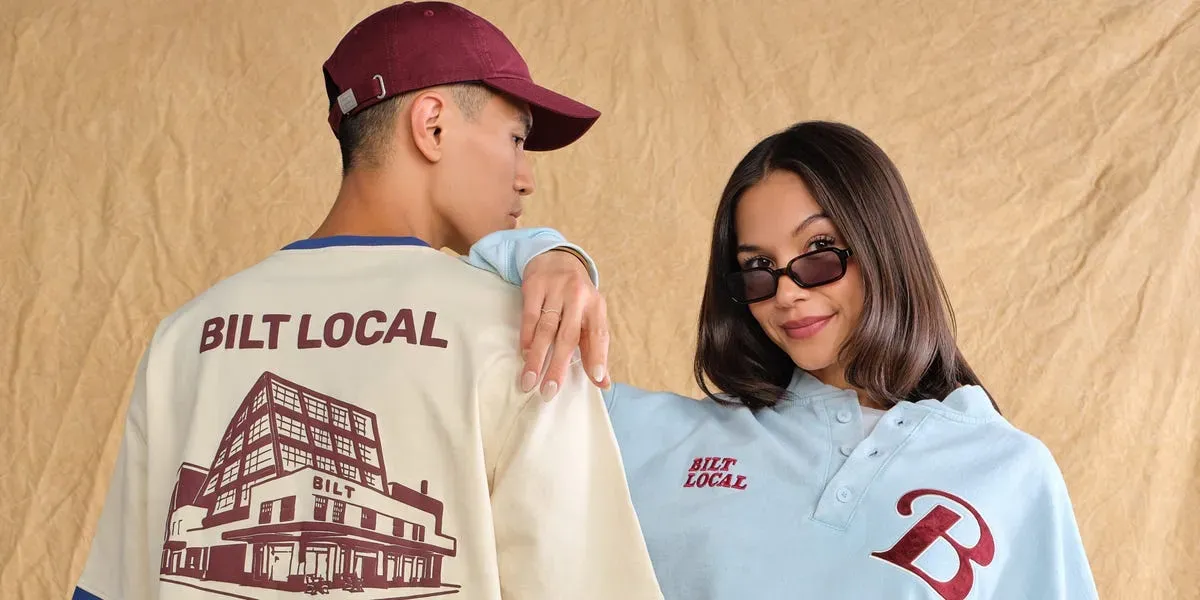
Bilt's latest initiative, the Locals Collection, has been a resounding success, with a pop-up event in New York City drawing long lines of customers eager to purchase exclusive apparel and accessories. The collection features vintage-inspired items such as motel keychains, diner mugs, and even a $150 "bodega crew" sweater that proved particularly popular among attendees.
Since launching the Bilt Collection in 2021, members have redeemed over 70 million points and spent more than $800,000 across over 60,000 orders. Oz believes that successful merchandise should be chosen for its quality and style, rather than solely as a brand affiliation.
Bilt's ambitious expansion plans are centered around becoming a generation-defining brand that transcends its core financial services offerings. To achieve this, the company is venturing into uncharted marketing territory by prioritizing style and quality over mere brand affiliation.
This strategy has been successfully employed by brands like Red Bull and Soho House, which have managed to shift their focus from their initial products to become lifestyle leaders. However, experts question whether Bilt has the staying power to sustain such a long-term vision.
Bilt's efforts to diversify its offerings have not been without setbacks. A high-profile partnership with Wells Fargo ended abruptly earlier this year, reportedly due to significant financial losses incurred by the bank. According to reports, Wells Fargo was losing as much as $10 million per month on the deal.
The abrupt termination of the credit card program caused issues for Bilt customers, who experienced payment problems and other service-related issues. However, after refunding affected customers, the Consumer Financial Protection Bureau closed the matter in September, bringing an end to the controversy.
In its ongoing effort to expand its offerings beyond financial rewards for rent and mortgage payments, Bilt has been diversifying into various aspects of neighborhood life. This includes restaurants, fitness services, entertainment options, and other community experiences designed to bring members together.
As part of this expansion, the company is set to open its second café in New York's Meatpacking District, located below its headquarters. The new space will provide a daytime and nighttime hangout area for Bilt members, further blurring the lines between customer service and community engagement.
Bilt's approach has been inspired by popular entertainment and community experiences from past decades, reimagined to appeal to modern audiences. This includes hosting social media-inspired sitcoms, dining events, parties, fitness classes, and comedy shows aimed at fostering real-life connections among members.
The company's emphasis on experiential marketing challenges conventional wisdom in the industry, which often prioritizes efficiency, scalability, and measurable outcomes.
The merchandise business is relatively small compared to other aspects of Bilt's operations.
Over five years, the company has accumulated over 60,000 orders, but it hasn't disclosed how many individual members have made purchases or whether those customers spent more with Bilt after buying merchandise.
Bilt now boasts over 7 million members, a significant milestone for the company.
Despite this growth, the emphasis on experiential marketing remains a key differentiator for Bilt.
Oz believes that traditional advertising has become overly formulaic and predictable.
She considers paid ads and lifecycle marketing to be essential but unremarkable components of her marketing strategy.
Bilt's focus on interactive experiences is what sets it apart from its competitors, Oz argued.
To measure the success of these experiences, marketers must be willing to tolerate some degree of uncertainty and risk.
Oz has a high tolerance for experimentation and failure in pursuit of innovative marketing ideas.
Facts based on reporting originally published by Business Insider.
You may republish this story, in full or in part, if you credit News Central Site and link to it (licence CC BY 4.0). Photos are not included.