Apple Enters Foldable Phone Market with iPhone Duo Release
A comparison between Apple's iPhone Duo and Oppo's Find N6 highlights their distinct approaches to foldable phone design.
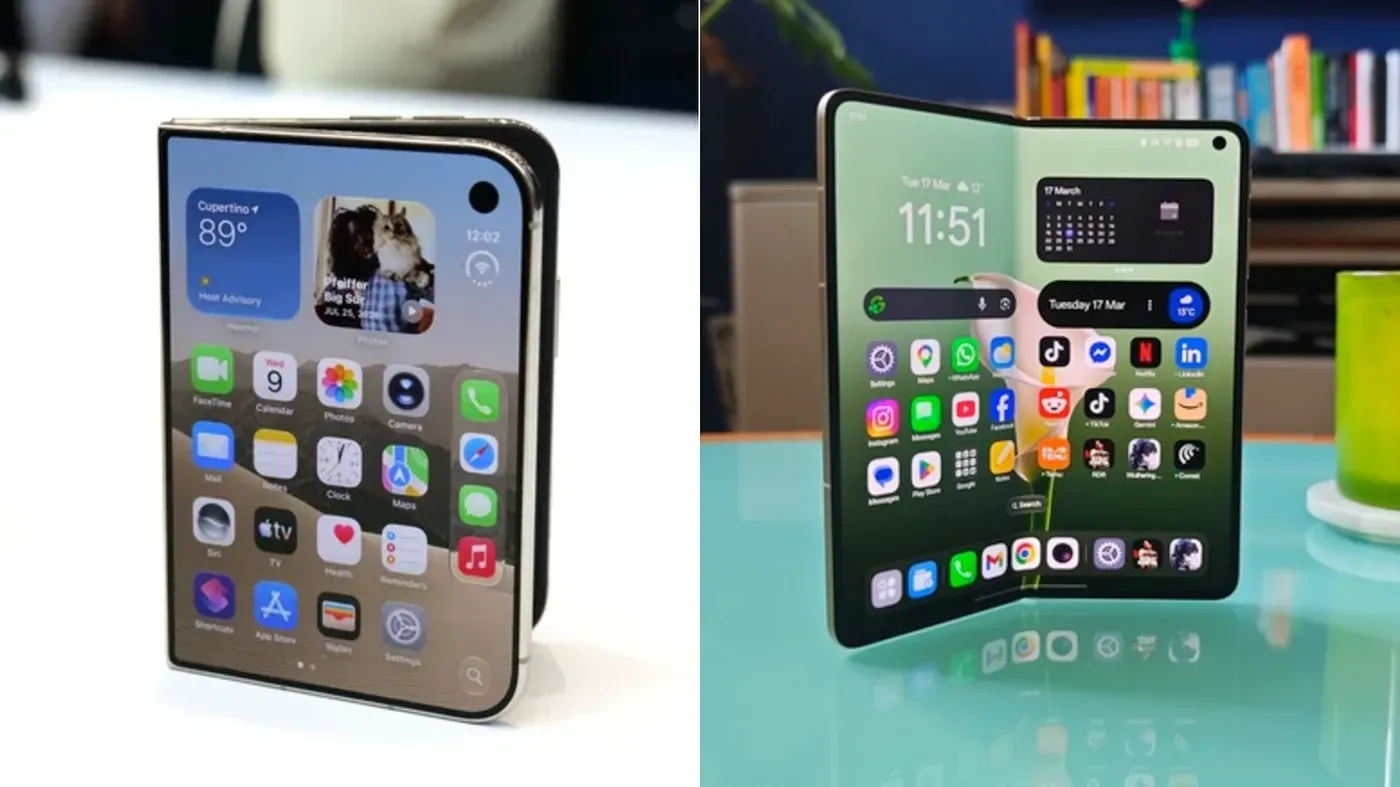
The foldable phone market has just gotten a whole lot more interesting with Apple's entry into the fray. The iPhone Duo is now officially on the scene, joining Oppo's Find N6 in the quest to pack tablet-sized screens into pocket-friendly devices.
While both phones use book-style folding designs, they've taken distinct approaches to achieve this goal. Apple has focused on integrating its signature design language and ecosystem features into the iPhone Duo, whereas Oppo is pushing the boundaries of thinness and camera resolution with the Find N6.
This comparison aims to provide a comprehensive overview of these foldables by examining their design, display, durability, cameras, performance, battery, software, and pricing. We'll delve into each aspect to determine which device deserves a spot in your pocket.
As we begin this comparison, it's worth noting that the iPhone Duo is yet to ship, limiting our hands-on experience to just a few early encounters. To level the playing field, we're relying on specifications rather than real-world testing for now.
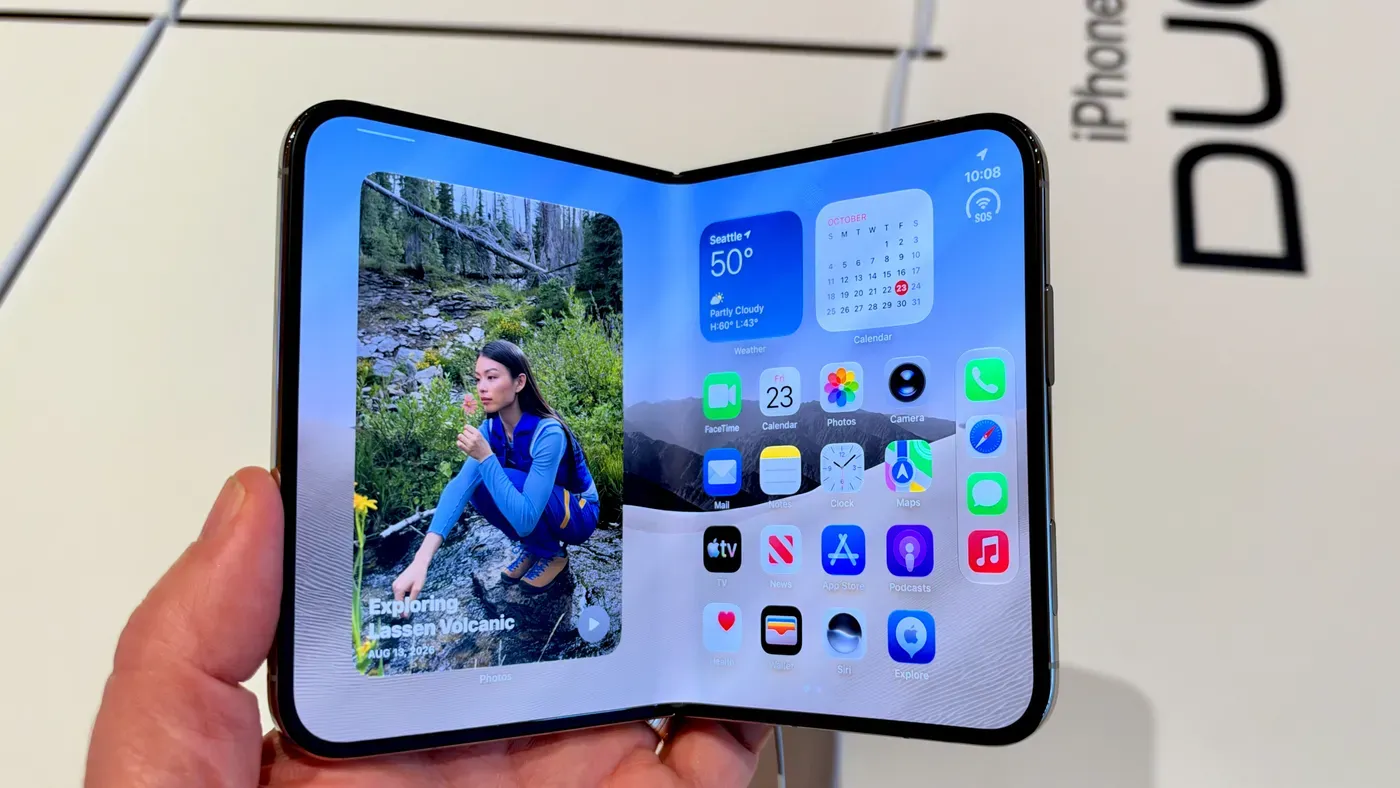
Both phones employ the familiar book-style folding design, but their proportions differ significantly. The iPhone Duo boasts an outer display of 5.4 inches and an inner display of 7.6 inches, both utilizing OLED technology with impressive features such as 120Hz ProMotion, HDR10, Dolby Vision support, and peak brightness reaching up to 3,000 nits.
The Find N6's dimensions are slightly larger than those of the iPhone Duo, boasting a 6.62-inch cover screen and an 8.12-inch inner display with a near-square aspect ratio of 1.1:1. This unique shape allows users to take advantage of multiple viewing modes, including tent and tabletop configurations, perfect for hands-free video calls or content streaming.
While both devices support 120Hz refresh rates on their screens, the Find N6's cover display stands out with its peak brightness reaching up to 3,600 nits. The inner display also boasts impressive brightness, topping out at 2,500 nits. This is a notable improvement over the iPhone Duo's displays.
The aspect ratio of the iPhone Duo remains consistent across both displays, maintaining a 1.4:1 ratio that Apple claims is ideal for immersive video and side-by-side multitasking. In contrast, the Find N6's near-square inner screen offers users a more book-like or tablet-like experience when unfolded.
Oppo's foldable measures an impressive 0.35 inches in thickness when folded, making it one of the thinnest book-style foldables available today. The iPhone Duo, on the other hand, is noticeably chunkier at 0.44 inches folded and 0.21 inches unfolded, weighing slightly more than the Find N6.
When comparing durability, the iPhone Duo stands out with its IP68 rating for dust and water resistance. This means it can withstand immersion up to 19.7 feet for 30 minutes, providing solid protection against everyday wear and tear.
The Find N6 also offers impressive water resistance ratings, including IP56, IP58, and IP59 certification, which cover powerful water jets and submersion up to 4.9 feet for 30 minutes. While not quite matching the iPhone Duo's level of protection, this is still a notable achievement in terms of durability.
The weight difference between these two foldables may be a concern for those who frequently use their phones one-handed. Although it's not a critical issue, it could become noticeable after extended use. The 1 ounce disparity might make a slight impact on daily usage.
When carrying multiple items in hand, the thickness of the phone becomes more relevant. This is particularly true when slipping the device into a purse or pocket. In such situations, the extra millimeters of thickness may be more bothersome than the weight difference.
Oppo has set its sights on eliminating the foldable crease altogether. To achieve this, the company employs its Titanium Flexion Hinge, which boasts an impressive hinge height variance of just 0.002 inches. This "zero-feel crease is not a physical absence but rather a design feature that makes the crease less noticeable.
The Oppo Find N6's crease may be shallower than on older devices, but it still exists. While it's true that you might not feel it as much, the crease remains visible under normal use conditions. This is consistent with our initial observations during the hands-on experience.
In contrast to Oppo's approach, Apple designed its iPhone Duo hinge from over 100 individual components. The precise control this provides results in a very faint crease that can be difficult to observe with the naked eye. Yet, like the Oppo phone, it is still present.
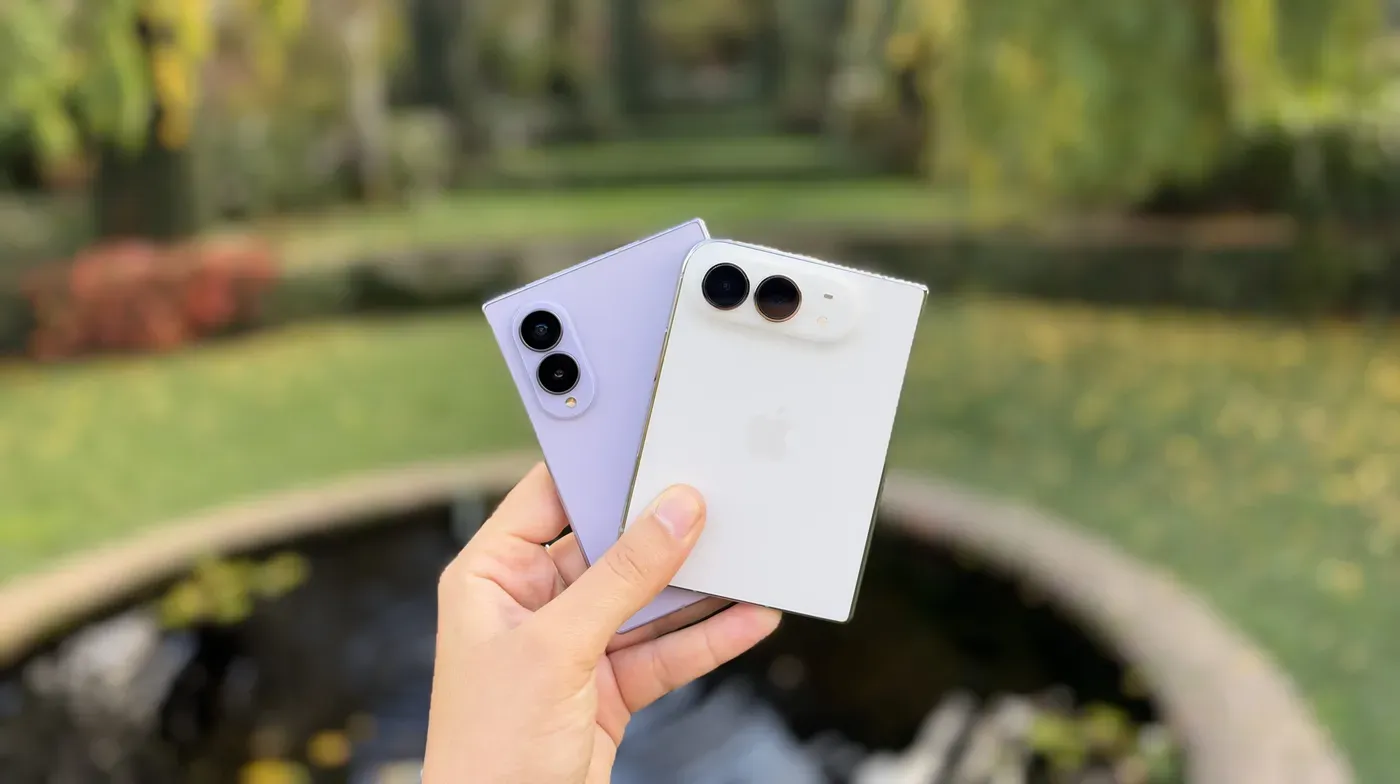
The camera systems on these two foldables reveal distinct design philosophies. Apple's iPhone Duo boasts a dual rear camera setup featuring a 48MP Fusion Main camera and a 48MP Fusion Ultra Wide lens, but it omits the telephoto lens found in many other flagship phones.
In contrast, Oppo's Find N6 takes a more traditional approach with a triple rear camera system that includes a 200MP Hasselblad ultra-clear main sensor. This setup is accompanied by a 50MP ultrawide and a 50MP periscope telephoto lens offering 3x optical zoom with tele-macro focus down to 3.94 inches.
The sheer megapixel count on Oppo's main sensor gives it an advantage for capturing detailed images, particularly suited for landscapes or large prints. However, megapixels alone do not guarantee superior image quality. As our hands-on experience with the Find N6 demonstrated, its camera array delivered exceptional results in various lighting conditions.
While Apple's iPhone Duo is capable of taking crisp shots" in a range of lighting situations, it falls short by lacking a dedicated telephoto lens. This absence becomes particularly noticeable when trying to capture distant subjects or zooming in on details.
The Oppo Find N6 boasts an impressive 6,000mAh battery that supports fast charging. The company's proprietary SuperVOOC technology allows for up to 80W wired charging and 50W wireless AirVOOC charging.
Oppo claims that the Find N6's battery can sustain roughly 26 hours of video playback or 25.8 hours of social media browsing on its larger screen, providing ample power for extended use.
The iPhone Duo boasts impressive battery life, with up to 31 hours of video playback on its inner display and up to 44 hours using the outer display. Apple's claims are based on standard tests, but real-world usage may vary significantly. The company has not disclosed the total battery capacity yet, which could be an important factor in determining overall performance.
Fast charging is a key feature for both phones, with the iPhone Duo capable of reaching 50 percent charge in around 20 minutes via wired connection. This convenience comes at no additional cost to users, making it an attractive option for those who need power on the go. The proprietary fast-charging technology used by Oppo, however, offers a unique advantage.
The iPhone Duo has been available for purchase since October 23rd, with sales launched in over 70 countries worldwide. Pricing starts at $1,999 for the base model with 256GB of storage and rises to $3,199 for the top-of-the-line 2TB configuration. Color options include Star White and Night Sky.
The Oppo Find N6, on the other hand, has been available since spring 2026 but remains elusive in the US market. Despite this, international buyers can still acquire the phone through various online retailers offering global versions for $1,729.99. The launch price in China was ¥9,999, equivalent to approximately $1,490.
The Oppo Find N6 boasts a slimmer design and a versatile camera system that sets it apart from its competitors. Its fast charging capabilities are also noteworthy, allowing users to quickly top up their battery levels when needed. While the phone's global availability is limited, its affordability makes it an attractive option for those seeking a premium foldable experience.
Ultimately, each foldable device has its strengths and weaknesses, with neither clearly outperforming the other in all areas. The iPhone Duo shines with its impressive durability and seamless integration into the Apple ecosystem, while the Oppo Find N6 excels with its versatility and affordability.
Facts based on reporting originally published by Engadget.
You may republish this story, in full or in part, if you credit News Central Site and link to it (licence CC BY 4.0). Photos are not included.