Women in Iran Defy Hijab Rules Despite Retreating Morality Police
The compulsory hijab has not disappeared in Iran, with authorities finding new ways to enforce compliance.
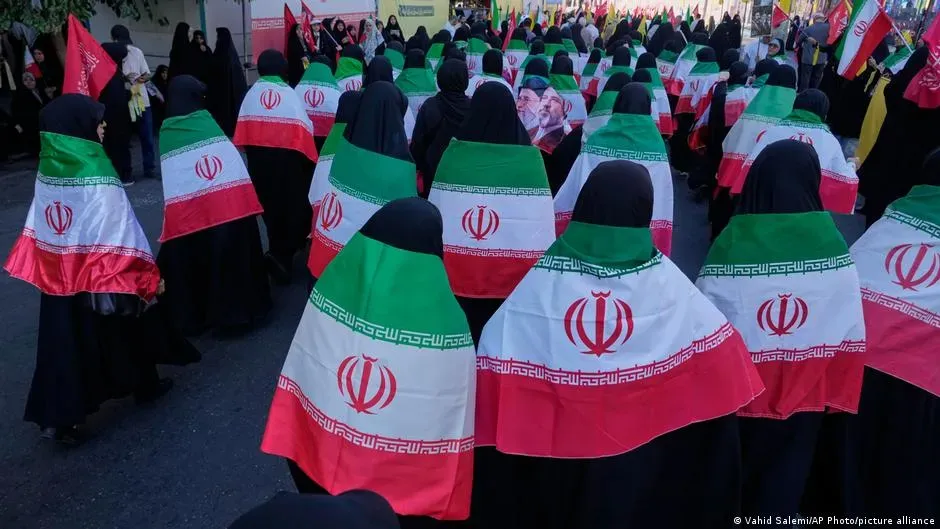
Women in Iran are increasingly appearing in public without wearing a hijab, marking one of the most visible social changes since the 2022 "Woman, Life, Freedom protests. The protests were sparked by the death of a woman who died in police custody after being arrested for allegedly wearing her headscarf improperly.
Despite the relative retreat of street patrols by the morality police, the compulsory hijab has not disappeared. Authorities are finding new ways to enforce compliance without resorting to the same level of confrontation that fueled the protests.
Judiciary chief Gholamhossein Mohseni Ejei has called for action against social abnormalities," "indecency" and "nudity. He urged prosecutors to coordinate with police, intelligence bodies, and government institutions to enforce compliance.
The online campaigns calling for conscious purchasing have sparked debate about their potential impact on social divisions in Iran. The idea behind these campaigns is to encourage consumers to support vendors who adhere to hijab rules, but critics argue that this approach may actually drive a wedge between people.
A female lawyer based in Tehran expressed concern that such initiatives could exacerbate existing social tensions rather than promoting unity around a shared value. She pointed out that by categorizing individuals based on their appearance and imposing economic pressure on them, these campaigns risk undermining the right to choose where one shops.
The lawyer also questioned the assumption that women who wear the hijab are uniquely representative of Iranian societal values. She argued that this perspective oversimplifies the complexity of Iranian society, which is characterized by a rich diversity of cultural norms and practices.
These concerns highlight the challenges of addressing issues related to dress codes in Iran, where the regime has been grappling with declining compliance among women.
As Iranian women continue to defy the hijab rules, reports are emerging that authorities are now targeting them in everyday settings. Women have taken to social media to share their experiences of being denied access to essential services like clinics and banks for not wearing a headscarf.
Shirin Shams, an exiled Iranian activist, believes these campaigns aim to revive the social divisions that were weakened during the Woman, Life, Freedom movement. She argues that the compulsory hijab is a key ideological line for the Iranian state, which has been trying to divide women based on their clothing choices.
The widespread presence of women without headscarves in public spaces suggests that social reality has moved beyond official expectations. This shift has significant implications for the regime's efforts to maintain control over society.
Saeed Paivandi, a French professor, describes the conflict as a broader struggle over social control. He suggests that the issue is not just about clothing but also about the state's attempt to reconstruct boundaries between women who comply with the rules and those who do not.
The Iranian government has been creating divisions among women for years, categorizing them as either properly veiled or badly veiled" or "unveiled". This distinction is not just about clothing but also reflects the state's attempt to enforce strict moral and social codes.
According to Peyvandi, a woman without a headscarf does not represent an individual choice, but rather a challenge to Iran's ideological order. For some conservative figures, she embodies a threat to their authority and the country's values.
The Iranian President has emphasized the importance of national unity and social cohesion, yet conservative voices continue to call for stricter enforcement of dress regulations. This creates tension within the government, with some factions aware that renewed confrontations between police and women could have far-reaching consequences.
As the debate rages on, parts of the establishment seem hesitant to revive large-scale protests, while others are unwilling to tolerate the normalization of women appearing in public without a hijab.
The Iranian government's efforts to enforce compulsory dress rules have shifted from direct coercion to more subtle forms of pressure. This new approach involves using various channels, such as courts, workplaces, and administrative procedures, to encourage compliance.
Supporters of Islamic dress codes are now looking for alternative ways to enforce conformity, with a growing emphasis on social campaigns and personal discretion. As a result, individuals in positions of authority, like bank employees or shopkeepers, may become involved in enforcing standards even without direct government intervention.
This shift has blurred the lines between law, personal choice, and ideological pressure, creating an increasingly complex environment for Iranian women to navigate. The risk is that linking religion to humiliation and exclusion could further alienate younger generations from religious institutions, undermining their sense of belonging.
Facts based on reporting originally published by DW English.
You may republish this story, in full or in part, if you credit News Central Site and link to it (licence CC BY 4.0). Photos are not included.