Women face barriers to leadership positions in top companies
Recent data shows a slowdown in the promotion rate of women into senior executive roles, exacerbating an already challenging pipeline for women to reach CEO level.
Women are facing significant barriers as they strive for leadership positions in top companies. According to recent data, the rate at which women are being promoted into senior executive roles has slowed down dramatically.
Experts warn that a shaky labor climate and lack of professional infrastructure are exacerbating an already challenging pipeline for women to reach the CEO level. These factors have led organizations to deprioritize cultivating female leaders in favor of more pressing concerns. This shift in focus is having a lasting impact on the number of women being promoted into top roles.
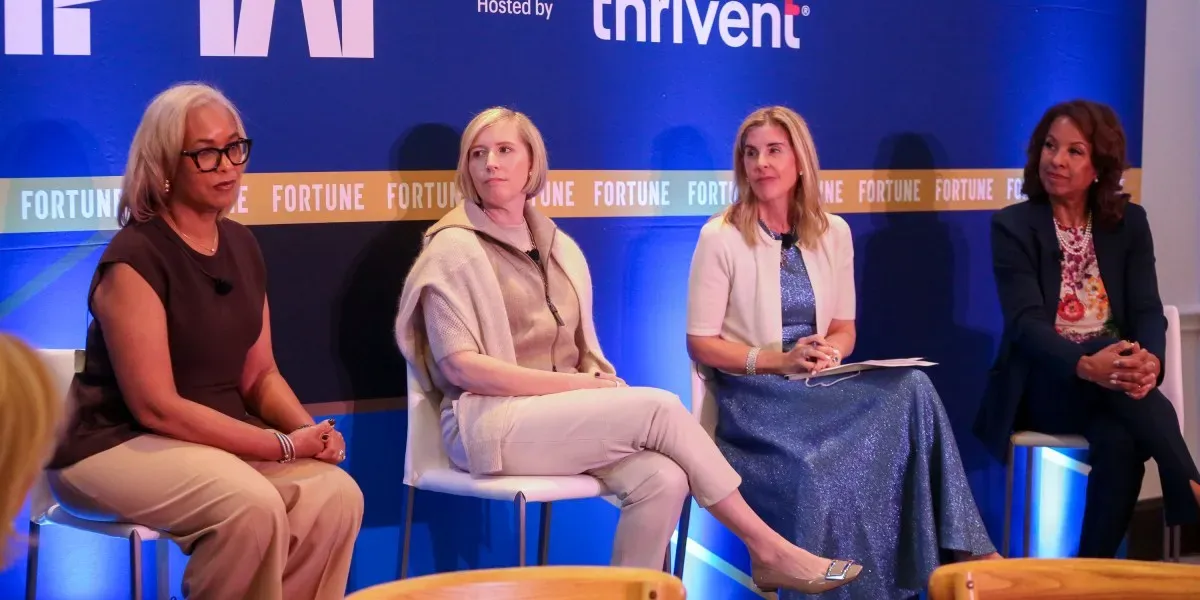
At the Fortune Most Powerful Women Summit, Kelly Baker, executive vice president and chief human resource officer at financial services firm Thrivent, highlighted the issue. She stated that organizations are no longer prioritizing the development and recruitment of female leaders due to a frenetic environment. This lack of focus has contributed to a decline in the number of women being promoted into senior positions.
Despite an increase in the number of women-led companies on the Fortune 500 list, now standing at 56, up from 7.4% six years ago, progress for women in leadership roles remains stagnant. Women hold approximately 30% of both C-suite and board level positions, marking a decline in women's representation on boards for the first time in over a decade.
Toni Townes-Whitley, former Fortune 500 CEO and Nasdaq corporate board member, noted that a decrease in discussions about workplace diversity has led to less focus on promoting women leaders. As a result, there is an attitude shift toward questioning women's capabilities in leadership positions.
The struggle for women to break through to leadership positions in business is a complex issue that cannot be solved by simply addressing the pipeline problem. According to Townes-Whitley, the environment surrounding women's roles in the workplace has become increasingly challenging due to negative rhetoric from various sources.
This external pressure can have a profound impact on women's self-perception and confidence in their abilities. Research suggests that only 36% of women in the workforce consider themselves potential CEOs or express a desire for top leadership positions. This statistic highlights the persistent problem of women undervaluing their own capabilities.
Despite possessing the necessary skills and experience, many women do not see themselves as leaders. Jenna Fisher, managing director of Russell Reynolds Associates, notes that companies cannot simply "3D print" candidates to fill leadership roles. The dearth of qualified female candidates is a symptom of deeper issues rather than a simple pipeline problem.
Hayden Brown, president and CEO of Upwork, is one example of a woman who did not initially consider herself suited for top leadership. It took her board chair's encouragement 10 years ago to prompt her to consider the role, and even then she was hesitant.
Brown has taken steps in her own life to promote greater self-confidence and inclusivity among women. She has made a conscious effort to edit children's books with her kids to be more representative of diverse roles for both boys and girls, promoting traits such as hard work over traditional notions of intelligence.
The issue at hand is not simply one of numbers or demographics but rather the deeply ingrained attitudes that prevent women from seeing themselves in leadership positions.
To drive lasting change, senior leaders must create an environment that supports and encourages women to take on leadership roles. This involves not just providing opportunities but also actively promoting women through mentorship and sponsorship.
Research suggests that AI is creating a new imperative for adaptable leaders who can navigate emerging technologies. Interestingly, women appear to be ahead of men in adopting and implementing AI solutions, possibly due to their willingness to adapt and evolve.
Despite the reduced focus on diversity and inclusion initiatives, there remains significant demand for women in executive and board positions.
Facts based on reporting originally published by Fortune.
You may republish this story, in full or in part, if you credit News Central Site and link to it (licence CC BY 4.0). Photos are not included.