Alphabet Investing Heavily in Artificial Intelligence
Alphabet expects to spend around $200 billion this year on expanding its AI capabilities, with capital expenditures significantly increasing next year.
Alphabet is investing heavily in artificial intelligence (AI), with a projected expenditure of around $200 billion this year to expand its AI capabilities.
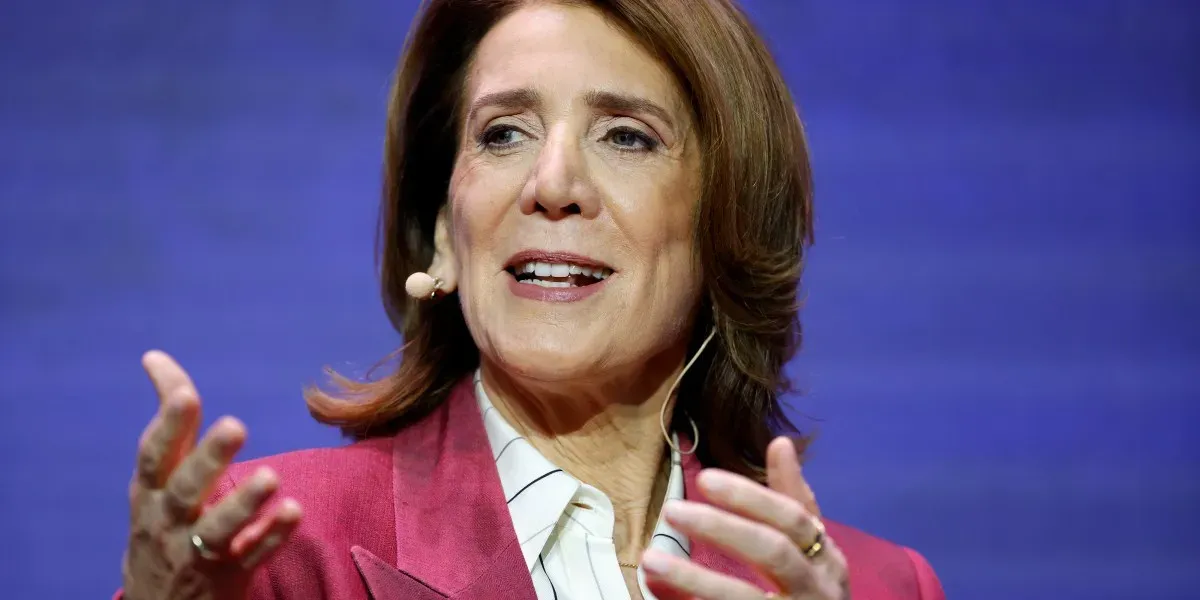
The company's president and chief investment officer, Ruth Porat, confirmed that Alphabet expects capital expenditures to significantly increase next year. This comes as the demand for compute continues to grow, driven by the value that partners are seeing in the enterprise, governments, and across Google's platform.
Porat made these comments at Fortune's Most Powerful Women Summit in Santa Barbara, California, where she was pressed on whether Alphabet is at the peak of its spending on AI. In response, Porat noted that the company sees this as an opportunity that extends over a long period.
As one of the largest corporate spenders ever, Alphabet's investment spree is being overseen by Porat, who has been instrumental in shaping the company's financial strategy since taking on her current role in 2023. Prior to that, she served as Alphabet's finance chief for nearly a decade and was previously Morgan Stanley's CFO.
Porat's leadership extends across various aspects of Alphabet's business, including its investment vehicles, such as GV and CapitalG, as well as its "Other Bets ventures and real estate investments.
Alphabet's increased spending on AI has had a significant impact on its financials, with capital expenditures reaching $44.9 billion in the second quarter.
The majority of this expenditure was dedicated to technical infrastructure that supports Alphabet's AI investments, according to CFO Anat Ashkenazi during the company's Q2 earnings call.
As a result, Alphabet's free cash flow turned negative for the first time in over 20 years as a public company, with a quarterly deficit of $5.9 billion.
This decline in cash flow is notable, given that Alphabet had previously lifted its 2026 capex outlook to as much as $205 billion, which sent stock prices plummeting by more than 6% the following day.
Meanwhile, Google Cloud's revenue surged 82% to $24.8 billion, with operating profit more than tripling to $8.8 billion in the same period.
Porat disagrees with a recent report from Jefferies' Chris Wood, who warned of massive capital destruction in the US AI market due to cheaper open-source Chinese models taking market share.
Alphabet's President Ruth Porat emphasized the importance of long-term thinking in achieving success. When asked what constitutes winning for the company, she pointed out that it is not about ranking who is best, but rather responsible deployment of technology.
Porat stressed that investing in growth over a prolonged period is essential to enduring success. She cited Alphabet's capital expenditure spending as an example of this approach, noting that it was a direct result of strategic decisions made years ago, including Google's pivot from mobile first" to "AI first" in 2016.
To drive long-term growth, companies must invest for the future rather than waiting until they need something. By doing so, they can create sustainable value and achieve lasting success, Porat emphasized.
Porat has been a vocal advocate for the benefits of investing in artificial intelligence. At a recent event, she highlighted the potential of data centers to create jobs and slow energy price growth by spreading fixed costs across a larger base. She also noted that AI is more than just a chatbot, but rather a tool with far-reaching applications.
Growing resistance to building new data centers has been acknowledged by Porat. According to recent polls, around 71% of Americans do not want one built in their community. However, she argued that public opinion can shift when companies demonstrate benefits such as energy capacity expansion, affordability protection, and job creation.
To address concerns about data center construction, Alphabet is investing in renewable energy sources like nuclear, geothermal, solar, and wind power. The company has also partnered with other firms to create the Skilled Trades Alliance, which aims to train workers needed for data center buildouts, including electricians, welders, and others.
Alphabet President Ruth Porat emphasizes the importance of addressing the downsides of artificial intelligence (AI) development, acknowledging that the anxiety surrounding AI's potential consequences is real and significant.
Porat's background in finance has likely informed her approach to mitigating risks associated with emerging technologies. Her experience working alongside Hank Paulson during the 2008 financial crisis highlights a key lesson: identifying vulnerabilities early on and taking proactive measures to address them, as it can be difficult to respond effectively once a problem arises.
Porat warns that companies failing to adapt to AI may find themselves at a competitive disadvantage if they don't develop ways to connect with customers in innovative ways.
Facts based on reporting originally published by Fortune.
You may republish this story, in full or in part, if you credit News Central Site and link to it (licence CC BY 4.0). Photos are not included.