US Law Enforcement Granted Warrants for Surveillance Devices at Anti-ICE Protest
Law enforcement agents in Minnesota and Pennsylvania have been granted warrants to use surveillance devices to track individuals involved in an anti-ICE protest.
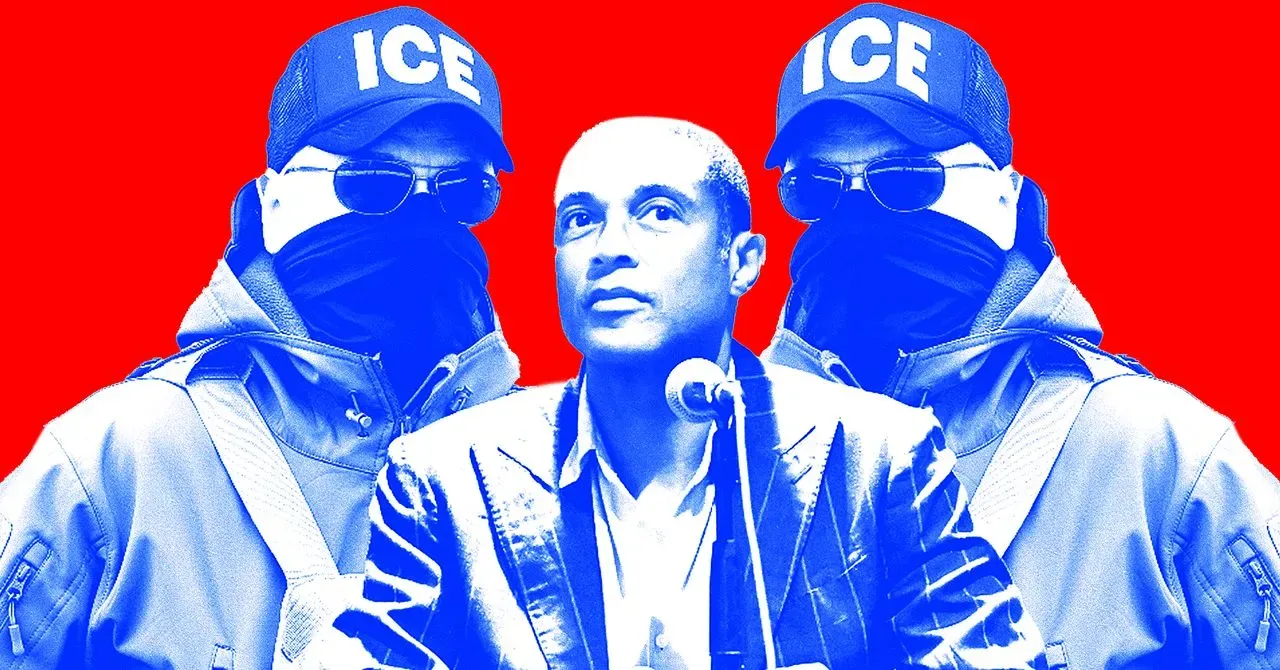
US law enforcement agents have been granted warrants to use controversial surveillance devices to track down individuals involved in an anti-ICE protest at Cities Church in St. Paul, Minnesota. The move comes after 39 people were charged with conspiring to violate worshippers' civil rights and interfering with religious worship during the January event.
Among those charged is Jerome Richardson, a 21-year-old college student who helped produce journalist Don Lemon's coverage of the protest. Richardson has since graduated from Temple University, but his involvement in the demonstration has led to law enforcement targeting him with warrants for cell phone surveillance. Protesters had targeted the church because one of its pastors, David Easterwood, also led ICE's St. Paul field office.
According to court filings, judges in Minnesota and Pennsylvania began signing warrants authorizing agents to use cell-site simulators on January 30 and 31. These devices can intercept cell phone signals, allowing law enforcement to track individuals' locations and communications. In addition to targeting Richardson, agents also applied for warrants to monitor the phones of journalists Georgia Fort and Jamael Lundy, a former Minnesota State Senate candidate.
The use of such surveillance tools has raised concerns about civil liberties and the potential for misuse. As the situation unfolds, it remains unclear how far-reaching the investigation will be and what implications this may have for those involved in the protest.
The investigation into the protest has taken a new turn as records reveal that federal authorities obtained warrants to deploy fake cell towers to track down individuals involved in the demonstration. The warrants were reportedly sought for at least two targets: Fort and another individual whose phone number was traced by investigators. It remains unclear whether these applications were approved or resulted in any evidence being collected.
The use of such technology raises concerns about the indiscriminate collection of data from nearby cellular devices, including those not suspected of a crime. Cell-site simulators can impersonate cell phone towers to locate a target's phone and also gather identifying information from nearby devices. This has led privacy advocates to label these tools as dragnet surveillance instruments.
The secrecy surrounding the use of cell-site simulators is notable, with FBI records showing that police borrowing these devices must agree to keep details of their use confidential, even in court. This lack of transparency has contributed to concerns among privacy advocates that such technology could be misused against protesters and journalists.
It's worth noting that Fort's lawyers have stated in a July letter filed in court that prosecutors were unsure whether the surveillance applications had been authorized or yielded any evidence. The ambiguity surrounding these warrants highlights the complexity and potential implications of this investigation as it continues to unfold.
The use of cell-site simulators to track down Don Lemon's producer has raised concerns about the government's surveillance tactics and their potential impact on press freedom.
Cooper Quintin, a senior staff technologist at the Electronic Frontier Foundation, believes that deploying such devices against journalists is an attack on the First Amendment. Quintin has spent years researching cell-site simulators and developing tools to help people detect them.
Evidence suggests that a cell-site simulator was used near the 2024 Democratic National Convention in Chicago, but it remains unclear who operated it or for what purpose.
The investigation into the protest at Cities Church has led to a series of contentious investigative tactics by federal agents.
The investigation into the protest at Cities Church has led to a series of contentious investigative tactics by federal agents.
Defense attorneys have uncovered 92 customs summonses issued in connection with this case, and they are questioning the government's authority to issue these warrants.
A closer look at the cell-site simulator warrants raises concerns about the accuracy of information presented to judges in order to obtain authorization for surveillance tools. It also questions why such intrusive tracking was necessary to locate one individual.
At least 15 warrant affidavits included a false claim made by prosecutors, which they later conceded was incorrect: that Don Lemon and his producer had been involved in chanting. The government acknowledged this error.
The deployment of cell-site simulators is supposed to be limited to cases where it's the most effective tool for achieving public safety objectives, but there's no clear explanation for why it was used here.
The warrant authorizing the use of a cell-site simulator was signed on January 31, just days after Richardson posted a YouTube video announcing his impending arrest. This timing raises questions about why investigators sought such an invasive tool to locate someone who had openly stated his intention to turn himself in.
While Richardson's defense team has filed a motion to suppress evidence obtained from phone tracking, it does not specify whether agents used a simulator or another method to gather information. The lack of clarity on this point only adds to the concerns about the use of such an intrusive technique.
The deployment of cell-site simulators is typically reserved for high-stakes cases where other methods have failed, but in Richardson's case, prosecutors had already agreed to release him upon his surrender. This raises questions about why investigators felt the need to employ a tool that can intercept and manipulate phone signals.
Richardson's background as a community organizer and activist has been highlighted by his supporters, who point to his work with the NAACP chapter at 16 and his role as executive director of Minnesota Teen Activists. His employer, CNN, also described his job in handling logistics for journalist Don Lemon during a live broadcast from Cities Church.
Prosecutors have alleged that Richardson participated in chants and obstructed churchgoers during a protest.
In a video defending his actions, Richardson stated he was proud to support Don Lemon's work. He highlighted the importance of journalists' roles in society and expressed pride in being part of Lemon's team.
The government initially sought arrest warrants for multiple individuals involved in the case but faced resistance from judges. A magistrate judge rejected five out of eight warrants, prompting an appeals court to reject the Justice Department's bid to override this decision. The department ultimately withdrew its request for arrest warrants.
After securing a grand jury indictment on January 29, prosecutors chose to arrest some defendants at their workplaces or homes rather than allowing them to surrender voluntarily. Lemon was arrested at a Beverly Hills hotel while covering the Grammy Awards, and Fort was detained at her residence.
Facts based on reporting originally published by Wired.
You may republish this story, in full or in part, if you credit News Central Site and link to it (licence CC BY 4.0). Photos are not included.