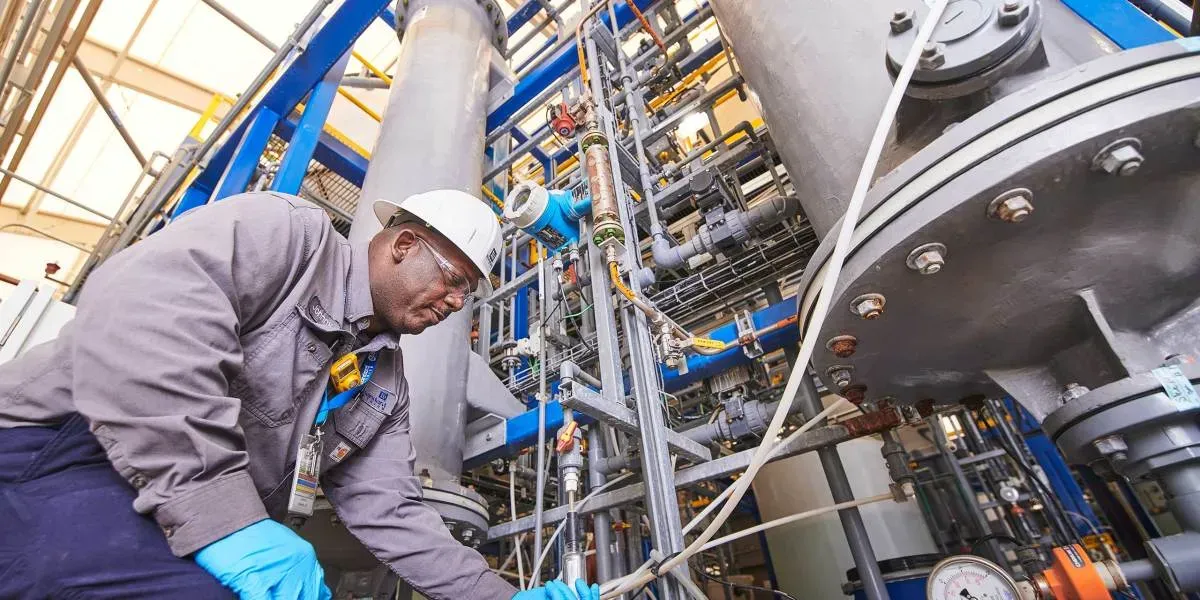
US Department of Defense Unveils Plan to Create War Stockpile on American Soil
The plan aims to ensure the country's military capabilities remain intact in the event of cyberattacks and sabotage that disrupt domestic factories and power grids.

The US Department of Defense has unveiled plans to create a war stockpile on American soil, aimed at ensuring the country's military capabilities remain intact even in the event of cyberattacks and sabotage that disrupt domestic factories and power grids.
At the heart of this initiative is the need for critical minerals, fuel, and munitions. However, experts warn that securing these resources may prove to be a significant challenge. The US currently produces less than 1% of one of the most common types of rare-earth magnets used by its military.
The country's reliance on foreign suppliers, particularly China, which dominates processing for many critical minerals, has also raised concerns. China has been known to limit American companies' access to these resources even in times of peace. This vulnerability could have far-reaching implications for US military operations if a conflict were to occur.
The FORTRESS America initiative was formally established on September 30th and is designed to enable US forces to continue operating even if domestic power grids and manufacturing supply chains are disrupted. The program builds on earlier efforts to ensure military bases can function without the grid for up to 90 days, and its planned scale is being described as unprecedented in recent history.
The Pentagon's plan to stockpile war materials within the US is facing a significant challenge due to America's reliance on foreign supply chains for critical minerals.
Clark noted that during the Cold War, the military stored large quantities of war matériel overseas near potential battlefields in Eastern Europe or Northeast Asia. However, FORTRESS focuses on safeguarding supplies within the country, reflecting concerns that American factories could become targets due to cyber threats, drone attacks, electromagnetic warfare, and insider attacks.
China's capabilities in these areas are a major concern for US officials, who warn that Beijing could disrupt industrial production through various means. In fact, U.S. agencies have already identified Chinese state-sponsored hackers infiltrating critical infrastructure within the country.
The US defense industry is heavily reliant on foreign supply chains for its raw materials, with over $60 billion worth of critical minerals other than rare earths imported in 2025 alone.
The US military's reliance on rare-earth magnets has become a major concern, with domestic sources struggling to meet demand. According to recent data, the country's most common type of rare-earth magnet is in short supply, with only 300 metric tons produced domestically in 2025 compared to a staggering 48,000 metric tons in demand.
The shortage is already having real-world consequences, as major companies like Ford are feeling its effects on their factory floors. In May 2025, the automaker was forced to idle one of its Chicago plants for a week due to a lack of rare-earth supplies. This is just one example of how the supply chain disruptions are impacting American industry.
China's tightening export controls have only added to the problem, making it increasingly difficult for US companies to secure enough rare-earth materials. Despite repeated calls from US officials for China to fulfill its commitments on rare earths and other critical minerals, Beijing has shown no signs of easing up on restrictions.
The Pentagon is well aware of the risks posed by foreign dependence on these critical supplies, particularly in a major war scenario where shipping routes and overseas production could be severely disrupted. In an effort to reduce reliance on foreign sources, the military is pursuing a dual strategy that involves building raw-material reserves while investing in domestic mining and processing capacity.
The US military's efforts to build a war stockpile are facing significant challenges in securing essential minerals.
Tungsten is one such metal where the country's reliance on imports has become increasingly problematic. The last time domestic production of tungsten was commercially viable was 2015, when cheaper imported supplies undercut local output.
According to the US Geological Survey, the nation's net import reliance for tungsten exceeded 50% in 2025, highlighting the pressing need for a reliable domestic supply chain. This issue has been exacerbated by the fact that no new tungsten mines have come online since the last one closed.
A recent contract awarded to The Elmet Group, a leading tungsten manufacturer, is intended to alleviate some of these concerns. Under the terms of the deal, worth up to $2 billion, Elmet will supply tungsten ores, concentrates, and sodium tungstate to the National Defense Stockpile.
However, delivery of these supplies has been put on hold until new production capacity comes online from investments made in Nevada, Australia, and Spain.
The US Department of Defense's ambitious plan to stockpile critical minerals has hit a significant roadblock. Analysts are warning that achieving supply chain independence will take time, citing the complexity of rapidly building both finished products and raw mineral reserves.
According to experts, the Pentagon is unlikely to meet its goals in the near term due to structural difficulties. Building the necessary infrastructure to compete with China's dominant supply chain will require significant investment and a substantial amount of time.
The first test for the US defense industry comes soon, as new federal regulations set to take effect from January 1, 2027, will prohibit defense contractors from purchasing rare earths, magnets, and tungsten from countries including China, Russia, Iran, and North Korea, unless they can source these materials domestically.
Facts based on reporting originally published by Fortune.
You may republish this story, in full or in part, if you credit News Central Site and link to it (licence CC BY 4.0). Photos are not included.