Tsunami Warning Issued for Rapa Nui During Film Location Shoot
A tsunami warning was issued for Rapa Nui while I was visiting the island, prompting a sense of unease among locals and tourists alike.
A tsunami warning was issued for Rapa Nui while I was visiting the island, prompting a sense of unease among locals and tourists alike. According to one local, tsunamis are rare occurrences on the island, although there was a notable event in 1960 that caused significant damage.
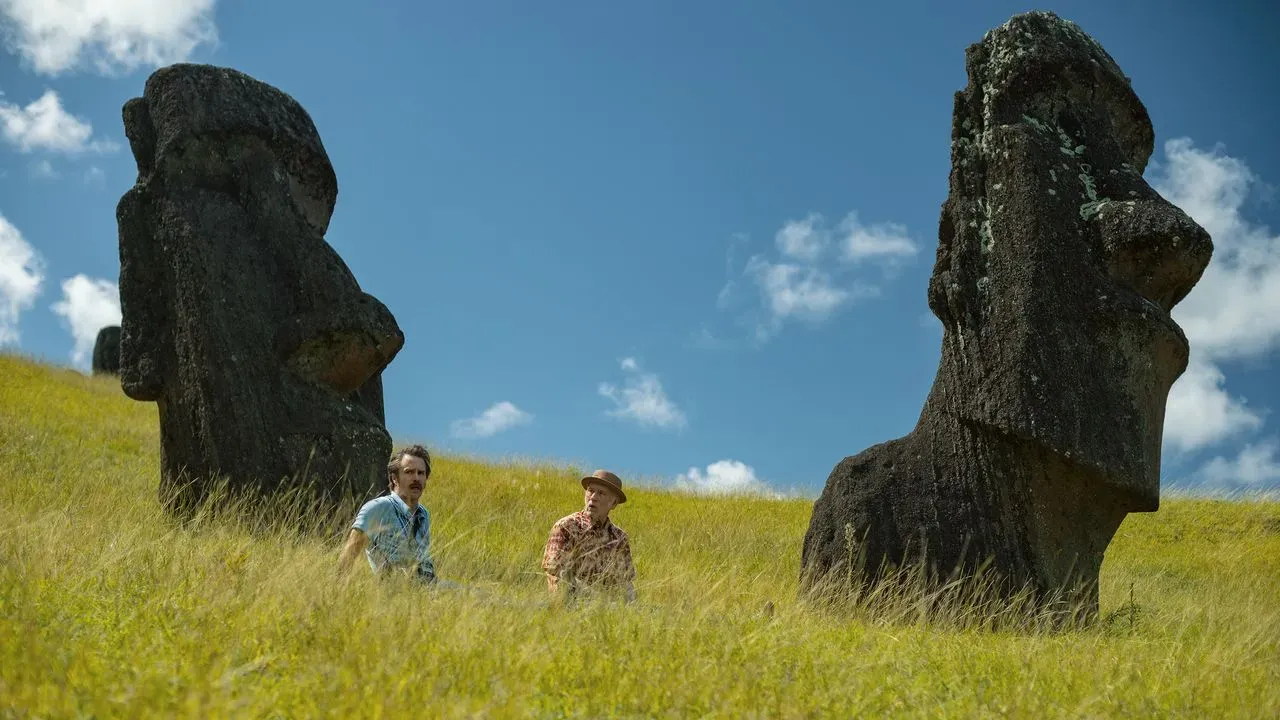
The warning was eventually lifted, but it added an air of tension to my visit. I couldn't help but feel a sense of mortality as I posed for a photo in front of the iconic moai statues. The vast Pacific Ocean behind them seemed to stretch on forever.
The island's eerie atmosphere is at the heart of Wild Horse Nine, a new film written and directed by Martin McDonagh. Partially filmed on Rapa Nui, the dark comedy follows two CIA agents as they travel from Santiago to the island for a week-long vacation.
Their trip coincides with a pivotal moment in Chilean history, just before the 1973 military coup that ousted socialist president Salvador Allende and installed dictator General Augusto Pinochet. The film's protagonists are likely involved in American foreign policy in Latin America, at least according to those familiar with the region's complex history.
I had traveled to Chile to follow in the footsteps of Wild Horse Nine, tracing the real-life locations and historical events that inspired the film. Rapa Nui is a key location in the movie, where Chris Carlisle and Lee Chesterfield embark on their ill-fated adventure.
The film's characters are quintessential McDonagh creations, an older, brasher Chris, and his exasperated younger colleague Lee. As they navigate the complexities of their final mission together, Chris becomes increasingly erratic, driven by a terminal cancer diagnosis and a desire to see "the big heads on Rapa Nui.
McDonagh's films often feature acerbic buddy duos, and Wild Horse Nine is no exception, with its blend of dark humor and poignant drama. As I explored the locations that inspired the film, it became clear that Wild Horse Nine is more than just a story about two CIA agents on a mission, it's also a nuanced exploration of mortality, friendship, and the complexities of American foreign policy in Latin America.
The 9-day tour to track the route of Wild Horse Nine kicked off in Santiago, but unseasonable rain clouds had rolled in by the time I arrived, obscuring the imposing Andes and threatening to flood the Mapocho River.
Despite the gloomy weather, the city's 19th-century architecture stood out, particularly in bohemian Barrio Lastarria, where my guide Lisette Matamala met me outside my hotel. We set off into the rain, our comically oversized umbrellas providing little protection from the downpour.
As we walked to nearby Plaza de la Constitución, Lisette pointed out La Moneda Palace, the seat of the Chilean president that was bombed during a coup. The image of the palace still stands as a powerful reminder of the country's complex history.
The bombing of La Moneda is a pivotal moment in Wild Horse Nine's plot, and I had been looking forward to seeing it firsthand. As we stood under our umbrellas, Lisette explained the significance of this event and its impact on Chilean politics.
As we continued through the city, it became clear that Santiago's history is deeply intertwined with the country's Indigenous culture. However, my tour companions in the movie seemed more interested in getting from point A to B than in exploring these complexities.
In contrast, our itinerary for the next few days would delve into the fraught politics and cultural heritage of Chile, setting the stage for a nuanced exploration of the themes that underpin Wild Horse Nine's narrative.
The Salvador Allende Museum of Solidarity is a contemporary art museum located in Santiago's historic Barrio República neighborhood. This building has undergone significant transformations over the years, serving as an affluent family home in the mid-20th century, a left-wing exhibition space from 1971 to 1990, and even a detention center and listening station operated by Pinochet's Directorate of National Intelligence (DINA).
After Chile's return to democracy in 1990, the museum was restored to its original form. While it is not directly associated with the Wild Horse Nine film, visiting this museum provides essential context for understanding the historical events that inspired the narrative.
Museum Director María José Lemaitre guided me through the building, pointing out various aspects of its complex history. She noted that when the art was reinstalled after the restoration, several hidden secrets were uncovered within the building's structure.
These secrets included transcriptions of tapped phone calls discovered in the ceilings and phone-tapping equipment found in the basement. I had the opportunity to see this equipment firsthand in a dusty, windowless subterranean room. The handwritten names and phone numbers of families spied on by DINA were etched into the walls, serving as tangible evidence of the regime's atrocities.
The museum curator, Caroll Yasky, emphasized that while the museum showcases the past, its true significance lies in promoting a better future for Chilean society. As we left the basement and stepped back into the daylight, I couldn't help but feel the weight of Pinochet's legacy still lingering over Santiago.
In the evening, I met with a university professor who shared a personal connection to the regime. His father had been one of Pinochet's drivers, a role that seemed to have left an indelible mark on him. The professor hinted that his father's experiences may have even contributed to a health crisis he faced later in life.
We visited Villa Grimaldi, a former detention center on the outskirts of Santiago, which now serves as a memorial to its past. The site is a poignant reminder of Chile's tumultuous history under military rule. Today, it stands in stark contrast to its dark past, with clusters of colorful mosaics and water features adding a touch of serenity.
Two survivors of the detention center, Alvaro Ahumada and Ignacio Puelma, took us on a tour of the site. Both men are now in their early 70s and were once members of the student-led Movement of the Revolutionary Left. They were transferred to Villa Grimaldi when they were just teenagers.
As we walked through the grounds, I couldn't help but notice the stark contrast between the sobering remnants of the detention center's structures and the vibrant flowers that now bloom there. It's a testament to the resilience of the human spirit and the power of transformation.
Ahumada, who is also the president of the foundation, explained their vision for the site. We didn't want to have a horror museum, he said, emphasizing the need to create something more positive from this dark chapter in Chile's history. The pair's words were a poignant reminder of the struggles they faced during their time at Villa Grimaldi.
As we continued our tour, I was struck by the similarities between Ahumada and Puelma's story and the film Wild Horse Nine. Both men were young left-wing activists who were imprisoned for their politics. They even formed a band together during their imprisonment, finding solace in music amidst the hardships they faced.
Their bond is still strong today, with Puelma describing it as very deep". Ahumada added that they shared a love of rock music, which helped them connect and find comfort in each other's company. Their story is a powerful reminder of the human spirit's ability to persevere even in the darkest of times.
As we left Villa Grimaldi, I couldn't help but think about the film Wild Horse Nine and its depiction of the real-life events that took place in Chile during this period. The story of Ahumada and Puelma is just one example of the many lives affected by the regime's brutal suppression of dissent.
The cast of Wild Horse Nine still grapple with the film's themes and events, which are deeply rooted in Chile's turbulent past.
One character, Monica, is loosely based on Comandante Tamara, a left-wing activist who attempted to assassinate former dictator Augusto Pinochet.
This dark period in Chilean history also claimed the life of renowned singer Victor Jara, whose music continues to be celebrated by locals and visitors alike.
The film's director, di Girolamo, shares a personal connection to this era, having been born after democracy was restored but with parents who were students during the tumultuous year of 1973.
As I arrived on Rapa Nui, the same island where Chris and Lee's story unfolds, I felt a mix of excitement and trepidation, mirroring the emotions that must have gripped the characters in the film.
The island's laid-back atmosphere is palpable from the moment you step off the plane at its small, thatched airport, where ukulele music drifts through the air and chickens roam freely around the baggage claim area.
Gina Pakarati, a local who knows Rapa Nui like the back of her hand, picks me up in her trusty Suzuki Jimny and takes me on a journey to visit some of the island's iconic moai sites.
As we arrive at Ahu Akivi, one of Rapa Nui's most impressive moai sites, a mix of tourists mingles around us, some familiar faces among them.
The experience of laying eyes on these colossal statues for the first time is nothing short of magical, as if witnessing a myth come to life. We've all gathered here in pursuit of a once-in-a-lifetime adventure, each with our own unique story to tell.
Gina Pakarati recalls her childhood days playing among the moai, now restricted by a safety rope, and listening to her grandfather's tales of assisting archeologist William Mulloy with their restoration in the 1960s. That period brought significant attention to the island, paving the way for tourism after the first commercial flight arrived in 1967.
The island's connection to mainland Chile was somewhat severed during the coup, but life on Rapa Nui continued relatively unaffected. With the arrival of hotels and cars, followed by a Hollywood film crew in 1993, the island's economy began to flourish. Although the Kevin Costner-produced movie Rapa Nui was a commercial disappointment, it sparked a wave of activity that still resonates today.
The initial boom inspired ventures like the Iorana Hotel, an eccentric ocean-view property that has been welcoming guests since the 1990s and remains family-run to this day.
Facts based on reporting originally published by Conde Nast Traveler.
You may republish this story, in full or in part, if you credit News Central Site and link to it (licence CC BY 4.0). Photos are not included.