Starbucks Introduces New Rule Requiring Purchase Before Seating in China Stores
The new rule, announced on October 21st, affects all 8,000 outlets across mainland China and allows for priority support for certain individuals such as pregnant women or those with mobility issues.
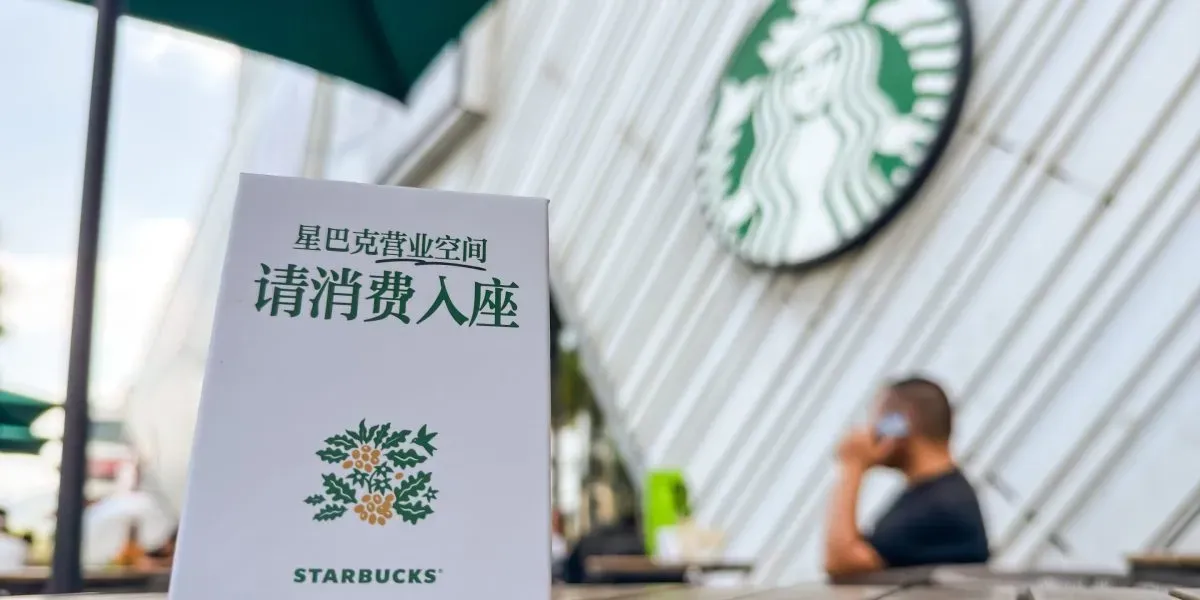
In a move that has sparked little controversy among Chinese customers, Starbucks has introduced a new rule requiring patrons to make a purchase before taking a seat in its mainland China stores. This policy affects all 8,000 outlets across the country.
The company will provide "priority support for certain individuals, such as pregnant women and those with mobility issues, who may still be able to sit without buying something first. The decision was announced on October 21st.
Social media users have largely welcomed the change, with many arguing that seats are a resource provided by Starbucks to enhance customer experience. As one Weibo user pointed out, Starbucks is in the business of selling beverages, not operating as a free study room."
The new policy comes as part of a broader effort to revamp the store experience, with Starbucks investing over 300 million yuan ($44.9 million) to upgrade its locations. This includes increasing staffing during peak hours to provide better service.
Starbucks' China operations have faced significant challenges in recent years, with revenue declining from $3.6 billion in 2021 to $3.2 billion in 2025 due to disruptions caused by COVID and increased competition.
As the company adapted to these changes, it made a strategic decision to partner with a local investor to revitalize its Chinese market presence. In November 2025, Starbucks announced that it was selling a 60% stake in its China operations to Boyu Capital, a Hong Kong-based private equity firm.
This significant investment is aimed at propelling the business forward, allowing Starbucks to expand its reach and deepen its connections with customers in China. According to Brian Niccol, Starbucks' CEO, this move will position the company for growth and success in a rapidly evolving market.
In line with these changes, Starbucks has been refining its store policies to prioritize paying customers while maintaining a welcoming atmosphere. In early 2025, the company revised its open-door policy to ensure that only those who make purchases are allowed to occupy seats in its stores.
The decision to restrict seat access to buying customers is not unique to Starbucks; many retailers already have similar rules in place. The move aims to strike a balance between creating a sense of community and managing store capacity during peak hours, as part of the company's efforts to provide better service.
Starbucks Korea has implemented a new policy banning bulky items from its stores in an effort to maintain a sense of community and manage store capacity during peak hours.
The move comes after some customers were using Starbucks outlets as makeshift offices, bringing in desktop computers and printers among other large items. This has resulted in limited seating for others, impacting the shared space experience that the company aims to provide. By restricting bulky items, Starbucks Korea is taking steps to strike a balance between accommodating remote workers and ensuring all customers can enjoy their stores.
Facts based on reporting originally published by Fortune.
You may republish this story, in full or in part, if you credit News Central Site and link to it (licence CC BY 4.0). Photos are not included.