
The NFL offseason — which is basically a whole season unto itself — is about to come to a screeching halt. Free agency has come and mostly gone. The draft is complete. And now, teams will likely wait until June 1 before making any more moves, because of the salary-cap and compensatory-pick considerations. (That’s when we’ll no doubt see the Philadelphia Eagles trade disgruntled receiver A.J. Brown.)
But there is always something to discuss in the NFL offseason.
Always.
This is “Sound Smart,” where I try to spin forward, dive deeper and think outside the box. If I do my job, you’ll have a better understanding of what really happened over the past week of the NFL offseason.
1. IF THERE’S ONE THING YOU SHOULD KNOW, IT’S…
George Pickens’ contract situation says one thing about the Dallas Cowboys — and another about the NFL.
When it comes to extending the All-Pro receiver, the Cowboys aren’t going to change the way they do business — not even after the Micah Parsons situation blew up last year.
You know the story: Dallas and Parsons never agreed on a contract and negotiations went forgotten-milk sour. Parsons is now a Green Bay Packer. The Cowboys have players and picks to show for the trade. A new-look defense is under construction after last year’s version was putrid without All-Pro edge Parsons.
And you’d think maybe the Cowboys might be more generous with their players, perhaps to earn more goodwill — or perhaps to avoid fallout with another mercurial star.
You’d think wrong.
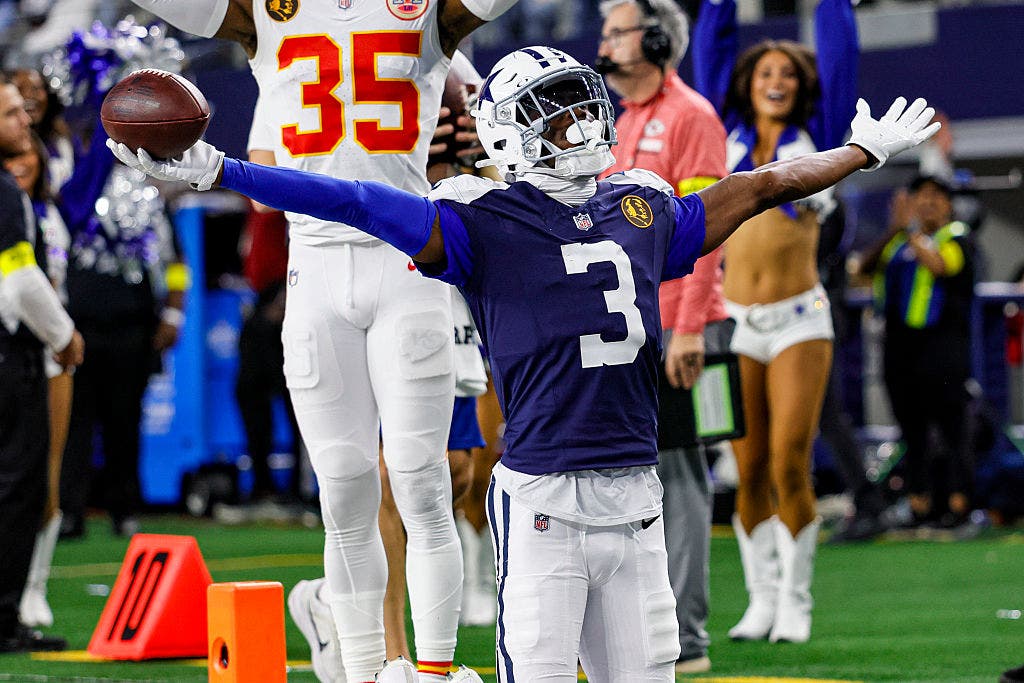
In his first season with the Cowboys, George Pickens set career highs with 93 catches for 1,429 yards and nine touchdowns. (Photo by Matthew Pearce/Icon Sportswire via Getty Images)
At the NFL owners meetings in March, Cowboys owner Jerry Jones set the table for how negotiations would go with Pickens, calling the franchise tag “an integral part of our strategy over the next two or three years as we look to keep our best players.” And ahead of the draft, executive vice president and director of player personnel Stephen Jones doubled down.
“We’ve made a decision that we’re gonna have George play under the franchise tag, which won’t be a first for us,” Jones said. “There won’t be negotiations on a long-term deal. That’s certainly not a first for this organization and won’t be a first in the league.”
Pickens signed his franchise tag on April 30.
On the Cowboys’ end, this is a shrewd decision for roster management. It’s what’s best for the organization, forcing the receiver — who could likely have made $40 million per year (and probably on a three- or four-year deal) on the open market — to play for a one-year, $27.3 million deal. And with Pickens, it’s important to note how he’s not like CeeDee Lamb or Ja’Marr Chase, veteran receivers who repeatedly proved themselves on and off the field before signing huge deals.
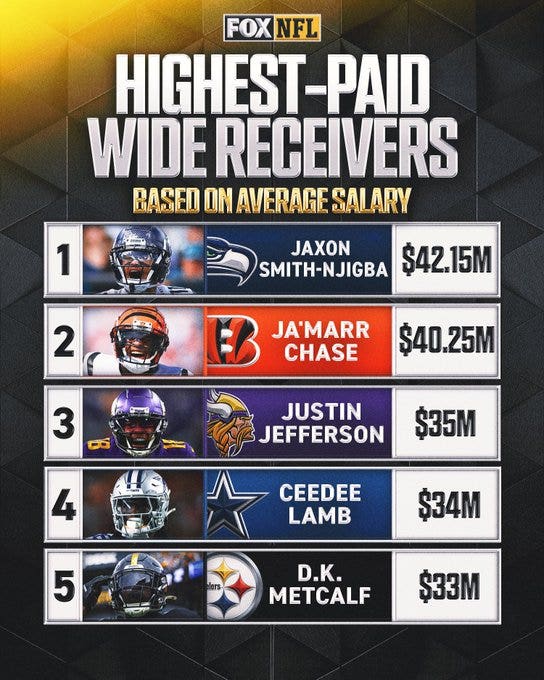
No, Pickens is more of a wild-card, whose play had been spotty at times until he arrived in Dallas last season. And he only landed with the Cowboys because the Pittsburgh Steelers were fed up with him, shipping him off for a third-round pick.
That isn’t to say that Dallas’ decision is fair. But it is analytical and calculated. The Cowboys aren’t changing. Not for Parsons. Not for Pickens.
Now for the NFL, it’s yet another reminder of how little power the players have. At the owners meetings, Jerry Jones mentioned that Pickens entered the league under the collective bargaining agreement, which players negotiated. And so Pickens must follow the NFL and NFLPA’s agreed-upon contract rules, which include the franchise tag. In other words, Jones is saying: Don’t hold out, don’t hold in, don’t fight this franchise tag.
But of course, Pickens doesn’t have much of an alternative. When he entered the draft in 2022, the NIL era was not fully launched in college football — not like the raging business it is now. Nowadays, star players can stay in college and make plenty of money. As we saw in this year’s draft, many do. But when it comes to going pro in football, the NFL has no competitor. And the league’s contract system is extremely team-friendly. It prevented Pickens from cashing in and securing the long-term financial deal that he could absolutely demand, if not for the franchise tag.
Because of that, Pickens has no real recourse — except to demand a trade and/or to stage a holdout or hold-in. That doesn’t seem to be on the table. Instead, he’ll work to change the narrative that he’s difficult to work with. He’ll play on an improperly valued contract.
And in 2027, if all goes well, he’ll cash in big.
2. MONDAY MORNING CONTROVERSY
Where in the world is Shedeur Sanders?
Deshaun Watson is in pole position to start at quarterback for the Cleveland Browns in 2026, per Cleveland.com’s Mary Kay Cabot.
And … my goodness, why and how?
Where is Shedeur Sanders?
This is one of the more promising Browns teams we’ve seen in quite some time, which — I know, I know — might not be saying much. But I genuinely believe that Cleveland is agonizingly close to pulling itself out of the basement and away from the purgatory of rebuilding, year after year.
But the Browns are not going to be competitive if they play Watson, one of the worst QBs in recent NFL history. I’m not even being hyperbolic. Consider this telling statistic from ESPN’s Benjamin Solak: Over the past 26 years, we’ve seen 907 seasons of quarterbacks with 200 passing attempts or more. In 2024, Watson’s season ranked 902nd in yards per dropback. And of course, the QB tore his Achilles twice since that season.
That’s your guy, Cleveland?
So I’ll ask again: Where is Sanders?
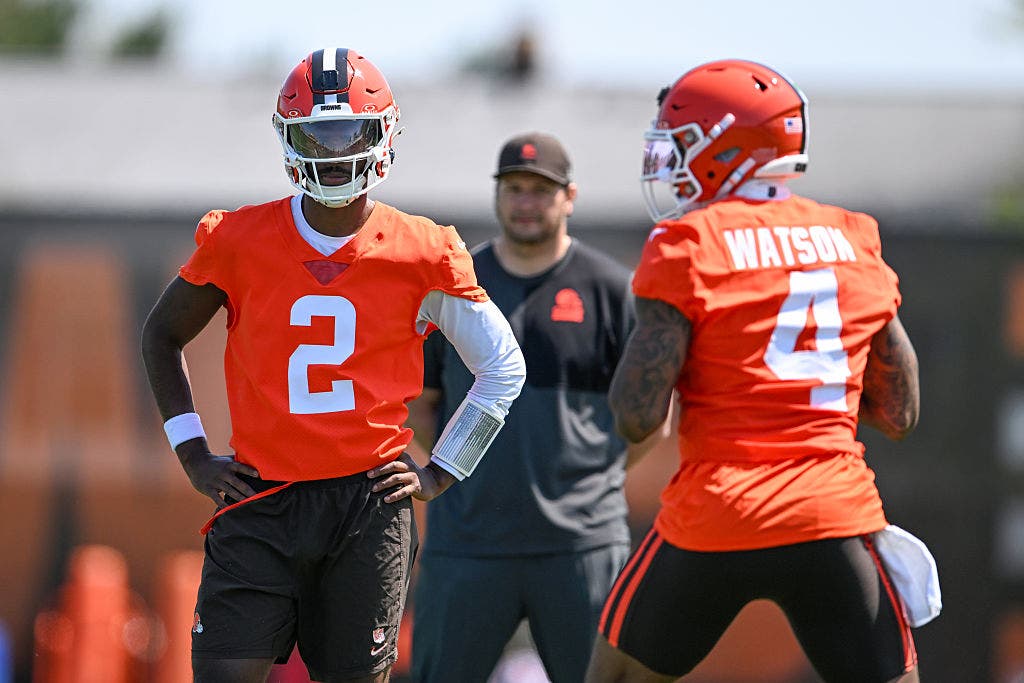
Shedeur Sanders (2) looks on as Deshaun Watson runs a drill during a voluntary veteran minicamp in April. (Photo by Nick Cammett/Getty Images)
I get it. In all likelihood, Cleveland will draft its guy in 2027 — and that will be the year the Browns can legitimately turn this around.
Maybe it’s as simple as: The Browns want to lose a lot of games in 2026 — to rise to the top of the 2027 draft (aka tanking). But that would surprise me. The Browns can’t really afford to tank, not with GM Andrew Berry and head coach Todd Monken on hot seats.
Yeah, that’s right, they could both get fired. Monken hasn’t coached a single down yet, but the Browns struggled to attract a top candidate in the 2026 hiring cycle, mainly because of the team’s salary cap issues and quarterback issues — which all tie back to Watson. If they have a strong, young team with a high draft pick in a QB-rich 2027 draft, the Browns could hire a big-name coach or hot coordinator prospect. (Monken joined Cleveland after getting fired from his OC gig with the Baltimore Ravens.) Think about how the Chicago Bears attracted Ben Johnson with a well-timed hire a year after selecting QB Caleb Williams with the No. 1 overall pick in the 2024 draft.
It’s starting to feel clear that Sanders is not a part of the Browns’ plan, that I’m inserting him into the conversation — because he is not inserting or asserting himself as QB1.
Time is running out.
Now would be a great time for Sanders to step up. To prove he’s “LEGENDARY.”
3. PEELING BACK THE CURTAIN
Eric DeCosta did a brilliant job of defusing tension between NFL teams and the Consensus Draft Board.
There has been an ongoing discussion in the NFL about the “Consensus Board,” an aggregation of media-based big boards ranking the top draft prospects. It’s an effort to use the immense draft data to set the averages. The discussion is often contentious after a team veers from the consensus ranking. But finally, the discussion took a more productive turn this week.
And that was when Ravens GM Eric Decosta took the time to explain what he’s seeing when he works with his team’s board — and compares it to the consensus.
“Over the last three years or so, more teams seem to be drafting the same as the Ravens,” DeCosta said on “The Lounge” podcast. “There seems to be an alignment in some ways of boards. And some of that might be based on modeling and analytics and more data being used, some of that data which is industry data and various things. I’m not sure if that’s good or not.”
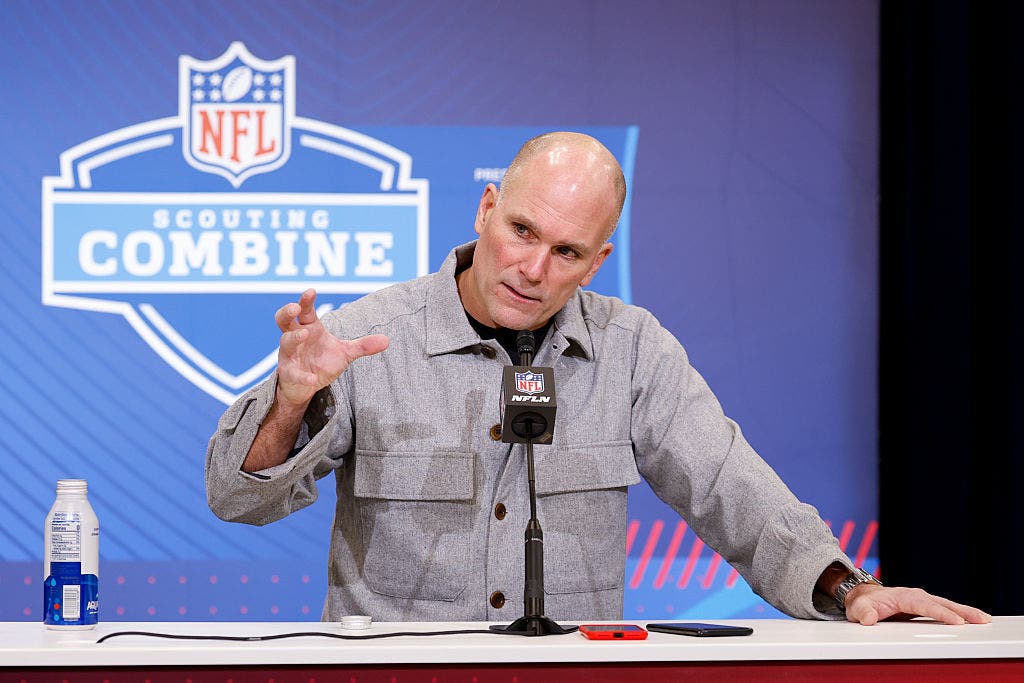
Ravens GM Eric DeCosta speaks to the media during the 2026 NFL Scouting Combine in Indianapolis. (Photo by Lauren Leigh Bacho/Getty Images)
He said there are draft prospects he calls “outlier players” who he might rank, for example, as first- or second-round picks but who the consensus boards show as fourth- or fifth-round picks.
“That was concerning except that, in most of those cases, those players were drafted closer to where we had them by other teams,” DeCosta said. “Meaning, they weren’t falling [toward their consensus value]. … We see these guys getting drafted nearer to 35 than 105. So what that tells me — and once more, I feel we’re simply scratching the floor on this — nevertheless it tells me that there are gamers that groups like that the consensus boards haven’t heard about, valued correctly or latched onto.”
He added: “There are these outlier prospects that the teams know about that the consensus boards haven’t caught up to.”
DeCosta felt like the open entry to information and analytics has helped the media’s consensus board align extra carefully with groups’ boards — significantly as the years go on. But they don’t match universally.
The total dialogue began with the examination of the San Francisco 49ers’ draft class, which included a handful of “reaches,” when utilizing the consensus board.
In this yr’s class, 49ers receiver De’Zhaun Stribling may be the greatest instance of an “outlier player.” The 49ers took him at thirty third general — regardless of him sitting at eighty fifth on the consensus board — as a result of San Francisco feared he’d get drafted quickly after their slot. Reports indicate that the 49ers were right — a number of groups had Stribling circled for Round 2. And all it takes is one different workforce.
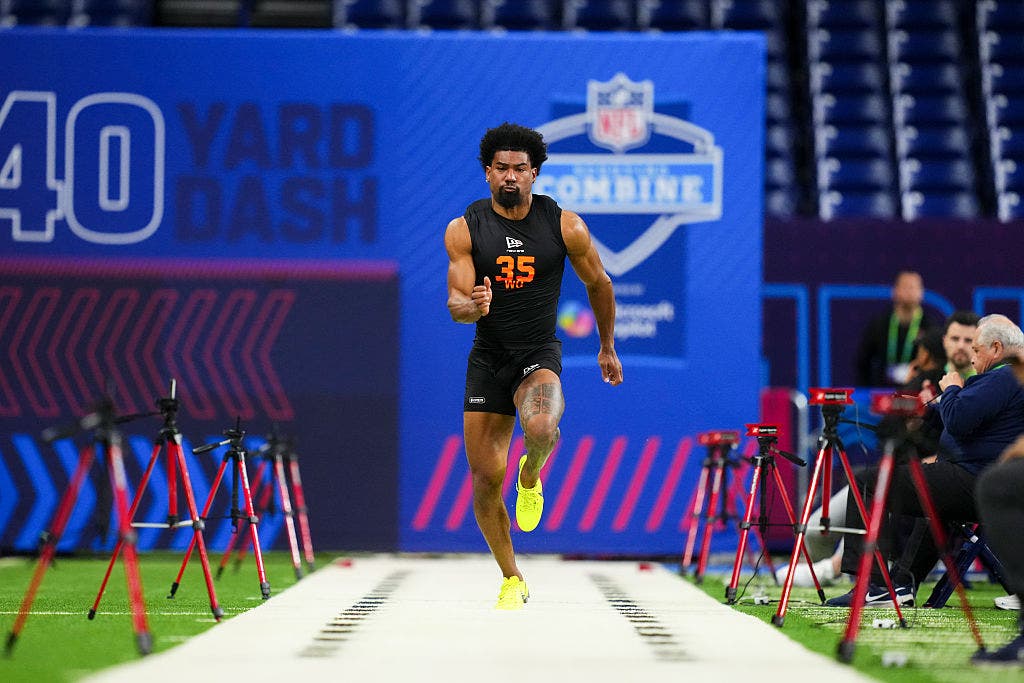
De’Zhaun Stribling had the sixth-best whole rating amongst all receivers, in line with Next Gen Stats, at the NFL Combine. (Photo by Cooper Neill/Getty Images)
If the 49ers needed Stribling, they in all probability wanted to take him at No. 33. And it’s now upon them to verify he delivers upon that draft standing.
San Francisco GM John Lynch and coach Kyle Shanahan weren’t as open as DeCosta to speak about the course of and the method the consensus board does (and doesn’t) steer their line of pondering. They have been extra defensive and flippant, with Lynch saying, “We’ve got consensus in this building. That’s the consensus that I care about.” So I admire that DeCosta took the time to achieve the draft neighborhood with a extra beneficiant spirit.
4. RANDOM RANKINGS
Here are six sleeper rookies that I really like for fantasy soccer. I’ll do three for dynasty and three for redraft.
Ted Hurst, WR, Tampa Bay Buccaneers (Dynasty)
The Bucs’ offense got here right down to earth final yr, which is why they pivoted from OC Josh Grizzard to Zac Robinson, an apple that fell off the Sean McVay tree. You can guess that GM Jason Licht drafted Hurst with Robinson’s offense in thoughts, and the rookie wideout will be part of a unit that has some uncertainty at the receiver spots past Emeka Egbuka. Jalen McMillan has but to take a full-time beginning function and Chris Godwin is getting older and oft-injured. Hurst is a developmental prospect out of Georgia State however has unimaginable bodily talents and was dominant at the FCS degree. Maybe he breaks out in 2027.
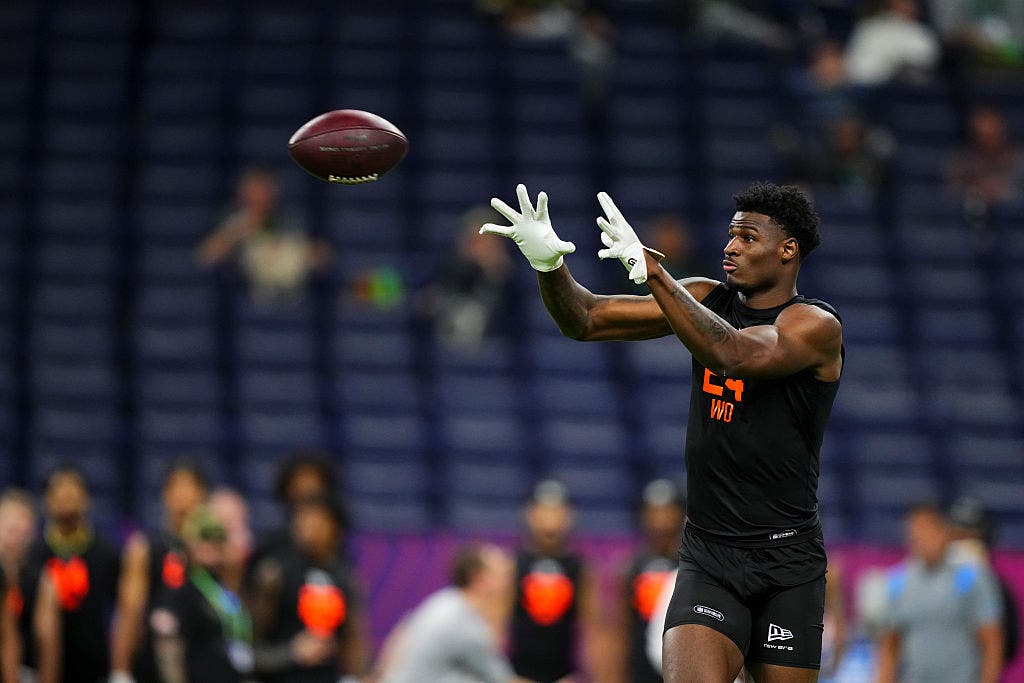
Ted Hurst is probably not well-known to NFL followers, however he had a 1,000-yard receiving season for Georgia State in 2025. (Photo by Cooper Neill/Getty Images)
Mike Washington, RB, Las Vegas Raiders (Dynasty)
New Raiders head coach Klint Kubiak ran a two-back backfield in Seattle. Now, Kubiak didn’t have Ashton Jeanty final yr, and it’s seemingly the 2025 first-round decide will get an enormous share of the touches. But there’s a probability that Washington has a much bigger function than anticipated, significantly given how ideally he matches Kubiak’s system. He can be a extremely good handcuff in Vegas.
Chris Bell, WR, Miami Dolphins (Dynasty)
Bell is the final high-risk, high-upside play. He was an impressive participant at Louisville, the place he would have seemingly earned his method into the high 50 picks in the NFL Draft. But he tore his ACL, which landed him in Round 4 and on a Dolphins workforce devoid of receivers. Can he earn a large function whereas overcoming the knee harm? Draft him if you wish to be alongside for that journey.
Ja’Kobi Lane, WR, Baltimore Ravens (Redraft):
If you need a late-round flier with excessive upside, Lane might be amongst the greatest choices. Baltimore has lengthy wanted an explosive, outdoors choice with good fingers. That’s Lane. He ought to supplant veteran receiver Rashod Bateman for enjoying time, and the query will merely be whether or not Lane can convert his snaps in a extra environment friendly method than Bateman has.
Justin Joly, TE, Denver Broncos (Redraft):
The Broncos have been in search of a good finish who matches Sean Payton’s sensibilities. (He needs one other Jimmy Graham, however in fact, these guys don’t develop on bushes.) It doesn’t seem to be Evan Engram or Adam Trautman have fairly gotten it executed in Denver. So Joly is a compelling man, significantly if we see him working with the first-team in coaching camp.
Jonah Coleman, RB, Denver Broncos (Redraft)
I’ll say it: I don’t assume second-round decide RJ Harvey was very spectacular final yr as a rookie. Not in fantasy. Not in actuality. He’s not so spectacular {that a} man like Coleman can’t vulture carries. And that’s much more true of J.Ok. Dobbins, who will seemingly be Coleman’s extra direct competitors. So if Coleman can steal Dobbins’ job and eat into Harvey’s touches, the rookie can be a extremely good fantasy choice. But for now, that’s a giant if.
5. HE SAID WHAT?!
*Silence*
Normally, that is the area the place I discover a controversial assertion — or an thrilling quote. But I need to discover an uncommon silence that surrounded QB Fernando Mendoza, the draft’s No. 1 general decide. No one is speaking about him. No one has actually mentioned him since the mix, when it grew to become clear that he was the sure-thing at first general.
There’s nothing controversial about the squeaky-clean Mendoza.
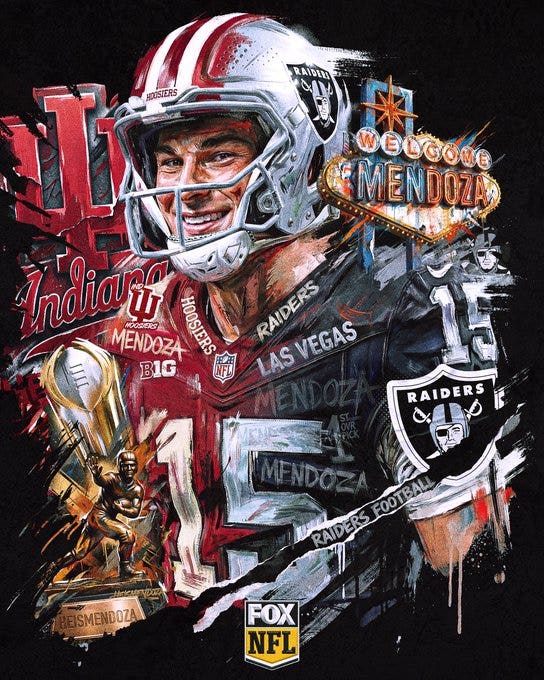
From my vantage level, it has been intentional.
Mendoza has made appearances right here and there. He has let his aw-shucks persona shine. He has embraced his cultural achievements as one in every of the NFL’s few Latino quarterbacks. And he has used his highlight for good, elevating funds for the National MS Society in honor of his mom. But he has not generated a compelling headline since successful the nationwide championship.
That’s genuine to Mendoza, for certain. But it has all been in the title of securing the No. 1 general decide. That didn’t assist draft scores. That thrust undersized and inexperienced Alabama QB Ty Simpson into the pre-draft dialogue as a sacrificial lamb in the embrace-debate TV world. But it was all to learn Mendoza, who has made the leap to the NFL as quietly as any first-overall decide in latest reminiscence. That consists of understated personalities like Cam Ward and Bryce Young going to understated groups like the Titans and Panthers.
Despite the lack of fanfare for Mendoza, you possibly can rely me as somebody who believes in his prospects.
Give him a while. He’ll develop on folks, each on and off the subject. He might very effectively be a celebrity in 2027.