Soldiers Deployed in Milan Ahead of Fresh Protests
Soldiers are being deployed to Milan in Italy as part of efforts by the government to quell unrest ahead of fresh protests this Saturday.
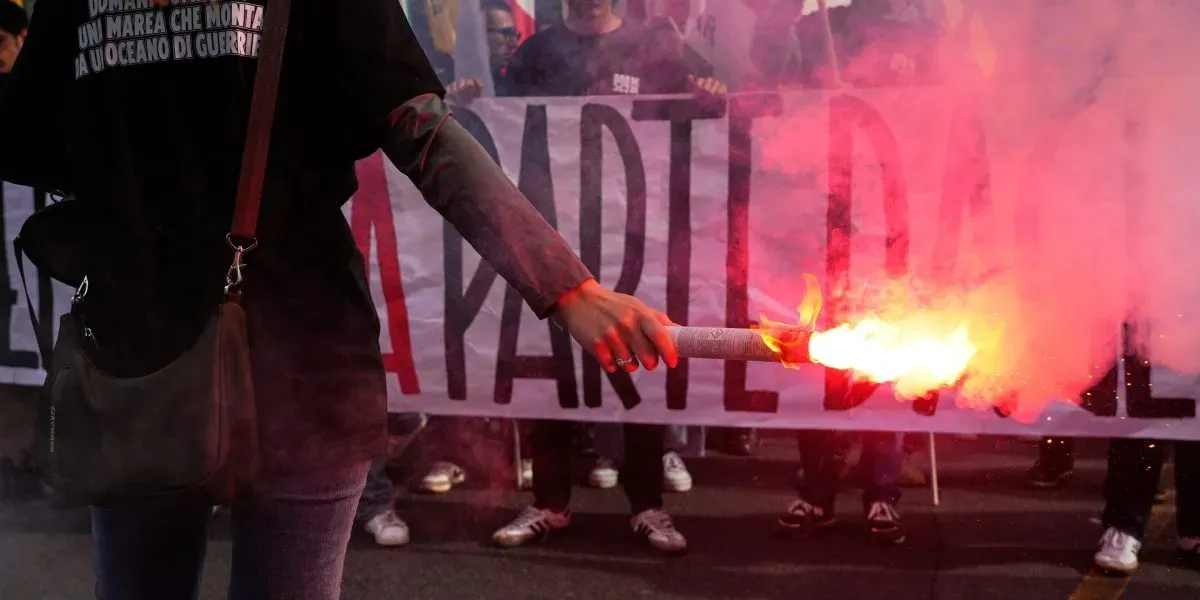
Soldiers have been deployed to Milan in Italy as the city prepares for fresh protests this Saturday, just one week after looting and clashes with police. The move comes as part of efforts by the government to quell the unrest.
According to Premier Giorgia Meloni, additional measures will be taken to address the situation, including tougher penalties for minors who are accused of participating in violent protests. It is reported that a significant number of young people were involved in last week's disturbances.
Protests against various issues are taking place across Europe this Saturday, with cities such as Tirana in Albania and Madrid in Spain also experiencing demonstrations. The range of grievances being voiced by protesters is broad, encompassing concerns about pensions, housing, war, education, and corruption.
In Milan, the deployment of 500 soldiers will supplement hundreds already stationed there, who will work alongside approximately 5,000 police officers to maintain order. Authorities are employing a range of tactics to prevent further violence, including drone surveillance, checks at railway stations, rapid-response units, and online monitoring for potential threats.
Stores in Milan's fashion district have been boarding up their windows with wooden planks ahead of the protests, particularly luxury brands like Omega, Tiffany, and Gucci. These measures are aimed at preventing a repeat of last weekend's incidents, during which rioters smashed into stores targeting sneakers, athletic wear, and sporting goods near the city's central Duomo square.
Security measures are being extended beyond the city center in Milan to prevent protesters from evading heavily policed areas. This decision comes amid concerns that demonstrators may move into other neighborhoods to avoid law enforcement. The heightened security presence aims to contain any potential unrest and maintain order.
Soldiers could provide immediate reinforcements, according to Valter Mazzetti, secretary-general of the Fsp police union. However, he emphasized that troops alone cannot resolve the ongoing police staffing shortages. This shortage has been a pressing concern for authorities as they struggle to manage the increasing number of protests.
Defense Minister Guido Crosetto highlighted the limitations faced by soldiers in maintaining public order. He noted that troops lack key tools necessary for operations, including pepper spray and tasers, which are not authorized for use throughout the city. Even plastic restraint ties can only be used in specific areas around train stations.
The demographics of last week's violence and looting have raised concerns about social and economic inequalities. Milan police reported that approximately 2,000 very young protesters were involved, with a significant number being "naturalized, second-generation Italians" or foreign nationals.
Security measures were stepped up in Rome as authorities locked down luxury shopping areas and increased patrols around iconic landmarks such as the Circus Maximus and Piazza del Popolo.
Several hundred students gathered peacefully to emphasize their commitment to non-violence and distinguish themselves from rioters who had caused chaos in previous demonstrations.
Riccardo Ponzio, national president of an Italian far-right student association, voiced his concerns about the impact of violent protests on young people, particularly those seeking education and wanting to contribute positively to society.
A separate anti-war march took place in central Rome, sparking worries that extremist groups might infiltrate the event and cause trouble.
Protesters in Albania's capital city have clashed with police for over a week, hurling rocks, flares, firebombs, and fireworks at officers who have responded with batons and tear gas.
The unrest has been sparked by demands from high school and university students for lower tuition fees and greater state investment in education. Some protesters have also joined a broader anti-government movement calling for the resignation of Prime Minister Edi Rama.
A separate protest outside the prime minister's office turned violent, with some activists setting fires on the street. The government has warned that those who engage in such behavior will face penalties.
Meanwhile, thousands of retirees and others took to the streets in Spain's capital to demand protection for public pensions from any potential meddling or privatization.
Large crowds marched peacefully through central Madrid, waving flags and banners with messages like "protect pensions" and "decent pensions for today and the future."
Large crowds have taken to the streets of Lisbon on Saturday as part of the "Oct. 17 Movement", joining their Spanish counterparts who have been protesting for affordable housing and better living conditions.
The protests in Spain are fueled by a severe housing supply shortage caused by rapid population growth driven by immigration and an explosion of short-term rentals, which has left many renters struggling to find stable accommodation. This issue came to a head when an 87-year-old woman was forcibly evicted from her rented apartment in Madrid last month, sparking widespread outrage.
The protests have been centered around a tent camp in Puerta del Sol square in the Spanish capital for almost a month now. Prime Minister Luis Montenegro's government has faced criticism for introducing measures that ease rent increases and facilitate tenant eviction if they fail to pay, which protesters argue puts them at greater risk of homelessness.
Facts based on reporting originally published by Fortune.
You may republish this story, in full or in part, if you credit News Central Site and link to it (licence CC BY 4.0). Photos are not included.