Solar Roofs Limited in Powering Electric Vehicles
A typical car roof can only capture so much sunlight, making it difficult to generate enough electricity to charge a modern EV.
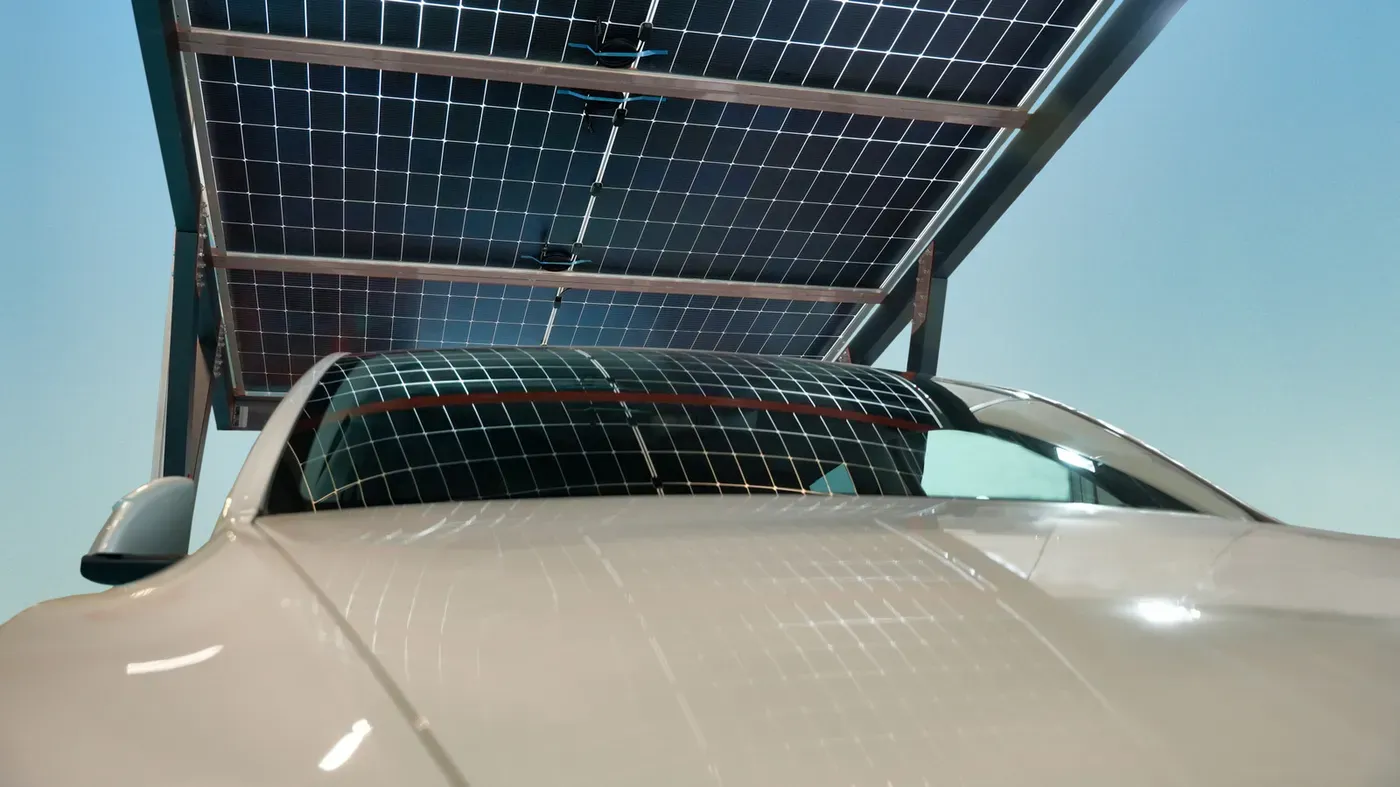
The idea of using solar roofs to directly power electric vehicles (EVs) may seem appealing, but it's plagued by a significant problem: the limited surface area available on a car roof.
A typical car roof can only capture so much sunlight, making it difficult to generate enough electricity to charge a modern EV. To make matters worse, driving an EV requires substantial amounts of energy to propel the vehicle forward.
While adding more solar panels might seem like a solution, it actually introduces new problems. The added weight of extra hardware would require electric motors to work harder, drawing even more energy from the battery.
Car manufacturers are trying to find ways to overcome these limitations by experimenting with flexible solar panels that can be stretched when parked and lighter EVs that can travel further on each watt-hour of electricity.
The median model-year 2025 electric vehicle (EV) uses an estimated 39kWh of energy per 100 miles, which translates to 390Wh per mile. To generate power from solar panels on a typical EV roof, a 400W array covering about 22 square feet would be required.
However, this amount of power is barely sufficient to cover the vehicle's energy needs. Assuming optimal conditions and a four-hour charging period, the solar panel would only produce approximately 1.6kWh before accounting for losses due to inefficiencies in the charging process.
This limited output means that even under ideal circumstances, the EV could travel around 4 miles on solar power alone at an average consumption rate. But real-world conditions are rarely so favorable, with shade, cloudy weather, heat, and unfavorable parking angles all contributing to reduced solar output.
As a result, EV manufacturers must balance competing demands for space, weight, and aerodynamic efficiency when integrating solar panels into their designs. Some solutions attempt to mitigate these limitations by using expandable or retractable panels that can be deployed when the vehicle is stationary.
Aptera has taken a unique approach to designing an electric vehicle (EV) powered by solar roofs. The company's teardrop-shaped EV features three wheels, two seats, and lightweight composite construction, which sets it apart from the more conventional median model-year 2025 EV.
The Aptera's solar panels have been tested in Southern California, with impressive results. In July testing, TÜV Rheinland measured 4.23kWh of electricity delivered to an Aptera prototype's battery while parked and untouched. This translates to approximately 42 miles of solar range at the company's targeted efficiency.
However, real-world scenarios can quickly alter the equation. For instance, a car left in a garage or exposed to prolonged periods of cloudy skies will not be able to generate as much electricity as one parked in direct sunlight. Similarly, long road trips will require more frequent charging sessions.
Aptera's goal is ambitious, but history has shown that achieving it can be challenging. In January 2023, Lightyear suspended production of its first solar EV just weeks after deliveries began, and the company behind it, Atlas Technologies, subsequently filed for bankruptcy days later.
Aptera's solar-powered electric vehicle (EV) is still in development, with a launch edition target price of $40,000. The company plans to start building its first 40 production vehicles by the end of 2026.
The timeline for customer deliveries depends on several factors, including financing, supplier performance and regulatory approvals.
Facts based on reporting originally published by Engadget.
You may republish this story, in full or in part, if you credit News Central Site and link to it (licence CC BY 4.0). Photos are not included.